Machine translation of the 1948–1954 Italian original. The original text is authoritative.
PIGGHE (PIGHIUS), ALBERT. — Theologian and controversialist, b. at Kempen, whence the name Campensis, in 1490, d. at Utrecht on 26 Dec. 1542. He studied philosophy and theology at Louvain, DRIEDO, JEAN (v.) and Adriano Florent, later Pope Adrian VI, who took him with him to Rome for confidential assignments. On returning to his homeland, he obtained the provostship of St John’s at Utrecht, which he held until his death. At the behest of Paul III, in 1540 he took part in the Diet of Worms as a theologian, in an attempt to reach agreements with the Protestants.
In addition to works on astronomy, geography, etc., he composed the Hierarchiae Ecclesiasticae assertio (Cologne 1538): an ecclesiology of particular historical importance for its determined reaction against conciliar ideas; the Controversiarum explicatio (ibid. 1542): a doctrinal report on the discussions at Regensburg, where, at the Diet, he proposed, on the question of justification, the theory of « double justice », accepted by the Protestants but rejected by the Council of Tri-
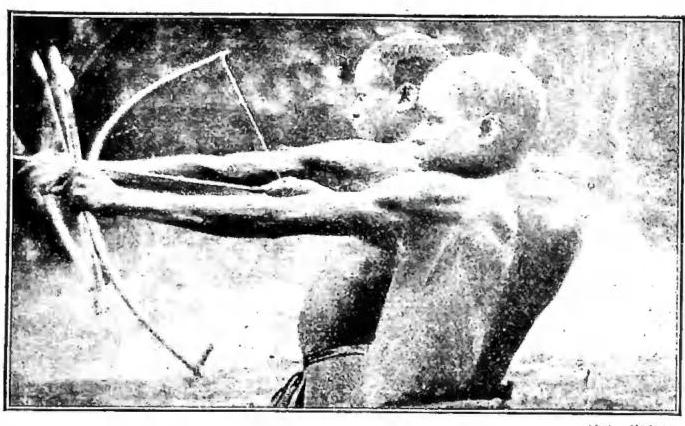
PIGMEI — Two pygmies draw the bow. (photo Fides)at the sixth session of Trent. According to it, in the justified person there is an inherent righteousness distinct from the righteousness of Christ, which is imputed to the justified person and truly sanctifies him; concerning original sin, P. speaks of a simple imputation and not of a “physical” reality. Although in this he came close to Protestantism, P. intended to remain under the authority of the Church, of which he speaks with heartfelt devotion; and he lacks the theological pessimism that makes man a plaything of guilt. With others of his age, he shared the nominalist principles that barred him from understanding the medieval scholastic “entities,” the habitus and the relatio, indispensable for elucidating the reality of the Christian mysteries.
BIBL.: F. Dittrich, Gauparo Contarini, Braunsberg 1885, pp. 631–68; E. Amann, s. V. in DThC, XII, cols. 2094–2104 (good synthesis); H. Jedin, Studies über die Schriftstellertätigkeit Albert Pigges, Münster 1931; J. Henninger, S. Augustinus et doctrina de duplici iustitia, Mödling (Vienna) 1935, pp. 1–3 and passim; I. Feiner, Die Erbsündelehre Albert Pigges, Coira 1939.
Cite this article
“PIGGHE (PIGHIUS), ALBERT.” Enciclopedia Cattolica, vol. IX (1952), p. 885. Azione Romana digital edition, https://azioneromana.com/article/pigghe-pighius-albert.