
STILITA (from the Greek στύλος “column”). — An anchorite who lived on top of a column. Almost entirely unknown in the West, stylites were fairly numerous in the East, especially in Syria and Mesopotamia; examples of stylites are also found in Egypt, Anatolia, Palestine and Greece. The bizarre and heroic inventor of this form of asceticism was St Simeon (q.v.), surnamed “the Stylite,” in the 5th century, and among his principal imitators were St Daniel, St Luke and St Alypius. The stylites flourished again around the 10th century, then gradually disappeared.
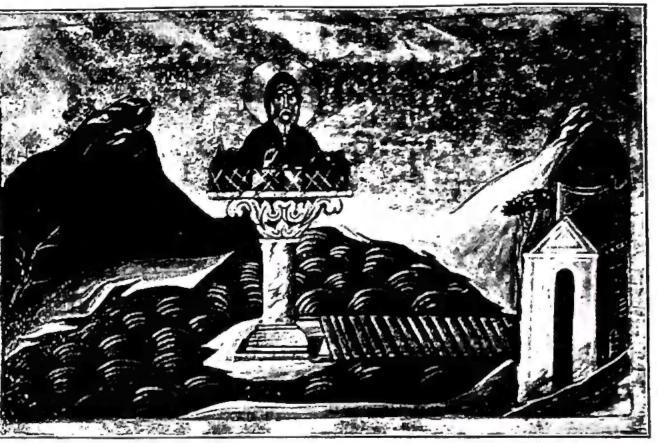
STILITE - A stylite (from the Greek στύλος “column”) was an anchorite who lived on top of a column. This way of life was not a deviation from monasticism, but rather a characteristic branch of Eastern anchoritism.
Often the stylites’ column was an ancient ruin; sometimes it was erected specifically for the purpose, as in the case of St. Simeon. His column, of which the base still survives, was 16–18 m high. Some stylites had more than one column at their disposal. The typical column consisted of steps leading to the base, the base itself, the shaft, the capital, a balustrade or parapet, and sometimes a small cell like a nest; but some, for greater penance, dispensed with such shelter. To reach the top one climbed a ladder or a rope. Around the columns monasteries often formed; there was frequent attendance by both pagan and Christian pilgrims, including emperors drawn by the saints’ holiness, whose penance was extraordinary. Many indeed never descended from the column, on which they died. The stylites ordinarily stood, practising the “stasis,” so that foot ulcers were common; sometimes they succumbed to exposure. To this severe penance they added the most austere fasts and reduced sleep to a minimum, taken while leaning on the balustrade or sitting on a stool. Simeon, for example, kept vigil in prayer all night until the ninth hour, then conferred with the devotees who had gathered at the column, and towards sunset resumed his prayers. Liturgical life for the stylites was minimal. Sometimes they received Communion, raised up by a rope or brought by a deacon on the ladder. There were even a few priestly ordinations of stylites, sometimes performed by the bishop below extending his hands.
Some resemblance to the stylites was shown by anchorites who lived in trees, called “dendrites” (q.v.); they were always fewer in number than the stylites and never formed a true category like them.