
SUMMAGA. - Benedictine abbey, in the diocese of Concordia, 3 km distant from it; the Latin name « Summa aqua » is connected with the marshy ground, reclaimed and made habitable by the monks.
Probably founded between the 9th and 10th centuries, it had jurisdiction over certain towns and parishes; converted into a commendam in 1430, the commendatory cardinal Carlo Rezzonico, later Pope Clemente XIII, restored the church in 1740; with the
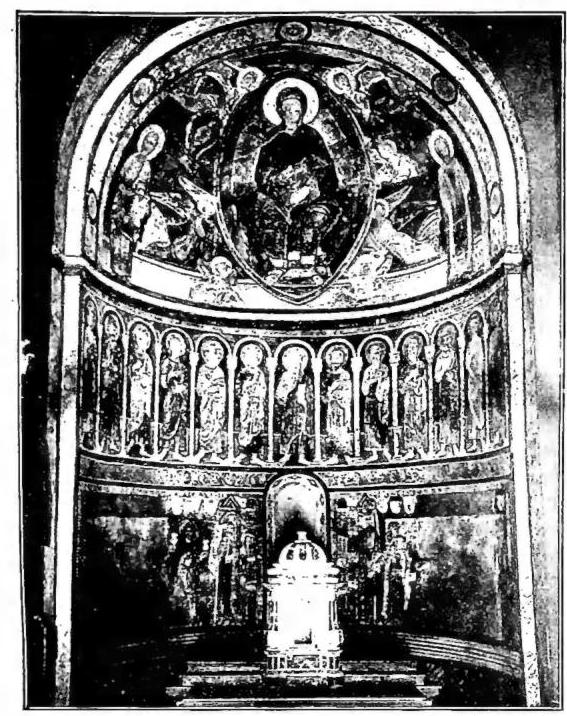
Of the first Basilica there survives a small chapel, which served as the apse of the Romanesque church, erected in the 12th century; its central apse still preserves a noteworthy painted cycle, divided into three zones: above, within a mandorla, the Virgin among the angels, and the symbols of the Evangelists; in the centre, Christ among the Apostles; finally, above a delicate drapery, the wise virgins and the foolish virgins. The fresco is assigned to the end of the 12th century or to the early years of the 13th, and has the unmistakable character of the Romanesque art of southern and central Italy, and especially of the Benedictine painted cycle of Tivoli.