Machine translation of the 1948–1954 Italian original. The original text is authoritative.
SUN YAT-SEN. – Cantonese form of the name of Süenisien (Sun I-hsien), Chinese politician and revolutionary. Born on 12 November 1866 into a humble peasant family in the village of Tsuiheng, halfway between Canton and Macao; died in Beijing on 12 March 1925. He attended the village school, then at the age of eleven went with his elder brother to Hawai‘i, in Honolulu, where he studied at Iolani College, until at sixteen his brother brought him back to his native village for fear that he might become too modernized.
Feeling ill at ease among backward people, he took refuge in Hongkong, where at the beginning of 1884 he received Baptism from an American Protestant missionary, and on 7 May he married. In order to devote himself more fully to the revolution without arousing suspicion among the police, he took up the study of medicine, first in Canton and then again in Hongkong, from 1887 to 1892, when he obtained the degree of bachelor of medicine and surgery. From then on he was known by the name of Dr. Sun Yat-sen, although in fact he had never attained the degree of doctor. After the defeats in the Franco-Chinese War of 1884–85 and the Sino-Japanese War of 1895, he attempted a coup in Canton against the Manchu dynasty. But the conspiracy was discovered in time, and S. no longer considered himself safe in China. During sixteen years of wandering, he sought refuge in Japan, America, Europe, Siam, Malaya, India, etc., everywhere shadowed by the imperial police, which placed a bounty of one million taels on his head, dead or alive. On 11 October 1896 he was therefore seized in the Chinese Legation in London, but an old associate of his
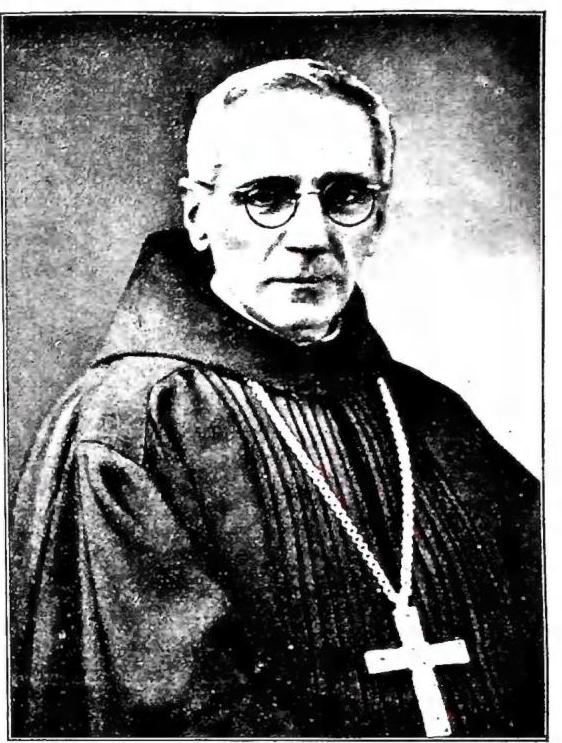
(courtesy of the Pont. Inst. of Sacred Music) SUÑOL, RAMON GREGORIO MARIA — Portrait.A teacher from Hong Kong succeeded in freeing him. He thus continued to travel throughout the world, preaching revolution and democracy to the numerous Chinese whom he encountered almost everywhere. After China’s disasters around 1900, the revolutionary party gained ground, and in 1905 people began to speak seriously of the future Chinese Republic. This was the moment when S. concentrated his reforms around tridemism (v.). In October 1911, when revolution broke out in China, he was in Denver, Colorado. Confident of England’s support, S. returned to his homeland on 25 December 1911; he was immediately elected provisional president of the young Republic and assumed his functions at Nanjing on 1 January 1912. From then on he was regarded as the “father of the nation.” Forty-five days later, weary of the presidency, he abdicated in favor of Iüenseechae (Yuan Shih-k’ai), on condition that the Emperor also abdicate, which occurred on 12 February 1912. Freed from all political responsibility, he devoted himself to preaching the new political gospel, tridemism. Relations between President Iüenseechae and S. deteriorated, especially when, in 1915, the former wished to restore the monarchy in his own favor. S. again took refuge in Japan, returning in 1916 upon the death of his adversary. In 1917, a “military government” was formed in Canton, with S. as generalissimo; and when, in 1921, the city proclaimed itself a republic independent of Beijing, he was elected its president. He immediately preached an expedition against the north, which failed twice. Faithful to his grandiose plans for reform, in January 1924 he admitted the Communist Party, supported by Russia, to his Nationalist Party, to which S. had requested assistance. He then resumed preaching his tridemism. On 1 June 1929, his mortal remains were interred in a magnificent marble mausoleum at Nanjing.