
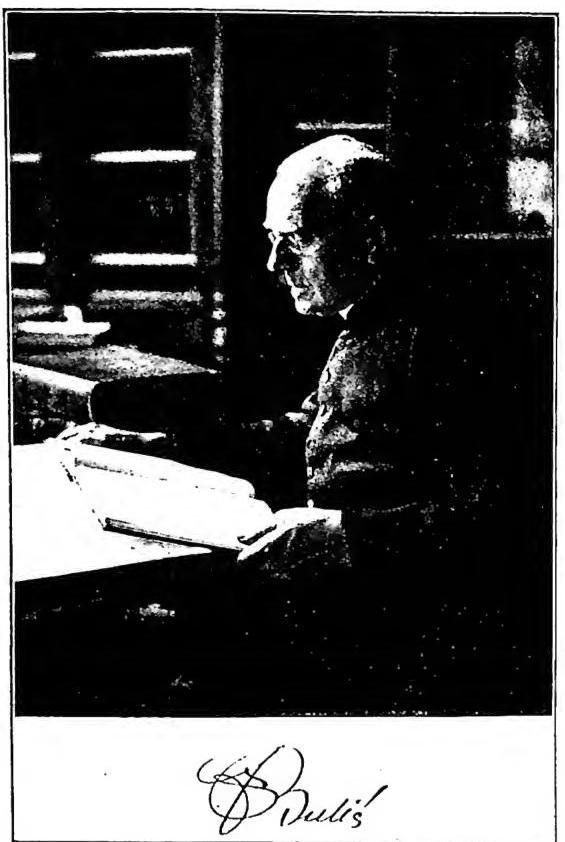
BULIĆ, FRANCESCO — Archaeologist, born at Vranjić (Vragnizza), near Spalato, on 4 October 1846, died at Zagreb on 28 July 1934.
Having completed his ecclesiastical studies at the seminary of Zara (1869), he attended the University of Vienna, where he took a degree in classical philosophy (1873), and returned there in 1877 to complete his epigraphic studies. From then on he lived in his homeland, where he took an active part in the civil administration, but devoted himself above all to teaching and archaeological studies: director of the lyceum of Spalato (1883–96), director of the archaeological museum (1883–1920), and provincial conservator of monuments (1913–26).
Following the example of De Rossi, he devoted himself preferably to the study of the Christian antiquities of Dalmatia, which he succeeded in bringing out of obscurity, especially at the highly important centre of Salona. The results of his excavations and explorations are recorded in vols. VII and following of the Bollettino di archeologia e storia Dalmazia (Spalato 1878 ff.), a periodical which from 1920 (vol. 43) appeared with a Croatian title and subtitles and summaries in French, with M. Abramić as co-editor. But B., although, because of his Croatian origin, he was an ardent Slavophile and opposed Italian aspirations (which he also opposed as the Yugoslav delegate to the Paris Conference), was not sectarian in the field of culture and zealously safeguarded Dalmatia’s Latin and Italian historical and archaeological heritage. Even after 1920 he continued to write, almost exclusively, in Italian in his journal.
His merits lie above all in active archaeology. But, owing to his lack of broad and profound archaeological and architectural culture, he did not succeed in producing that synthesis of the antiquities of Salona which, in the final years of his life, others began to provide by making use of his excavations. His publications are essentially ecclesiastical and fragmentary. Alongside the Bollettino, mention should be made of the Inscriptiones quae in C. R. museo archeologico Spalati asservantur (Spalato 1886, followed by several auctaria up to 1894), and Stridone luogo natale di s. Girolamo, in Miscel-
In 1921 he was presented with a richly produced Strena Buliciana. Commentationes gratulatoriae Francisco Bulić ob XV vitae lustra feliciter peracta oblatae a discipulis et amicis a. d. IV non. oct. MCMXXI (Zagreb 1924).