Machine translation of the 1948–1954 Italian original. The original text is authoritative.
SALONA. - Today a small village of Dalmatia,
(by courtesy of Msgr. d. P. Frutasi) SALONA - Sarcophagus of the Good Shepherd (4th cent.) - Spalato, Archaeological Museum.in Yugoslavia, near Spalato, with extremely rich ancient remains from the period in which it flourished as an important Roman city.
Founded by the Greeks (from Issa, a colony of Syracuse) on the territory of the Dalmatians, probably in the course of the 3rd century B.C., S., an important port on the eastern Adriatic, experienced great development under Roman rule, having then become not only a colony (Martia Iulia S.) but also the administrative center of the new province (Illyricum, later Dalmatia). The seat of a legatus Augusti pro praetore and of other high magistrates, S. also became in the 3rd century the seat of a bishop. A considerable Christian community had formed there among the numerous easterners, the first spreaders of Christianity in the Dalmatian cities. Having survived the multiple incursions of barbarian peoples who had temporarily seized the entire territory of Dalmatia, S. recognized, like all of Dalmatia, Byzantine power until its complete destruction by Avaro-Slavic tribes, which took place around 615. S. never again rose as a city, and social life moved to nearby Spalato (Split), where the ecclesiastical organization was also transferred. In the vicinity of S., however,
a notable center of the nascent Croatian state was established in the early Middle Ages.
The ecclesiastical organization took shape during the 3rd century, and is due to the bishops Venazio (who had, as F. Bulliè demonstrated, a purely missionary function in the Illyrian territory) and Dominio, who suffered martyrdom: the former, as is believed, under Aurelian, and the other under Diocletian. S. had a considerable number of martyrs (among whom Anastasio, Asterio, Telio Antiochiano, Gaiano, etc.), whose relics were partly transferred, through the efforts of Pope Giovanni IV, a Dalmatian, to Rome in the baptistery of S. Giovanni in Laterano (chapel of S. Venanzio with its magnificent mosaic: cf. Wilpert, Mosaiken, p. 731 and pl. 111). Some are also preserved in the cathedral of Spalato.
S. became famous for its Christian monuments (it was there that the first Congress of Christian Archaeology took place, in 1894). Among the first and most important should be mentioned the cemetery basilicas (so far five have been discovered:
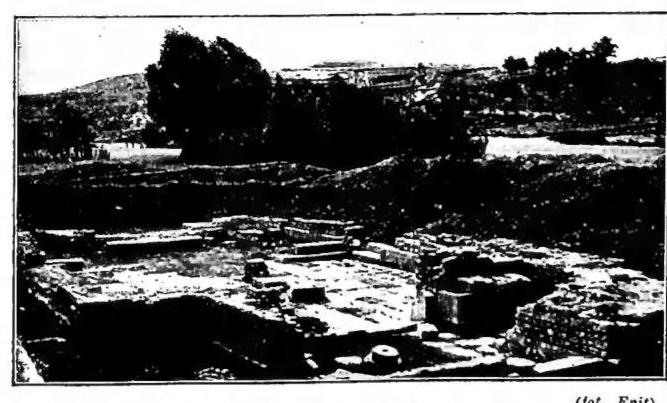
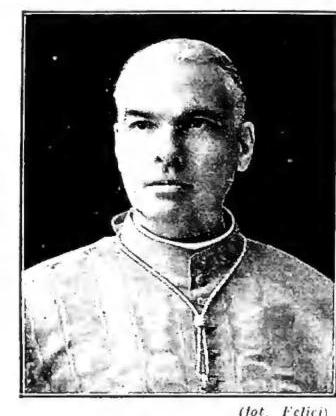
(photo Enit) SALONA - Excavations of the 11th-century basilica, built over an Early Christian basilica of the 6th century.SALOTTI, CARLO - Portrait.transported the relics of all the most important Salona martyrs. Marusinac, on the other hand, is of exceptional importance in the development of Christian architecture. Besides a rare example of a mausoleum (of St. Anastasius), with orientalizing (Syrian) features, two basilicas were brought to light, side by side, the first originally roofless (basilica discoperta). Another notable Christian complex is represented by the Urban Basilica, a large three-aisled church (5th century, rebuilt in the 6th century) with the baptistery and other adjacent buildings. By means of a wide narthex, this Basilica is joined to another in the form of a Greek cross, which exhibits different phases of construction. S. had very many other basilicas, of which, for the most part, traces are still visible. Within the perimeter of the ancient city alone, within the surrounding walls, as many as fifteen have been recorded so far. S. was raised by Pope Zosimus (414) to the dignity of ecclesiastical metropolis of Dalmatia, which it retained until the destruction of the city. - Vedi tav. CVI.
BIBL.:Bull. di arch. e stor. dalmata (from 1898); L. Jelić, F. Bulić-Rutar, Guida di Spalato e S., Zara 1894; G. P. Kirsch, Le Bon Pasteur sur les manum. chrét. de S., in Eph. Salonitana, 1894, p. 17 ff.; L. Jelić, I manum. scritti e figurati dei mart. salonitani del cimitero della «Lex sancta christ.», ibid., p. 31 ff.; H. Delehaye, Saints d'Istrie et de Dalmatie, in Anal. Boll., 18 (1899), pp. 369-71; id., L'hagiagr. de S., ibid., 23 (1904), pp. 5-18; id., Nouvelles fouilles à Salone, ibid., 47 (1929), p. 77 ff.; Ch. Segvic, Chronol. des évêques de S., suivie de la chronol. des évêques de Spalato, in Anal. Bolland., 33 (1914), pp. 265-73; J. Zeiller, Les origines chrét. dans la prise, rom. de Dalmatie, Paris 1906; id., Basiliques chrét. de S. et de la Dalmatie, in Bull. de la Soc. Nat. des Antiq. de France, 1921, pp. 326-31; id., Une ébauche de vicariat pontif. sous le pape Zosime, in Rev. hist., 155 (1927), pp. 326-32; W. Gerber, R. Egger, M. Abramic, Forschungen in S., I, Vienna 1917, II, ibid. 1926; J. Brönsted, E. Dyggve, Fr. Weilbach, Rech. à Salone, I, Copenhagen 1928; II, ibid. 1934; Eubel, I, pp. 430-31; II, p. 251; III, p. 346; IV, p. 358; V, p. 341; E. Dyggve, S. christ. Aperçu histor. du dévelop. de la ville et de ses constructions à l'époque paléochrét., in Atti del III Congr. di arch. crist., Ravenna 1932, Rome 1934, pp. 237-254; id., in Zeitschr. für Kirchengesch., 59 (1940), pp. 103-13; id., History of Salonitan christianity, Oslo 1951.