
CASSAPANCA. — It originated in the Middle Ages from the combination, perhaps intended to save space, of the bench (v.), which was the most common type of seat, and the chest intended to contain clothing, books, and other household furnishings. It adorned castles and taverns, private houses, churches, and convents alike, and was always decorated with carving, relief sculpture, or inlay, according to the taste of the various centuries. During the Renaissance, c. came into extensive use in sacristies, chapter houses, and even apses or presbyteries: arranged along the walls with high backs and with lecterns and kneelers in front, they assumed a special configuration that endured for a very long time in ecclesiastical practice, which employed them for the functions of the choir.
The term cassone is more widespread in the fifteenth century, with a meaning almost analogous to that of the c. (the cassone lacks armrests and sometimes backrests), and in certain regions it was replaced by other, more specific terms with a slightly dialectal flavor, such as arca, cofano, forziere, scrigno, and cofforo.
C. and cassoni were artistic objects as well as functional ones. Cennini gives explicit information about the ways of decorating them. In Florence, during the fourteenth and fifteenth centuries, the craft was regulated by specific provisions contained in the statutes of the Arte dei legnaiuoli, still preserved in that State Archive.
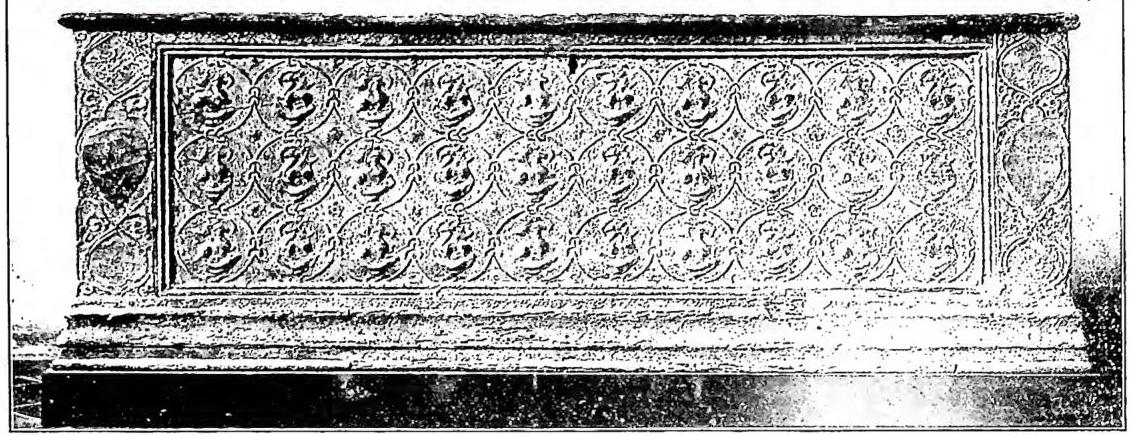
(Alinari photograph)
As early as the fourteenth century, c. were decorated with paintings in solid colours or with monochrome friezes. In Florence, a workshop belonging to a pictor cofanorum on the ground floor of the bishop’s palace is recorded from that period, and furniture painted in this way can be seen in many fourteenth-century paintings. The practice of decorating them with paintings of stories, allegories, or other figurative scenes dates instead from the Renaissance: Vasari clearly mentions it, and many examples still preserved today bear witness to II. Among these, it is worth recalling some by Paolo Uccello in Vienna, in the Lanckoronsky collection, and in Paris at the Jacquemart-André Museum; those by Pesellino, who exerted the greatest influence on furniture painters of the fifteenth century; those by Pollaiolo (a cassone with the scene of Hercules, Dejanira, and Nessus was in the Cook collection, at Richmond); those by Mantegna; and later, in the sixteenth century, those by Bachiacca, Franciabigio, and Andrea del Sarto, until, as the century advanced, decoration with relief sculptures prevailed, bringing the history of this piece of furniture to its conclusion.