
FOGGINI, PIER FRANCESCO. — Historian and theologian, b. in Florence in 1713, d. in Rome on 31 May 1783. Son of Giovan Battista, reputed the finest sculptor of his time and an architect in the service of the Grand Duke, he pursued his theological studies at the University of Pisa, where he perhaps acquired his sympathy for Jansenism and proximity to Enlightenment theories.
A friend of Giovanni Lami, he collaborated on his Novelle letterarie. Invited to do so, he went to Rome, where he met and formed a close friendship with his fellow citizen Giovanni Bottari. He was a member of the Academy of Ecclesiastical History, at which he delivered learned dissertations on several occasions, even in the presence of the Pope. In 1746, at Bottari’s request, he became his coadjutor, with the right of succession, in the office of second custodian of the Vatican Library; he obtained this office in 1768, when Bottari became first custodian. Esteemed for his erudition and moderation, he was theologian to Cardinal Neri Corsini and also to his nephew Cardinal Andrea. In this capacity he had to exercise his influence in the Commission for the suppression of the Jesuits, of which Cardinal Andrea Corsini was a member. Indeed, he was entrusted with carrying out the suppression of the English College, and the Jesuit superior general, Ricci, remained there under his supervision until his transfer to Castel S. Angelo, where Foggini visited him several times. Through Bottari he also established a relationship and friendship with Cardinal Passione, fervently frequenting his hermitage at Camaldoli. In Rome he thus completed his Jansenist formation. He collaborated with the Giornale dei letterati, and held various important and delicate offices in the Eternal City, either through or in the service of his cardinal friends. An eminent student of ecclesiastical history, he published several works of the Fathers; particularly noteworthy is his edition of St Augustine’s work on Grace, in eight small volumes successively dedicated to different popes. He also prepared the translation and commentary of the works of George of Pisidia. His history of St Romulus provoked a controversy that lasted ten years. Following in the footsteps of Lami and Muratori, he applied critical discernment in his investigations, demanding a strict separation of legend from history; in this he was also defended by the Dominican Mamachi. As regards his position toward the papacy and its privileges, in theory he appears Catholic, but in practice hesitant between truth and error. He always sought to moderate the episcopalian ideas of De Ricci, of whom he was a friend. In the disputed questions of moral theology, first an adversary and later a supporter of Concina, he was firmly opposed to probabilism. In the doctrine of Grace as well he was Augustinian, and although he published no dogmatic study, in the individual works of the Fathers he sought to demonstrate the agreement of the Augustinian system with the patristic tradition. In the dogmatic field F. held the same views as De Ricci, as he did in the propagation of “sound doctrine”: he praised all his initiatives, disseminated his pastoral letters, and arranged for them to be translated into French. He disagreed, however, about the manner of proceeding with the reforms; because of his subsequent death, he was unable to witness the decidedly heretical and schismatic character that these assumed in the famous Synod. After Bottari, F. must be regarded as the principal spiritual leader
(Int. Alinari)
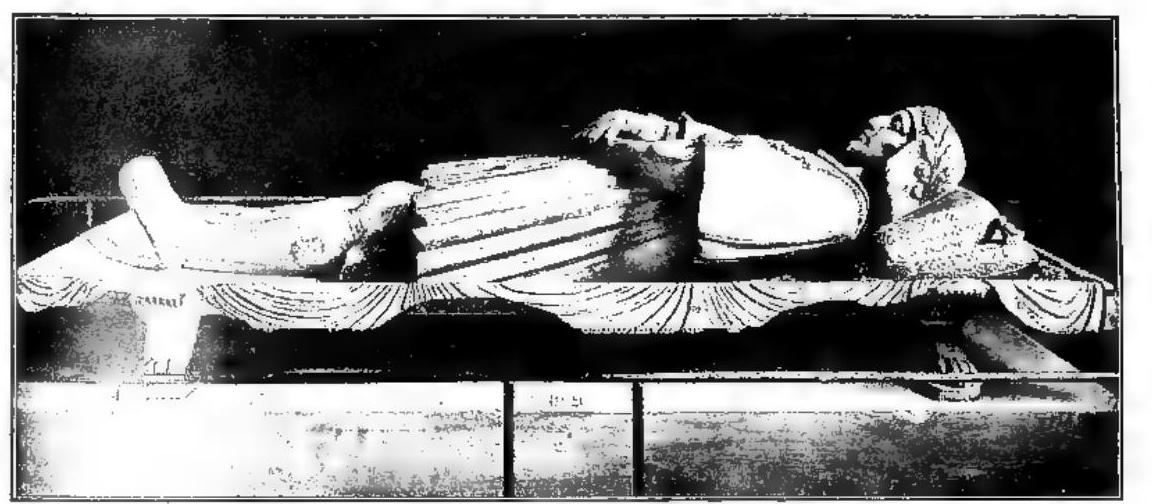
FOIX, GASTON de — Monument to G. de F., a work by Agostino Busti, known as il Bambus (1483–1549), formerly in the church of S. Marta. Milan, Archaeological Museum.