
MARINO I, POPE. — Also designated as Martino II. Born at Gallese near Rome, died at Rome on 15 May 884. As a deacon, he took part in the legation sent by Nicolò I (November 866) to Constantinople to clarify the situation of the Bulgarian neophytes, whom the Byzantine patriarch claimed to include within his own jurisdiction; but the legation was stopped at the frontier of Bulgaria. M. was subsequently at Constantinople among the presidents of the Eighth Ecumenical Council (869–70), at which Fozio was condemned.
Upon returning to Rome, M. was appointed bishop of Cere (Cerveteri), and the Bulgarians unsuccessfully requested him as their bishop. At Naples, in 882, he worked to break the alliance between Bishop Atanasio and the Saracens. He was serving as treasurer and archdeacon of the Church of Rome when he was elevated to the pontificate upon the death of Giovanni VIII (16 December 882): the first case of a bishop being elected pope, contra statuta canonum (cf. Annales Fuldenses, ad an. 882, in MGH, Script., I, p. 397), since bishops were forbidden to change sees.
M.’s pontificate marked a vigorous reaction against the attitude of his predecessor. Many condemnations imposed by Giovanni VIII were annulled, and several exiles were reinstated, among them the bishop of Porto, Formoso (the future pope), who had been reduced to the lay state with a prohibition against ever again returning to Rome.
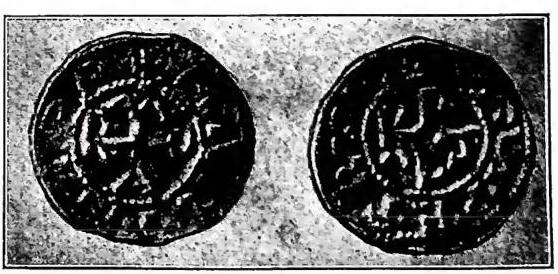
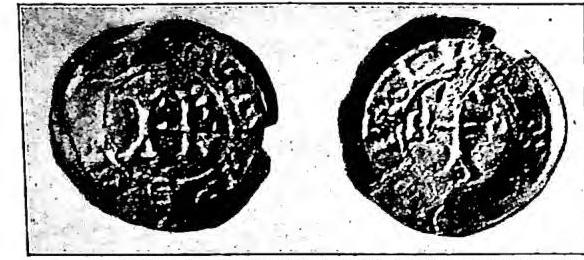
(from C. Serafini, Le munte e le belle pontifice, I, Milan, 1916, pl. 3, no. 6) MARINO I, pope — Silver denarius.
(from C. Serafini, Le monete e le belle pontifice, I, Milan, 1918, pl. 5, no. 9)