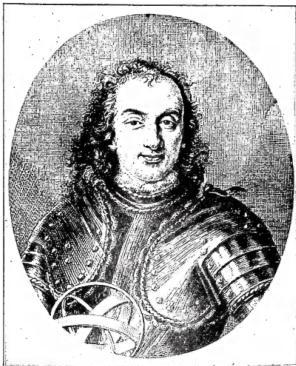
ODESCALCHI, FAMILY. — Originally from Como. Its progenitor is presumed to have been a GIORGIO, who was living in 1290. Many of its members held important political offices in the Milanese territory; later, from the time when BENEDETTO became Pope Innocent XI (v.), the family settled in Rome. But LIVIO, son of CARLO, the Pope’s brother, had no part whatsoever in the government, and the Pope contented himself with raising to a duchy the estate of Ceri, which he had acquired.
In gratitude for the victory of Vienna (1683), to which the Pope had contributed extensively, after the death of his uncle Livio was created by the Emperor Leopold I a prince of the Empire and Duke of Sirmio, concessions that established a majorat in favor of his heirs. In 1689, following the death of Innocent, he was appointed general of the Church, and in turn purchased from the Orsini the Duchy of Bracciano and the lordship of Palo on the Tyrrhenian Sea. He died unmarried on 7 September 1713, leaving as universal heir BALDASSARRE ERBA, the son of his sister Lucrezia, with the obligation of assuming the name and arms of the O. The latter obtained confirmation of the majorat from Charles VI, married Flaminia Borghese, thus perpetuating the O. line, and in 1745 purchased from the Chigi the Palazzo ai SS. Apostoli, which he completed.
Cardinals included BENEDETTO ERBA, archbishop of Milan (1712), highly deserving of recognition, created cardinal on 30 January 1713 and deceased in 1740; ANTONIO ERBA, created cardinal on 24 September 1759 and a few days later (28 September) appointed vicar of Rome. More deservedly remembered is CARLO, born in Rome on 5 March 1786, ordained a priest in 1808, who devoted himself zealously to popular preaching; on 10 March 1823 he was created cardinal and archbishop of Ferrara; from 1826 he returned to Rome, where