
PIMODAN, GEORGES-AUGUSTE-MARIE-ELIE de RARÉCOURT de la VALLÉE, marquis of. — Papal general, born in Paris on 29 Jan. 1822, of an ancient family from the Argonne; he pursued his classical studies with the Jesuits of Fribourg, then entered the military school of St-Cyr and subsequently the cavalry school of Wiener-Neustadt.
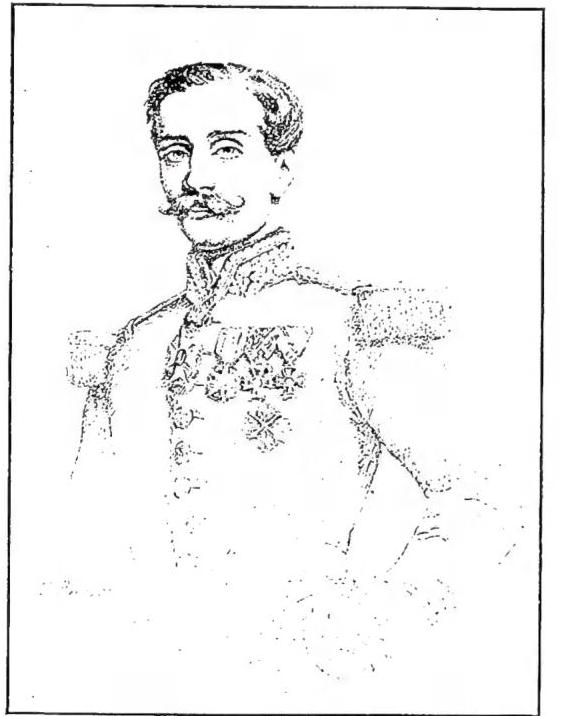
(from Souvenirs du général Marquis de Pimodan, I, Paris 1881)
PIMODAN, GEORGES-AUGUSTE, marquis of — Portrait.
at Polanka and condemned to execution for attempting to escape from Petervaradino (20 May 1849), he happened fortuitously to escape with his life. Colonel at the age of thirty-three and married to a Cournel de Montmorency, he left the military career and, having returned to France (1855), devoted himself to military studies: besides the memoirs on the aforementioned campaigns (Souvenirs du général marquis de P., 1847-49, 2 vols., 1st ed., Paris 1861; 2nd ed., there 1891), he authored a valuable Traité sur la cavalerie and careful historical-tactical observations gathered during painstaking visits to the Napoleonic battlefields of Russia and Germany (1856), which Thiers used for his Histoire du Consulat et de l'Empire de Napoléon. Moved by a profound religious sentiment, he responded to the appeal of Pius IX among the Catholic volunteers (1 Apr. 1860) in defence of the rights of the Holy See and assumed the position of chief of staff of the new papal army. On 19 May following, he routed the Garibaldians led by Zambianchi in the vicinity of Grotte di Castro. He then joined the column of Gen. de Lamoricière and, on 18 Sept., having received the order to open the way to Ancona for the small papal forces against the superior royal forces stationed beyond the Musone in the vicinity of Castelfidardo, he launched an attack on the steep ascent of the Crocette until, wounded in the face and right arm, he wielded his sword with his left hand and, continuing to remain in the front line on horseback, repeated to a handful of brave men: « Forward, my sons, God is with us! ». Finally, struck mortally, he fell, not without murmuring to De Lamoricière, who, thanks to his sacrifice and that of his men, was by then making his way toward Ancona: « General, they fight like heroes; the honour of the Church is safe! ». He died on the field during the night between 18 and 19 Sept.; the body and sword of the deceased were, by the express and chivalrous order of Vittorio Emanuele II, returned to Rome. He was buried in S. Luigi dei Francesi.