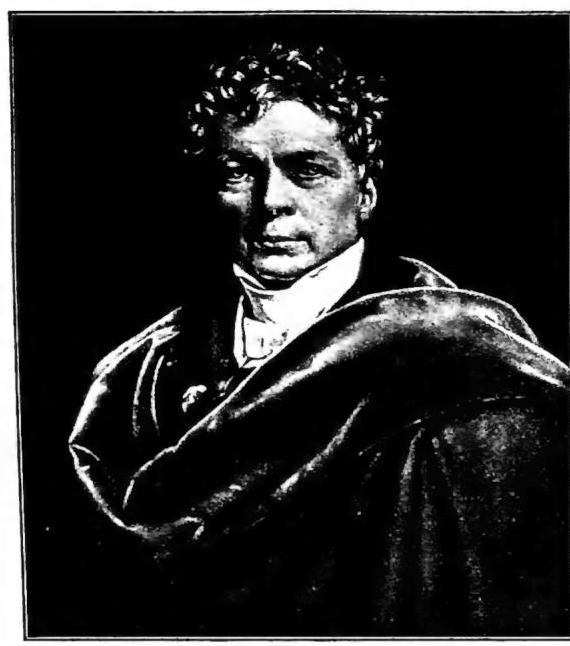
SCHELL, HERMANN. - Catholic theologian and apologist, born on 28 February 1850 in Freiburg (Baden), died on 31 May 1906 in Würzburg. He studied theology in Freiburg and Rome, and philosophy in Würzburg, where he attended lectures by F. Brentano. In 1884, he was called to the Faculty of Theology at Würzburg to succeed F. X. HETTINGER, FRANZ (v.) as professor of apologetics and Christian art history.
He proposed a modern apology of Christianity, particularly in the face of idealism (v.), monism (v.), and historicism (v.). In pursuing these aims, he failed to reconcile his philosophical conceptions, influenced by modern currents, with the teaching of the Church. His theology of the Holy Trinity, his interpretation of Christ’s "kenosis," and his eschatology contain erroneous and dangerous propositions. His election as rector magnificus of the University of Würzburg in 1896 provided him with an opportunity to expound his views on the cultural problems of German Catholicism and to urge Catholics toward a new orientation in their attitude toward the cultural ideals of the time. His two "reformist" writings, *Der Katholizismus als Prinzip des Fortschritts* (Würzburg 1897) and *Die neue Zeit und der alte Glaube* (Paderborn 1898), provoked a polemical accusation; by decree of 15 December 1898, both works, along with *Katholische Dogmatik* (4 vols., ibid. 1889–93) and *Gott und Geist* (2 vols., ibid. 1895–96), were placed on the Index. Schell submitted and pledged before his own bishop not to uphold the errors indicated in his teaching. After Schell’s death, the controversy flared up again when his friends promoted the project of a monument. Pope Pius X, in an apostolic letter of 14 June 1907 to Msgr. E. Commer, while acknowledging Schell’s zeal and integrity of life, upheld the decision of the Sacred Congregation of the Index of 1898.
The orientation and methodological principles of Schell’s apologetics are substantially in accord with traditional doctrine. He defends the possibility and value of metaphysics against empiricism (v.) and criticism (v.). He does not reject the moral-psychological claims of the immanence apologists (L. Ollé-Laprune, M. Blondel), but maintains that these can attain probative value only on the basis of metaphysical principles and within the framework of an intellectualist philosophy. Against the relativism of comparative religion scholars, he defends the doctrine of faith as revealed truth, demonstrating the greatness and uniqueness of the biblical conception of God and explaining the history of the chosen people as the unfolding of a communicative presence of God culminating in the Incarnation of the Word.
Schell was a theologian of notable speculative strength who, due to his apologetic tendencies, the influence of the Tübingen school of theology, and indirectly of German idealism, tended to expound and interpret the doctrine of faith in a manner that lent it the logical structure of a philosophical system. The foundation of his speculative thought consists in a metaphysical conception that, like Neoplatonic philosophy, seeks to reconcile Aristotelian ontology with a dynamic spiritualism. The aseity of God does not merely signify the exclusion of any form of dependence in being, but also self-actualization and self-revelation (positive aseity); God is “ratio et causa sui” (*Kath. Dogmatik*, I, pp. 238 ff.). The Trinity of persons becomes the expression of this perfect actualization; the Trinity is “the aseity of the living God, as explained by Revelation” (ibid., II, p. 21). Schell did not succeed in convincingly eliminating the serious difficulties and dangerous implications of this theory; indeed, it leads to the consequence that God realizes, in His productive acts, the aseity of His nature, and that the distinction of persons in God is reduced to the diversity of moments and aspects of a single process.
The actualistic conception of the person is also evident in his definition of mortal sin and in his explanation of eternal punishment. According to Schell, damnation is conceivable only as the consequence of a free and deliberate hardening that is total and definitive by the will of the person himself. A mortal sin therefore presupposes that the subject, through an act emanating from the center of his spiritual nature, decisively and explicitly rebels against God Himself. If the will acts under the influence of passionate impulses, it does not decide with the perfect freedom that alone can establish the person as an enemy of God and fix him in absolute obstinacy toward grace. For the sinner who has not voluntarily hardened himself, Schell maintains, even after death there remains the possibility of repentance and purification from his sins (ibid., III, II, pp. 721 ff., 879 ff.). These opinions, by which Schell clearly placed himself in contrast with the doctrine of the Church (cf., e.g., Council of Trent, Session VI, chap. 15), seem to derive from an unjustified identification of formal denial of God with explicit denial, and moreover confuse the conditions of its totality with those of its definitiveness.
Other major works: *Das Wirken des dreieinigen Gottes* (Mainz 1885); *Apologie des Christentums*, I: *Religion und Offenbarung* (ib. 1901, 3rd ed. 1907), II: *Jahweh und Christus* (ib. 1905, 2nd ed. 1908); *Christus, Das Evangelium in seiner weltgeschichtlichen Bedeutung* (Mainz 1903); Schell’s minor writings, ed. C. Hennemann (Paderborn 1908).
S.’s philosophy is the living document of the thoroughly Romantic versatility of its author, whose works in turn reflect the continual shifts in perspective of a speculation that appears devoid of systematic coherence and is beset by parodic and ever-changing intuitions. Hence the embarrassment in which the interpreters of Schellingian thought have found themselves; in order to introduce some order into the rich and varied output of the philosopher that might still reflect the genetic development of his speculation, they have divided his works into several groups, of which—setting aside his youthful writings inspired by Fichte—the following may be considered fundamental:
a) the group of works relating to the “philosophy of nature” (of particular importance are the Ideen zu einer Philosophie der Natur, 1797; the treatise Von der Weltseele, 1798; the Erster Entwurf eines Systems der Naturphilosophie, 1799; and the Allgemeine Deduktion des dynamischen Processes, 1800) and to transcendental idealism (documented by what is perhaps S.’s most famous book, the System des transzendentalen Idealismus, 1800);
b) the group of writings in which “philosophy of identity” finds its most proper expression (here it suffices to recall the Darstellung eines Systems der Philosophie, 1800, and the suggestive dialogue Bruno oder über das göttliche und natürliche Prinzip der Dinge, 1802);
c) finally, the group of writings relating to the “philosophy of freedom” (Philosophie und Religion, 1804; Philosophische Untersuchungen über das Wesen der menschlichen Freiheit, 1809; the Stuttgarter Privatvorlesungen, 1810; and the principal polemical writings directed against Fichte, including the one mentioned above).
To these groups is usually added that comprising the writings reflecting the final position assumed by S.’s speculation (the so-called “positive philosophy”): into this category fall the Einleitung in die Philosophie der Mythologie, the Philosophie der Mythologie, and the Philosophie der Offenbarung, all drawn from the Berlin lecture courses and published posthumously.
S.’s stance toward Spinoza (v.) Descartes (v.): just as Spinoza translated Cartesian spiritualism into a realistic metaphysics of Substance, so S. made use of Fichte’s idealist experience to identify in an absolute principle the metaphysical unity of the world. That S.’s rapprochement to Spinoza is not arbitrary is further borne out by the fact that the 1801 Darstellung, in which Schelling’s metaphysics of identity finds decisive expression, follows very closely, in the procedure of its argumentation, the geometrizing and deductive schemas of Spinoza’s Ethics; not to mention that the name of Spinoza recurs frequently, from S.’s earliest works onward, in the pages of S. (see, for example, the comparison that S. draws between his own position and that of Spinoza in the youthful writing Vom Ich als Prinzip der Philosophie [1795], almost as if to attest to the lively Schellingian sense of the ideal proximity of the two philosophies of the Absolute).
And yet Spinozism remains for S. the symbol of a speculative program rather than a mental perspective steadily possessed: other and altogether modern cultural, scientific, and philosophical experiences awaited adequate expression and interpretation within Schellingian thought. The general Romantic atmosphere in which the sensitive soul of the young S. joyfully immersed itself led the philosopher to translate into living symbols of the inner dynamism of universal life the new and striking results of contemporary science, and to see in the recent interpretations of physiological, electrical, magnetic, and chemical phenomena the most eloquent demonstration of the inadequacy of traditional mechanistic naturalism to account for the organic vitality of nature. Kant (v.), of the Kant of the Critique of Pure Reason, was now ideologically too distant. More than an analysis of the phenomenal structure of our knowing, what S. felt was a profound intuitive awareness of the inner finalities of cosmic becoming, so that he heard nature speaking the very language of spirit, and then saw in nature and spirit the living documents of the infinite expansive activity of a single and identical absolute principle of the real.
With a significant reversal of Kantian positions, the endeavor of the Romantics and of S. himself was directed rather toward eliciting the metaphysical implications of the Critique of Judgment than toward grasping the epistemological and gnoseological meaning of the first Critique. On the other hand, Fichte’s teaching had not passed without leaving its mark on the speculative sensibility of the young S. The subjectivist-transcendental principle of Fichte’s Doctrine of Science, assumed as the metaphysical symbol of the spirituality of the real insofar as expressive of the inexhaustible creative activity of the pure Ego—which in its incessant dialectical rhythm unfolds the ideal moments of its realization and its earthly vicissitudes—invited S. to integrate and almost critically mediate within the concept of a higher subjectivity his own vision of universal reality. Whether S. succeeded in this cannot be affirmed, for his philosophy is, in the end, the document of a mental experience perpetually oscillating between the diverse and unreconciled demands that solicit its internal developments.
Such oscillation stands out with extreme clarity in the writings of Schillinghian thought, which aim to expound the philosophy of nature and the system of transcendental idealism. For S., philosophy of nature and transcendental idealism represent two opposing yet converging viewpoints on reality; while the former romantically corrects the fundamental deficiency of Fichtean idealism by insisting on the dynamically active and spiritual character of nature (a nature not reducible in principle to a mere functional and dialectically negative moment of the affirmation of the Self), the latter accentuates the subjective aspect of the spirituality of the real and translates the very moments of the life of nature into terms of mental knowledge. Thus a double perspective is intuited, which reflects in metaphysical terms the fundamental uncertainty of speculative romanticism in its constant effort to clarify and concretize into plastic intuitions the turbid pan-aesthetic visions bequeathed to it by the Sturm und Drang. In reality, the convergence between a philosophy of nature, aiming to reveal the latent spirituality in the organic processuality of the physical world, and a transcendental idealism, which from the opposite viewpoint of self-consciousness tends to reconstruct the progressive materialization of the laws of spirit into laws of nature, remained for S. a normative ideal of his speculation, which he attempted to realize practically in the subsequent series of his intuitive responses. Ultimately, that ideal was the hypostasis of a myth: the myth of the fundamental aestheticity of human consciousness, erected into a hermeneutic canon of the metaphysical structure of the real. And S. himself showed in some way that he was aware of the aesthetic origin of his myth when he romantically identified art as the organ of knowledge of the Absolute: “Art,” he says (Transz. Ideal., VI, § 3), “is for the philosopher the highest thing, since it almost opens to him the sanctuary where, in eternal and original union, what is separated in nature and history burns as in a flame, and what in life and action, as in thought, must eternally flee from itself.”
Thus, finally, that myth was objectified for S. in the dual interpretation of nature as “visible spirit” and of spirit as “invisible nature” (Ideen zu einer Philos. d. Natur [Werke, Auswahl in drei Bänden, ed. by O. Weiss, I, op. cit. in bibl., p. 152]): which implied the resolution of the dialectic of nature and the dialectic of spirit and history into the undifferentiated unity of the two, in which the fundamental contrast of existence as spiritual inwardness and at the same time worldly corporeality is definitively annulled without residue.
Once embarked on this path, Schillinghian thought was able to run its most ambitious adventure. Dissatisfied with the ideal perspective opened onto the Absolute, S. even imagined that he could adopt the “philosophy of identity” from the real viewpoint of the Absolute itself, in order to grasp it concretely as the original unity of spirituality and naturalness: so that the Absolute, previously relegated to the background of the picture, now ends by absorbing and dissolving in its indifference the defined contours of the real in its individual existential aspects, and by rendering impossible, to a more impartial judgment, the deduction of the finite from the infinite and of opposition from identity. On this ground Hegel easily had the better of him, comparing the Schillinghian Absolute to the night in which all cows are black (Fenom. dello spirito, preface and Italian trans. by E. De Negri, I, Florence 1933, p. 15), as indeed S. himself demonstrated when, almost in response to the objections of his old friend, he sought to prove in the theosophical writings on the “philosophy of freedom” how the Absolute is capable of an internal and vital articulation. Böhme (v.), he then claimed to investigate the metaphysical essence of God, distinguishing from his being a nature or substratum, which is a dark craving to be and to come to light; and in this distinction he saw the first origin both of the existence of the finite and of their metaphysical fall into the world, as well as of evil and sin: so that finitude, fall, evil, guilt would be the inevitable consequences of the irrationality persisting in the dark recesses of the divine Being and of the irreversibility fatally imposed on men and things (Philosophische Untersuchungen über das Wesen der menschlichen Freiheit, in Werke, ed. cit., III, especially pp. 451 ff.).
In the face of such theosophical speculations, in which the turbid and unformed religiosity of romanticism is complicated by typically Protestant motifs, Hegel, as has been said, could easily have the better. Yet not so thoroughly as to resolve the fundamental work of every rigidly monistic and pantheistic position, such as had been revealed in the Schillinghian “philosophy of identity”: that is, ultimately, the unjustifiable dissolution of the essential problematicity of human existence within the framework of a metaphysics that irreparably compromises the deeply human (and for that reason genuinely Christian) sense of spiritual values by denying them the necessary reference to the pure spirituality of God.
In the final phase of his tormented mental development S. attempted to reverse his own previous speculative positions in order to reopen the course of his thought toward horizons no longer limited by the narrow pantheistic and theosophical perspectives. The result of this evolution was the so-called “positive philosophy,” which represents a significant protest against the Enlightenment pretensions of every merely intellectualistic philosophy: in its light, even the history of philosophy seems to take on a new meaning, entirely different from that conferred upon it by Hegel, and clearly indicative of the possibility of an orientation less traditionalistic of spe