
Ethnology
Etnologia · 40 articles · Principal contributors · All subjectsSection editor, 1948–54: Paolo Dalla Torre
Most cited sources Genesis 8Deuteronomy 61 Paralipomenon 53 Kings (1 Kings) 3Exodus 3Ezechiel 3Josue 3Judges 3
Related subjects Geography & DiocesesSacred ScriptureEcclesiastical HierarchyPhilosophyHistory & BiographyNon-Christian Religions
Principal entries
All entries, A to Z
-
Aborigines (ABORIGENI)
Indigenous people native to the place where they live (autochthons). In the ethnological sense, those inhabitants of a land are called… -
Amalecites (AMALECITI)
A nomadic Semitic people, living in the desert zones between the north of Sinai and southern Palestine (Negeb), mentioned in the Bible from… -
Animatism (ANIMATISMO)
An expression introduced into ethnological and religio-historical subjects by R. R. Marett, and which is meant to characterize a supposed… -
Animism (ANIMISMO)
1. ETHNOLOGY. - This term generally denotes the tendency of certain primitive peoples to attribute a soul not only to man but also to… -
Arzughi (ARZUGI)
A people who inhabited the region of Leptis Magna (Lebda), in Tripolitania. For a long time they resisted every influence of Christianity… -
Bantu (BÀNTU)
Under this name are included many tribes of the southern part of Africa that are not culturally and racially homogeneous. It is in fact an… -
Cannibalism (CANNIBALISMO)
I. STORIA DELLE CONO- SCIENCE AND DISTRIBUTION. - The term, synonymous with anthropophagy, derives from the name Caribales, Canibales… -
Cultural Evolutionism (EVOLUZIONISMO CULTURALE)
A theory that interprets human-social events according to the laws of evolution. SUMMARY: I. History. - II. The concept of evolution. -… -
Cultural Hero (EROE CULTURALE)
This is a figure encountered in the mythology of many primitive peoples and has a secondary and subordinate function in relation to the… -
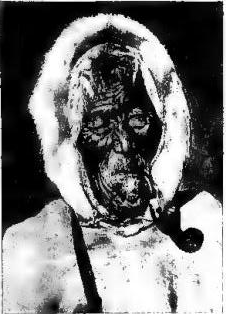
Eskimos (ESCHIMESI)
Collective name for a group of small tribes inhabiting Greenland, Labrador, the Canadian Arctic as far as Alaska, and Siberia. The Eskimos… -
Ethnology (ETNOLOGIA)
It is the science that studies the cultural manifestations of primitive populations. SUMMARY: I. Ethnology and its task. - II. Ethnology… -
Exogamy (ESOGAMIA)
The term e. (exogamy), introduced into sociology by Mc Lennan, means that rule, common to all peoples, by which a wife must be chosen… -
Falasha (Falà) - Emigrant, from Ge'ez Falata (to migrate) (FALASCIA (FALÀ) - EMIGRATO, DAL GE'EZ FALATA (MIGRARE))
Emigrant, from Ge'ez Falata (to migrate). - Small groups of Jewish religion in northern Ethiopia, in the area between Quara to the west of… -
Fetishism (FETICISMO)
The term fetish (enchantment, amulet), a word derived from the Latin factitius (cf. Italian fattura), was applied by the Portuguese, who… -
Functionalism (FUNZIONALISMO)
The founder of this ethnological school, originally English, is considered to be B. Malinowski, whose disciples include R. Firth, A. F.… -
Gomer
1. A people descended from Japheth according to the table of nations (Gen. 10:2; cf. 1 Chron. 1:5). In Akkadian inscriptions it appears in… -
Habiru
In numerous documents of the ancient Near East, varying in age and provenance, mention is made of groups and of persons called H. In the… -
Hevites (HEVEI)
A people settled in the land of Canaan and always included in the list of the whole group of peoples dwelling in the land before the… -
Hurrians (Hurri) (HURRITI (HURRI))
A people of the ancient Middle East with its own language (and literature), its own religion and probably also its own art. The term H.… -
Hyksos
With this term (Yakāc) Manetho designates the chieftains of Asiatic tribes who invaded Egypt at the end of the Middle Kingdom, settling in… -
Indo-European (INDOEUROPEI)
They are the peoples speaking Latin, Greek, Germanic, Celtic, Baltic, Slavic, Indian and Persian. SUMMARY: I. General remarks. - II.… -
Initiation (INIZIAZIONE)
From Lat. in-eo (hence initium, initiare) "to enter within," here in the sacral sense of being admitted among the participants of a given… -
Italo-Greeks (ITALO-GRECI)
These are the Greeks or Byzantines — merchants, ecclesiastics, soldiers, public officials — who moved to southern Italy and Sicily after… -
Kinship (Among Primitive Peoples) (PARENTELA (PRESSO I POPOLI PRIMITIVI))
Primitive peoples too distinguish a threefold kinship: by blood, by affinity, and legal-spiritual cognation, founded respectively on… -
Law (DIRITTO)
This noun, which may be called the common patrimony of the languages of civilized peoples, derives etymologically in a direct line from the… -
Levites (LEVITI)
Professional name of those charged with the Hebrew cult, subordinate to the priests, belonging to the tribe of Levi (v.), which was… -
Magyars (MAGIARI)
An Eastern people that at the end of the 9th century settled in the country which took from them the name of Magyarország, or Hungary.… -
Monotheism (MONOTEISMO)
I. THEOLOGY. - Monotheism (from μόνος θεός) is the doctrine that teaches that God is one only, inasmuch as, given his nature, he admits no… -
Nabataeans (NABATEI)
A powerful Arab people who in the last three centuries B.C. and in the early centuries A.D. acquired notable political and economic… -
Polytheism (POLITEISMO)
From Gr. πολίς = many and θεός = god, it is the belief in and worship of several divinities independent of one another, as opposed to… -
Primitives (PRIMITIVI)
Until about 1860 the question of "regression" or "degeneration" was still alive, that is, whether the primitive peoples, who were then… -
Prostitution (PROSTITUZIONE)
It is sexual activity exercised outside of marriage, especially by women and usually for profit, with anyone who requests it. It is said… -
Pygmies (PIGMEI)
This is the name given, from a Greek term (πυγμῶς = men as tall as a fist) already known to Homer, to the representatives of a highly… -
Qeniti (Cinei) (CINEI (QENITI))
From the Hebrew qêni or qajin, a collective singular, plural qênim. A tribe mentioned for the first time in Gen. 15:19, along with nine… -
Raphaim
A more generic descriptive term for the race that in the Stone Age populated Transjordan and some parts of Palestine (v. GIGANTI). The… -
Satisfaction (In Ethnology) (SODDISFAZIONE (NELLA ETNOLOGIA))
I. - Among primitive peoples, particularly among those ethnologically most ancient, there exists a moral ideal to which every person and… -
Semitic-Hamitic (SEMITO-CAMITI)
The name of Semites and Hamites goes back to the list of peoples in the Bible (Gen. 10), where a certain number of peoples are presented as… -
Totemism (TOTEMISMO)
I. DEFINIZIONE, DIVISIONE, ELEMENTI DEL T. - The term totem (totam, todam, ndodem) originates in the language of the Ojibwa (Algonquians)… -
Turco-Mongols (TURCO-MONGOLI)
I. The Turkish peoples have spread across Asia and Europe. In southeastern Europe there are the Ottoman Turks of Anatolia, the only ones… -
Ugro-Finns (UGROFINNICI)
A special linguistic family divided into two branches: the eastern or Ugric and the western or Finnic. To the first belong Hungarian, Vogul…