
BAHURIM. — A locality (Heb. Bahurim “young men”: district of the young; according to J. Fürst and J. P. van Kasteren: “deep place”) of the tribe of Benjamin, near Gensaalemme, on the road between it and Jericho. There Michol, while travelling from Gallim to Hebron, parted from Phaltiel (II Sam. 3:16; Septuagint Βαρχικη); there Semei cursed the fleeing King David, hurling stones at him from the heights (ibid. 16:5; Septuagint Βαυρικη); there Jonathan and Achimaas hid in a cistern (ibid. 17:18; Septuagint Βαυρικη). The commander of David’s militia, Azmaveth or Azmoth, was from B. (hab-barhumī, Vulgate de Beromi, ibid. 23:31, more correctly hab-bahārāmī in I Par. 11:33, Vulg. bauramites). It lay south of Gallim (the homeland of Phaltiel: II Sam. 25:44), east of the Mount of Olives.
The Targum of Jonathan wrongly identifies it with ‘Almit, which instead corresponds to the Levitical city Almon or Almath (Ios. 21:18; I Par. 6:60, Heb. 6:45), near Anathoth. B. is the present-day Rās et-Tmīm, a site near the ancient road to Jericho, where proto-Israelite, Seleucid, and Roman pottery has been found. Coming up from Jericho, the Piacenzan Anonymous writes (a. 570): «Non longe ab Hierusolima venimus in Baorin, deinde ad sinistram ad oppida Oliveti montis in Bethania» (ed. P. Geyer, Itinera Hierosolymitana saecc. IV-VIII [CSEL, 39], Vienna 1898, p. 170).
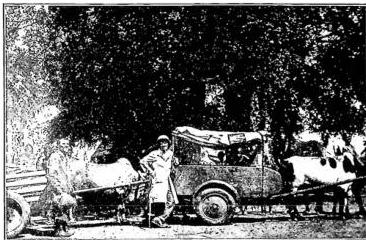
BAHR el-ĠAZAL — The Sons of the Sacred Heart of Verona visiting the interior of their mission.