
OUAHIGOUYA, APOSTOLIC PREFECTURE of. — It is located in French West Africa and was erected on 12 June 1947 with territory detached from the Apostolic Vicariate of Ouagadougou. It comprises the two administrative districts of O. and Koudougou, with an area of approximately 40,960 sq km.
The population of approximately 897,300 inhabitants is distributed, to the extent of two thirds, in the southern regions. In the northern and northeastern zones, the population density is very low: there live the nomadic tribes of the Peul race, inhabiting an almost desert land with scanty pastures. In the central part, the population is very dense and concentrated in large villages. It belongs to the Mossi and Gurunsi tribes.
The Catholics number 8,772 indigenous persons, 22 foreigners, and 19 of mixed origin; catechumens number 1,008; Protestants 1,470 and Muslims 152,600. The remainder are fetishists. The prefecture is entrusted to the White Fathers, who number 14, assisted by 2 indigenous priests and 9 indigenous nuns. There are 9 seminarians, studying at Koumi and Pabré. Catechists number 156, teachers 17. There are 6 principal mission stations and 47 secondary ones. Pharmacies 3. Elementary schools 3 with
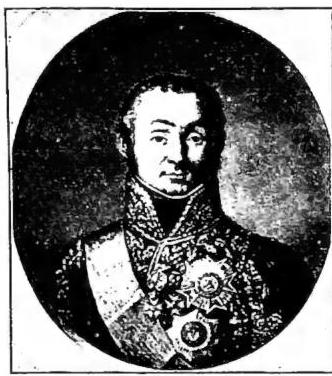
the marshal of the same name under Napoleon I, he entered the imperial army.
A cavalry officer, he took part in the campaigns in Spain, Russia, and Algeria. In 1849 he was entrusted with command of the expeditionary corps that was to land in the Papal States. The instructions given to him, both by the Ministry of War and by that of Foreign Affairs, were vague. The former simply ordered him to occupy Civitavecchia and then remain awaiting further instructions; the latter, drafted by Drouyn de Lhuys, then Minister of Foreign Affairs, in fact urged him, rather ambiguously, to proceed with the occupation of the city of Rome itself. O., having landed at Civitavecchia on 25 Apr. without encountering resistance from the Roman Republic, attempted four days later to enter Rome, but his attempt failed bloodily. O.’s setback was due to the hesitations of the French republican government, which, while seeking to provide some satisfaction to the various and conflicting currents within the National Assembly, also wished to counterbalance the direct Austrian intervention in favor of the Pope, an action that would have assured Vienna hegemony in the Italian question, something intolerable to the government of Paris. O., struck by the setback that wounded his honor as a soldier, sought full rehabilitation, which he obtained on 3 July with the occupation of Rome. Thus the Mazzinian Republic came to an end, and the return of Pius IX was made possible. In the meantime reelected as a deputy, O. took part in the sessions of the Legislative Assembly in Paris. During Louis Napoleon’s coup d’état, he was arrested because of his attitude and confined at Vincennes until 16 Dec. 1851.