
PUBLICANI (τελώναι). – Persons charged, under a contract for the farming of taxes, with collecting the taxes of the State. At Rome a distinction was made between the p. (from publicum, with vectigal understood), who constituted a powerful corporation (ordo publicanorum), and the portitores or exactores, who were their agents for the immediate collection.
Since the sum to be advanced to the State for the contract was considerable, the p. joined together in joint-stock companies (societas publicanorum), governed at Rome by a magister and in the provinces by a pro-magister. At Rome the p. often belonged to the equestrian order (the profession was considered unworthy of senators), and they were less despised than the τελώναι in Greece, where the saying “All p. are thieves” was proverbial. The system of tax farming, which assured the State a simple and easy collection of taxes, proved burdensome to the taxpayer because of the greed of the p., who sometimes had the very state authorities as their accomplices and participants in the profits (cf. Cicero, De aff., I, 42; Tacitus, Ann., XIII, 50).
The p. mentioned in the Gospel are (including Matthew-Levi, Mt. 9:9; Mk. 2:14; Lk. 5:27) collectors (portitores) rather than contractors for the taxes, with the probable exception of Zacchaeus, called ἀρχιτελώνης, “chief
Commercial advertising aims above all at creating fashion by introducing ever new needs, a fashion that creates differences within the uniformity of requirements. Advertising must persuade the public that an article of common use has qualities different from those of others and therefore corresponds to special requirements, consequently ensuring demand for II.
It may therefore be said that advertising is a means of social contact intended to provoke an attitude of approval or rejection on
of p.” (Lk. 19:2), who may have obtained the contract for the collection of taxes in the district of Jericho, where trade was very flourishing. Given the division of Palestine in the time of Jesus (ibid. 3:1), not all the p. there collected taxes for the same lord. The p. of Judaea and Samaria were direct agents of Rome; the others were hired by the tetrarchs. This also explains the difference between the position of Zacchaeus, in Jericho in Judaea, dependent on Pilate, and that of Matthew, in Capernaum in Galilee, in the tetrarchy of Herod Antipas.
That the p. were detested as greedy plunderers, as well as traitors to the religion and cause of Israel, is evident from profane sources and from the Gospel, although the latter also extends mercy to them. The p. are simply sinners (Mt. 9:10-13; 11:19; Mk. 2:15 ff.; Lk. 5:29-32; 7:34), to be placed alongside women of ill repute (Mt. 21:31 f.). Jesus Himself, adopting the language in common use, couples unbelievers and p. Yet He calls Levi and Zacchaeus to follow Him, sits at table with the p., and, in a classic parable, contrasts the p., conscious of his unworthiness and therefore humble, with the Pharisee, proud of a righteousness for which he attributes all the merit to himself (Lk. 18:9-14). The p. had listened submissively to the preaching of John the Baptist (ibid. 7:29 f.), who, putting his finger on the wound, commanded them not to exact more than had been established (ibid. 3:12 f.).
Rabbinic literature considered the repentance and salvation of the p. impossible (Bābha'gamma, 94b), placing them outright among thieves and murderers (Nedhārīm, III, 4), and it was permissible to deceive them when declaring goods subject to taxation. The p., however, could find mercy by reducing the sums to be paid by their fellow countrymen (Sanhedhrīn, 25b).
(photo Cantera)
Quadrato, to be distinguished from the homonymous apologist.
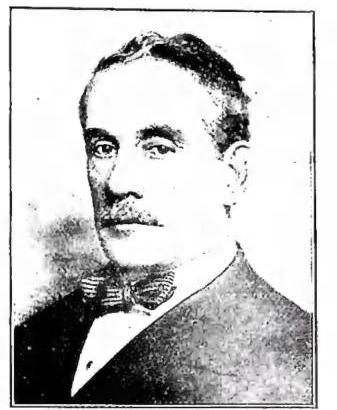
(photo Bollettini e Fratini, Florence) PUCCINI, GIACOMO — Portrait.