
ALCHIMIA. – The name derives from the Arabic al, article, and from the Greek χημία or χημεία = fusion. In the popular conception, a. is the science and at the same time the art of transforming metals into gold and silver. In reality, this is an excessively partial and one-sided conception that takes no account whatsoever of the vast and complex construction created by the true philosopher-alchemists (e.g. Paracelso). Indeed, the fundamental law of a. was that minerals, plants, animals, man, the astral entities of the celestial spheres, etc., are moved by the supreme Fat-
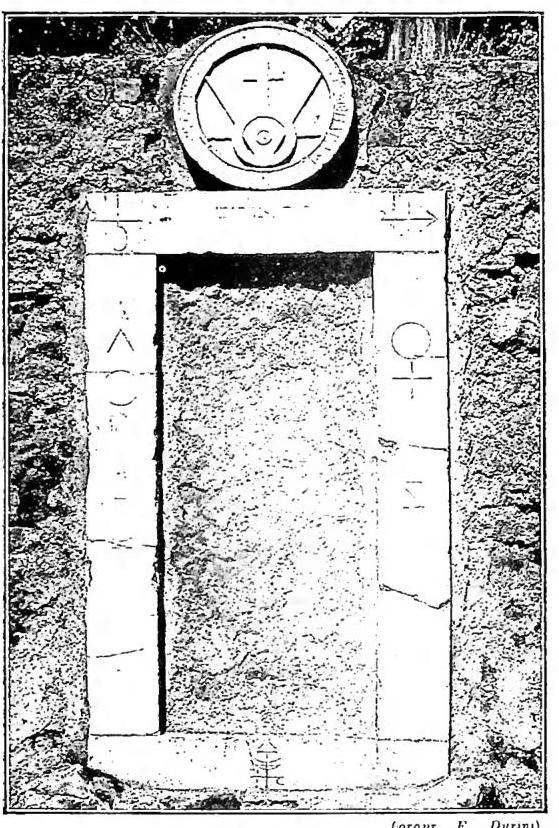
As far as chemistry is concerned, the foundations of alchemy were, in the Middle Ages, reduced to the following laws: 1) All species are immutable and cannot be transformed into one another. 2) Metals belong to a single species and can be transformed (reduced by purification) from the base state into gold, that is, into absolute purity.
In the chemical-pharmaceutical and iatrochemical field, alchemy held that illness was due to an imbalance of fluids created within the human sphere either by the action of foods or poisons, or, more often, by cosmic influences, that is, by the repercussions of meteorological or astronomical events upon the microcosm. Every organ of the human body therefore had a relation with the stars, and every metal likewise depended upon one of them. Therapeutics therefore had to use metals, or rather their salts, to restore the disturbed equilibrium within the human organism.
The basis of alchemy was continuous experimentation, but limited solely to thermal treatments of matter. Through this experimental method, the principal chemical discoveries were made, as well as the formation of a technical alchemy, whose representative in Italy was Vannoccio Biringuccio. Although a follower of the alchemical method of inquiry, he denied the second of the laws set out above. Many alchemists, from their researches into natural magic, sought, for purposes of profit or through religious deviation, to enter the field of black, that is, diabolical magic, incurring the gravest penalties; others resorted to the most criminal frauds and likewise fell into the hands of justice.
The means of obtaining the transformation of various metals into gold was represented by a hypothetical substance called the philosopher’s stone, from which derived the projection powder which, when cast upon the metallic compound to be purified, effected the transformation. In the human sphere, the corresponding substance was the elixir of long life, another hypothetical substance which, as a drug, was supposed to reproduce physiological equilibrium, enabling one to reach the most extreme limits of natural life by eliminating illnesses as causes of death.
From the standpoint of religion, alchemy was not condemned if it was practiced with honest intentions consonant with morality. Under these conditions, the Council of Trent declared this art lawful provided that no fraud was involved. A medieval tradition made s. Domenico the possessor of a secret for transmutation. This secret was supposedly transmitted to s. Alberto Magno through the spiritual heirs of the holy founder, and from s. Alberto it passed to s. Tommaso d'Aquino. All this—which has been shown to be entirely without foundation—was said in order to lend authority to the supposed attribution to s. Tommaso of two short treatises: one on the philosopher’s stone and one on the art of alchemy. These two little books, the second of which is dedicated to a certain friar Reginaldo, would appear to be the work of another Dominican, a friend of s. Tommaso; the latter, for his part (In II Sent., d. 7, III, sol. VI), while showing himself perfectly familiar with alchemical operations, very often reveals himself to be skeptical regarding this science, doubting the possibility of transforming metals.
Among the alchemists officially recognized is also Raimondo Lullo. It is written on the flyleaf of a 14th-century codex (in Italian script, originating from Spain): «Raimondo finished this reading in the city of Genoa in the year of Our Lord 1303, on the first day of February, in
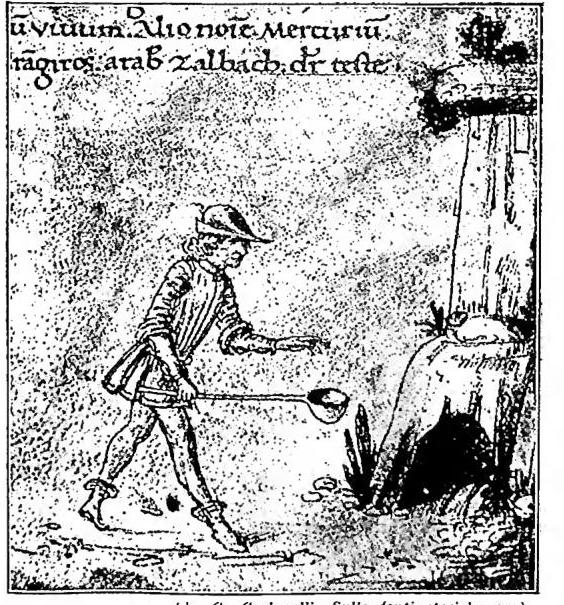
A. could become a sinful art because of the means employed and the ends pursued through fraud. One of the most celebrated examples was the marshal of France, Gilles de Laval, whom legend transformed into the infamous Barbabli.
As regards the transmutation of metals, today the alchemists’ dream may be said to have been realized in the artificial transmutations of the elements (v. NUCLEO), but, naturally, on entirely different foundations.