
CAPREOLUS OF CARTHAGE, saint. — From 430 until the year of his death, July 437, he was archbishop of Carthage. Three letters of his are known, arranged in chronological order as follows:
1st Letter to Theodosius II, emperor of the East, who in 431 summoned the bishops to the Council of Ephesus, chiefly to examine the doctrines propagated by Nestorius. Theodosius also wrote to St. Augustine, bishop of Hippo, asking him to attend the Council at Ephesus, and sent with the letter a certain Ebagnius, who, upon arriving in Carthage, learned from C. that Augustine was dead. Having then received a letter from C. for the emperor, he returned to Constantinople. Of this letter, only a passage has come down to us, cited by Fulgentius Ferrandus, from which it may be inferred that C. asked the emperor to uphold the Pelagian case as already judged and not to allow debate to be reopened on questions that had already been settled.
2nd Letter to the Council of Ephesus. Having learned of the convoca-
CAPREOLO CARTAGINESE, SAINT
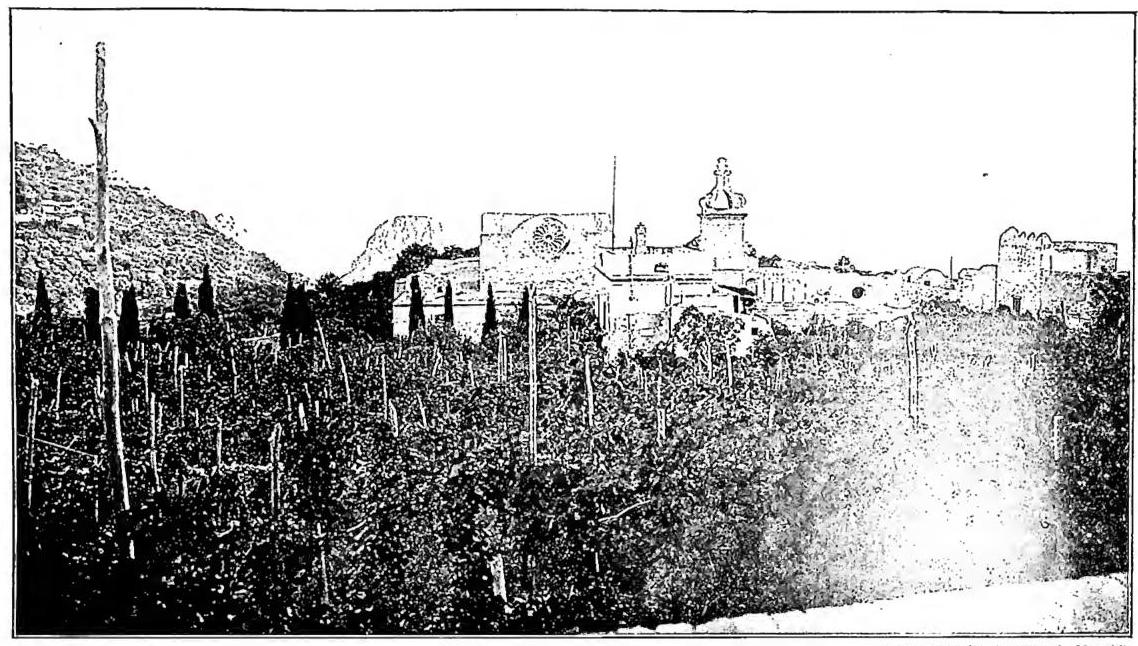
## CAPRIOLO, DOMENICO CAPRI - The Charterhouse (built between 1371 and 1374).
3rd Letter to Vitale and Tonanzio (or Costanzo?): two laymen, seemingly Spanish, who had turned to C. to ask for explanations on certain points of Catholic doctrine in relation to the Nestorian controversy. C. responds that Nestorius had been condemned shortly before at Ephesus; he then solidly demonstrates, with numerous quotations from Holy Scripture, that in Jesus Christ one must recognize two natures and one person; finally, he exhorts them to read the sacred books and those of the Doctors of the Church, in which is found what the true faith obliges one to believe.
The Sermo de tempore barbarico, which Tillemont (later refuted by Bardenhewer) attributed to C., has been reclaimed by Morin for the Carthaginian deacon Quodvultdeus.
The name of C. was inserted into the catalogue of saints in the calendar of the Church of Carthage.