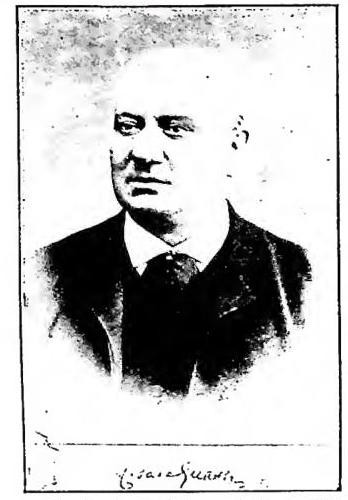
GUARINO il VERONESE. — Humanist, born in Verona in 1374, died in Ferrara on 4 December 1460. A pupil at Padua of Giovanni Conversino da Ravenna and at Constantinople of Crisoloro, on returning to his homeland he taught classical literature at Florence, Venice, and Verona, until in 1429 he was summoned to Ferrara by Prince Nicolò III d’Este to educate his son Lionello. There G. began teaching grammar, rhetoric, and history both at the University and in his own home. In the latter, as previously at Verona, he established a kind of boarding school, to which pupils came from every quarter, including from abroad; it was free for poor students and conducted in an intimate family spirit.
Classical culture, in which pagan and Christian authors were read and commented upon in harmonious conjunction, was combined with physical exercises (gymnastics, hunting, dancing, swimming), thus cultivating all the spiritual and physical faculties of the pupil and forming him as both healthy and learned. He continued his work through personal correspondence with his pupils, offering them advice and encouragement appropriate to their various circumstances. This makes the abundant correspondence particularly interesting (edited by R. Sabbadini, 3 vols., Venice 1915–19).
Without wishing to regard the times preceding him as darkened by ignorance, it cannot nevertheless be denied that G. exercised a considerable influence on the culture of Ferrara, both with regard to the traditions of the boarding school and with regard to classicism, because he knew how to cultivate the study of authors not as an end in itself or merely for aesthetic enjoyment, but for genuine preparation for life, supervising it and permeating it with a religious spirit. Practices of piety were in fact frequent, and G. led his pupils by his example.
A passionate researcher of manuscripts, he emended and prepared editions of classical authors (Caesar, Gellius, the two Plinys, etc.), translated the first book of Herodotus, Isocrates, Plutarch (De liberis educandis, 1476), Lucian, and Strabo, and also occupied himself with grammatical (Regulae grammaticales, 1470) and philological questions.
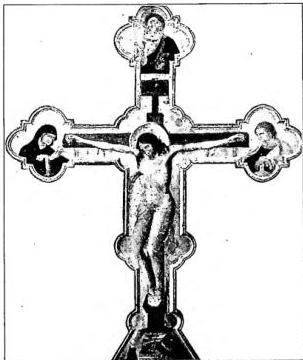
(Alinari photograph)
GUARIENTO PADOVANO – Crucifix bearing the signature of G. Bassano, Civic Museum.