
RAHAB (Hebr. Rāḥābh). — A prostitute of Jericho, who received and Joshua (v.), encamped beyond the Jordan.
Impressed by what was being told about the Hebrews who had come out of Egypt, and convinced that God had decreed their dominion over Palestine, she protected the two spies, misleading the searches of her fellow citizens. In reward, she obtained the oath that she would be spared, together with her family, on the day of the occupation; she fulfilled the agreed condition (a red cord at the window), and the promise was kept (Ios. 2, 2-21; 6, 17-25). Converted to the Israelite religion, she married Salmon of the tribe of Judah and had as her son Booz, the future husband of Ruth (Ruth 4, 21; Mt. 1, 5). Her faith was praised in writings of the New Testament (Hebr. 11, 31; Iac. 2, 25).
In Ps. 86, 4 and Is. 30, 7, R. is the symbolic name of Egypt. Elsewhere (Ps. 88, 10 ff.; Iob 9, 13; 26, 12 ff.; Is. 51, 9) it denotes a monster personifying pride and rebellion against God; today these texts are generally understood as a literary reference to the myth
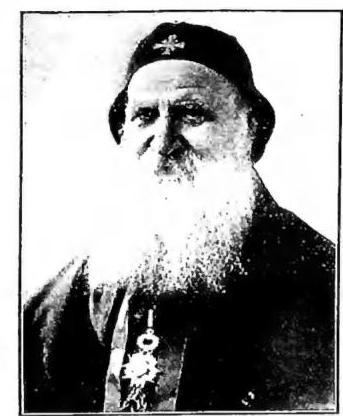
(courtesy of nona, Giorgio Knapati)
A pastor of extraordinary activity, he founded churches, schools, seminaries, religious houses, orphanages, and printing presses; he defended and comforted his flock especially during the war of 1914–17, and worked successfully for the return of dissidents (1 patriarch, 5 bishops, 30 priests or religious, and thousands of faithful). As bishop, he was the soul of the national Synod of Sciarfa (1888).
Through the publication and translation of several previously unpublished Syriac writings, and especially of the apocryphal Testamentum Domini (Mainz 1899), R. earned the esteem of European scholars. Among the liturgical books, revised according to the text of the ancient manuscripts that he had examined and copied in the libraries of Europe and acquired in the East, are the Rituale (1914–22) and the Messale (1922). In 1926 he founded an Arabic monthly journal (Documenti d'Oriente) and crowned his scholarly work with the richly documented, though not entirely free from inaccuracies, Les liturgies orientales et occidentales étudiées séparément et comparées entre elles (Beirut 1929). Other important works are: Acta ss. confessorum Guriae et Shamonae exorata Syriaca lingua a Theophilo Edesseno a. Chr. 297 (Rome 1899); S. Ephraemi Hymni de Virginitate (Sciarfa 1906); Studia Syriaca seu Collectio documentorum hactenus ineditorum (5 fasc., there 1904–undated).