SALOMÈ

### SALOME

SALOME - S. brings the head of St. John to Herod and Herodias; Musicians depicted under Doge A. Dandolo (1343-54) - Venice, Basilica of St. Mark, Baptistery.

---

### PSALMODY (SALMODIA)

I. GENERAL REMARKS. — Psalmody is the chanting of the psalms, which constitutes the essential part of the Divine Office and the Mass. It is the oldest and most solemn form of liturgical chant. The psalms are sung in a simple recitative style, called *recto tono*, or in a more ornate style, called *psalmodia*.

II. **S. SIMPLE.** — This is the most ancient form of psalmody. It is used in the Divine Office during the Triduum Sacrum of Easter and its octave, on November 2nd, and in particular circumstances such as the Litany of the Saints, the Rogations, etc. St. Benedict prescribes it in the "psalms of expectation" of Matins and Lauds, and at Compline every day. All these psalms are sung, as mentioned, without an antiphon.

At Mass, it is used in the chant of the Tract in an ornate form. The Tract follows a reading or the chant of the Gradual (after the suppression of the intermediate reading). It is sung from Septuagesima to Easter on all Sundays, on the feasts of the Saints, and on the weekdays of Lent; during the rest of the year, it is found on the Saturday of the Ember Days and in the Masses for the Dead. Today, the Tract is no longer sung by a soloist but alternately, as in other systems. It is not permissible to omit or abbreviate it, nor is it allowed to recite it simply, unless the organ accompanies it during the time.

Article illustration

III. **S. RESPONSORIAL.** — Its simplest form is found in the minor Hours of the Office, after the Chapter: it is the short responsory, very brief, almost syllabic. The cantor sings the responsory, the choir repeats it; then the cantor says the verse and the choir repeats the second part of the responsory; the cantor says the verse and the choir repeats the entire responsory.

The Roman Antiphonary has preserved different melodies for the various times of the year. St. Benedict established the short responsory not in the minor Hours, but in the major ones: Lauds and Vespers. The same system, slightly more ornate, is found in the invitatory and in the hymn *Benedictus* on the Saturday of the Ember Days.

The ornate form is found in the great responsories of Matins, composed like the short responsories but with a longer text and a much more ornate melody. These responsories are sung after each lesson. Some monastic liturgies also have a great responsory of this kind at Vespers of solemn feasts, at the Gradual, at the Offertory, and at the Alleluia of solemn Masses. Today, these pieces have almost entirely lost their form. The Gradual is intoned by the soloist and continued by the choir; then the soloist sings the verse and the choir joins in to sing the end of the verse as a refrain. The Alleluia follows the chant of the Gradual except during penitential times. The soloist intones the Alleluia, which is taken up by the choir and extended by a long melisma or *jubilus*, expressing joy; the verse is then sung by the soloist and ends with a *jubilus* sung by all; then the soloist again sings Alleluia and the choir continues the *jubilus*. The chant of the Offertory in ancient times accompanied the offering of bread and wine by the faithful; today, only an antiphon remains of this psalm. Only the Offertory of the Mass for the Dead has preserved the responsorial form.

IV. **S. ANTIPHONAL.** — This constitutes the most important part of the Divine Office. The simplest form is used for the psalms of the different Hours. After the antiphon is sung or simply announced, the cantor intones the first verse of the psalm, which is then continued by the first choir; then the second choir sings the second verse, and so on alternately until the end. Only the first verse has an intonation; the others begin on the tenor. However, in the evangelical canticles, an intonation is made for each verse. There exists, in the eight tones, a more ornate modulation for the first part of the verse, which can be used in the canticles of solemn feasts.

This system is also found in the Introit and Communion of the Mass. Today, only the antiphon, the first verse of the psalm, and the *Gloria* remain of the Introit. The tones are more ornate than those of the simple psalmody of the Office and are also better preserved in manuscripts. An intonation is made for all the verses and even for each part of the verse; the cadences have a more complex melodic design, and the final cadence of the *Gloria Patri* is even more ornate to prepare for the repetition of the antiphon.

The final cadences also have the peculiarity of not being tonic but syllabic, adapting to the number of syllables rather than to the accents, as in the verses of the responsories. The psalm of the Communion, sung to the same tone as the Introit, has today completely disappeared, except in the Mass for the Dead.

V. PSALMODY IN POLYPHONY. — The chanting of the psalms has also inspired polyphonists. We are not speaking of large compositions in the form of cantatas or oratorios, which do not belong to the liturgical Office. *"Psalmi igitur symphoniaici (di concerto) excluduntur prorsus ac vetantur"* (Motu Proprio of Pius X, November 22, 1903). The responsorial psalmody gave rise to the magnificent responsories of Palestrina, Ingegneri, Victoria, to name but a few among the ancients. The same antiphonal psalmody inspired musicians who harmonized the psalmodic formulas in fauxbourdon. Polyphonic singing is permitted on solemn feasts; the Roman basilicas provide a fine example. Pius X, in his Motu Proprio, permits alternating Gregorian chant by the choir with fauxbourdons, for which numerous formulas adapted to the different tones of the psalms exist. The same Pope also allows the entire psalmody to be sung in music, provided that the alternation of the choirs is preserved.

**

BIBL.:** P. Wagner, *Einführung in die gregorian. Melodien*, III. Gregorian. Formenlehre, Leipzig 1919; P. Ferretti, *Estetica gregoriana*, Rome 1934; E. Cardine, *La Psalmodie des Inroits*, in *Rev. Grégor.*, 26 (1947), pp. 172 and 229; F. Romita, *Les musiciens liturgiques*, Rome 1947; J. Froger, *Les chants de la Messe aux VIIIe et IXe siècles*, Tournai 1950. Carlo Desportes

---

### SALOME

The name of several Jewish women. The most notable are:

1. **SALOME**, wife of Alexander Jannaeus (v.); she reigned after him under the name Alexandra-Salome (v.).
2. **SALOME**, sister of Herod the Great (v.). She incited him to kill his wife Mariamme and his sons Alexander, Aristobulus, and Antipater.
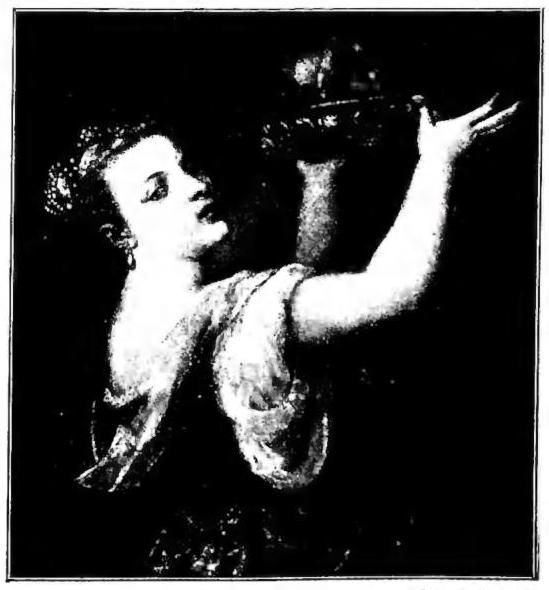
3. **SALOME**, daughter of Herodias (v.) and Herod Philip (v. FILIPPO ERODE), not named in the Gospels but presented as the "girl" (*χορεύουσα*) who danced at a banquet of Herod Antipas (v.), held at Machaerus, and obtained from the tetrarch, at her mother's instigation, the head of John the Baptist (Mt. 14:1-12; Mk. 6:14-29).

She later married her uncle Herod Philip, tetrarch of Ituraea, and, after his death (34 AD), married her cousin Herod, king of Chalcis, by whom she had three sons: Herod, Agrippa, and Aristobulus (Flavius Josephus, *Antiquitates Judaicae*, 18.5.4; 20.8.4). A legend by Nicephorus (*Historia ecclesiastica*, 1.20; PG 145, 692) claims that S. perished, decapitated by ice, while crossing a frozen river.

**

BIBL.:** G. Vitaletti, *S. nella leggenda e nell'arte*, Rome 1908; U. Holzmeister, *Chronologia vitae Christi*, ibid. 1933, pp. 205-207; G. Ricciotti, *Storia d'Israele*, II, Turin 1934, nn. 368, 370-371.

4. **SALOME**, daughter of Herod the Great and Elpis (Flavius Josephus, *Bellum Judaicum*, I, 563; *Antiquitates Judaicae*, XVIII, 21).

5. **SALOME**, wife of Zebedee (v.), mother of the apostles James the Greater and John. She was among the pious women who followed Jesus and ministered to Him (Mk. 15:40-41; Lk. 8:2-3). She asked Jesus for places of honor for her two sons and received a rebuke (Mt. 20:20 ff.). She followed the Master on His final journey.

Article illustration

### SALOME — N. M. (Mt. 14:1-12; Mk. 6:14-29)

She later married her uncle Herod Philip, tetrarch of Ituraea, and, after his death (34 AD), married her cousin Herod, king of Chalcis, by whom she had three sons: Herod, Agrippa, and Aristobulus (Flavius Josephus, *Antiquitates Judaicae*, 18.5.4; 20.8.4). A legend by Nicephorus (*Historia ecclesiastica*, 1, 20; PG 145, 692) claims that S. perished, decapitated by ice, while crossing a frozen river.

4. S. daughter of Herod the Great and Elpis (Flavius Josephus, *Bell. Jud.*, I, 563; *Antiq. Jud.*, XVIII, 21).

5. S. wife of Zebedeo (q.v.), mother of the apostles James the Greater and John. She was among the pious women who followed Jesus and ministered to Him (Mk. 15:40-41; Lk. 8:2-3). She asked Jesus for places of honor for her two sons and received a rebuke for it (Mt. 20:20 ff.). She followed the Master on His final journey.

**SALOME - N. M. (Mt. 14:1-12; Mk. 6:14-29).**

S. then married her uncle Herod Philip, tetrarch of Iturea, and after his death (34 A.D.) married her cousin Herod, king of Chalcis, by whom she had three sons: Herod, Agrippa, Aristobulus (Flavius Josephus, *Antiq. Jud.*, 18, 5, 4; 20, 8, 4). A legend of Nicephorus (*Hist. eccl.*, I, 20; PG 145, 692) claims that S. perished, beheaded by ice, while crossing a frozen river.

**

BIBL.:** G. Vitaletti, *S. nella leggenda e nell'arte*, Roma 1908; U. Ilolzmeister, *Chronologia vitae Christi*, ivi 1933, pp. 205-207; G. Ricciotti, *Storia d'Israele*, II, Torino 1934, nn. 368, 370-371.S. then married her uncle Herod Philip, tetrarch of Iturea, and after his death (34 AD) married her cousin Herod, king of Chalcis, by whom she had three sons: Herod, Agrippa, Aristobulus (Flavius Josephus, *Antiquitates Judaicae*, 18, 5, 4; 20, 8, 4). A legend by Nicephorus (*Historia ecclesiastica*, 1, 20; PG 145, 692) claims that S. perished, beheaded by ice, while crossing a frozen river.

**

BIBL.:** G. Vitaletti, *S. nella leggenda e nell'arte*, Roma 1908; U. Holzmeister, *Chronologia vitae Christi*, ibid. 1933, pp. 205-207; G. Ricciotti, *Storia d'Israele*, II, Torino 1934, nn. 368, 370-371.

4. S. daughter of Herod the Great and Elpis (Flavius Josephus, *Bellum Judaicum*, I, 563; *Antiquitates Judaicae*, XVIII, 21).

5. S. wife of Zebedee (q.v.), mother of the apostles James the Greater and John. She was among the pious women who followed Jesus and ministered to Him (Mk 15:40-41; Lk 8:2-3). She asked Jesus for places of honor for her two sons and received a rebuke (Mt 20:20 ff.). She followed the Master on His final journey.

**SALOME — N. M. (Mt 14:1-12; Mk 6:14-29).**

S. then married her uncle Herod Philip, tetrarch of Iturea, and after his death (34 AD) married her cousin Herod, king of Chalcis, by whom she had three sons: Herod, Agrippa, Aristobulus (Flavius Josephus, *Antiquitates Judaicae*, 18, 5, 4; 20, 8, 4). A legend by Nicephorus (*Historia ecclesiastica*, 1, 20; PG 145, 692) claims that S. perished, beheaded by ice, while crossing a frozen river.

**

BIBL.:** G. Vitaletti, *S. nella leggenda e nell'arte*, Roma 1908; U. Holzmeister, *Chronologia vitae Christi*, ibid. 1933, pp. 205-207; G. Ricciotti, *Storia d'Israele*, II, Torino 1934, nn. 368, 370-371.

4. S. daughter of Herod the Great and Elpis (Flavius Josephus, *Bellum Judaicum*, I, 563; *Antiquitates Judaicae*, XVIII, 21).

5. S. wife of Zebedee (q.v.), mother of the apostles James the Greater and John. She was among the pious women who followed Jesus and ministered to Him (Mk 15:40-41; Lk 8:2-3). She asked Jesus for places of honor for her two sons and received a rebuke (Mt 20:20 ff.). She followed the Master on His final journey.

**SALOME — N. M. (Mt 14:1-12; Mk 6:14-29).**S. then married her uncle Herod Philip, tetrarch of Iturea, and after his death (34 AD) she married her cousin Herod, king of Chalcis, by whom she had three sons: Herod, Agrippa, Aristobulus (Flavius Josephus, *Antiquitates Judaicae*, 18, 5, 4; 20, 8, 4). A legend by Nicephorus (*Historia ecclesiastica*, 1, 20; PG 145, 692) claims that S. perished, decapitated by ice, while crossing a frozen river.

**

BIBL.:** G. Vitaletti, *S. nella leggenda e nell'arte*, Roma 1908; U. Holzmeister, *Chronologia vitae Christi*, ivi 1933, pp. 205-207; G. Ricciotti, *Storia d'Israele*, II, Torino 1934, nn. 368, 370-371.

4. S. daughter of Herod the Great and Elpis (Flavius Josephus, *Bellum Judaicum*, I, 563; *Antiquitates Judaicae*, XVIII, 21).

5. S. wife of Zebedee (v.), mother of the apostles James the Greater and John. She was among the pious women who followed Jesus and ministered to him (Mk 15:40-41; Lk 8:2-3). She asked Jesus for places of honor for her two sons and received a rebuke (Mt 20:20 ff.). She followed the Master on his final journey.

**SALOME - N. M. (Mt 14:1-12; Mk 6:14-29).**

S. then married her uncle Herod Philip, tetrarch of Iturea, and after his death (34 AD) she married her cousin Herod, king of Chalcis, by whom she had three sons: Herod, Agrippa, Aristobulus (Flavius Josephus, *Antiquitates Judaicae*, 18, 5, 4; 20, 8, 4). A legend by Nicephorus (*Historia ecclesiastica*, 1, 20; PG 145, 692) claims that S. perished, decapitated by ice, while crossing a frozen river.

**

BIBL.:** G. Vitaletti, *S. nella leggenda e nell'arte*, Roma 1908; U. Holzmeister, *Chronologia vitae Christi*, ivi 1933, pp. 205-207; G. Ricciotti, *Storia d'Israele*, II, Torino 1934, nn. 368, 370-371.

4. S. daughter of Herod the Great and Elpis (Flavius Josephus, *Bellum Judaicum*, I, 563; *Antiquitates Judaicae*, XVIII, 21).5. S. wife of Zebedee (v.), mother of the apostles James the Greater and John. She was among the pious women who followed Jesus and ministered to him (Mk. 15:40-41; Lk. 8:2-3). She asked Jesus for places of honor for her two sons and received a rebuke for it (Mt. 20:20 ff.). She followed the Master on his final journey.

**SALOME - N. M. (Mt. 14:1-12; Mk. 6:14-29).**

S. then married her uncle Herod Philip, tetrarch of Ituraea, and after his death (34 A.D.), she married her cousin Herod, king of Chalcis, by whom she had three sons: Herod, Agrippa, Aristobulus (Flavius Josephus, *Antiquitates Judaicae*, 18, 5, 4; 20, 8, 4). A legend by Nicephorus (*Historia ecclesiastica*, 1, 20; PG 145, 692) claims that S. perished, beheaded by ice, while crossing a frozen river.

**

BIBL.:** G. Vitaletti, *S. nella leggenda e nell'arte*, Roma 1908; U. Holzmeister, *Chronologia vitae Christi*, ivi 1933, pp. 205-207; G. Ricciotti, *Storia d'Israele*, II, Torino 1934, nn. 368, 370-371.

4. S. daughter of Herod the Great and Elpis (Flavius Josephus, *Bellum Judaicum*, I, 563; *Antiquitates Judaicae*, XVIII, 21).

5. S., wife of Zebedee (v.), mother of the apostles James the Greater and John. She was among the pious women who followed Jesus and ministered to him (Mk 15:40-41; Lk 8:2-3). She asked Jesus for places of honor for her two sons and received a rebuke for it (Mt 20:20 ff.). She followed the Master on his final journey.

**SALOME - N. M. (Mt 14:1-12; Mk 6:14-29).**

S. later married her uncle Herod Philip, tetrarch of Ituraea, and after his death (34 A.D.) married her cousin Herod, king of Chalcis, by whom she had three sons: Herod, Agrippa, Aristobulus (Flavius Josephus, *Antiquitates Judaicae*, 18, 5, 4; 20, 8, 4). A legend of Nicephorus (*Historia ecclesiastica*, 1, 20; PG 145, 692) claims that S. perished, beheaded by ice, while crossing a frozen river.

**

BIBL.:** G. Vitaletti, *S. nella leggenda e nell'arte*, Roma 1908; U. Holzmeister, *Chronologia vitae Christi*, ivi 1933, pp. 205-207; G. Ricciotti, *Storia d'Israele*, II, Torino 1934, nn. 368, 370-371.

4. S., daughter of Herod the Great and of Elpis (Flavius Josephus, *Bellum Judaicum*, I, 563; *Antiquitates Judaicae*, XVIII, 21).**SALOME - N. M. (Mt. 14, 1-12; Mc. 6, 14-29).**

4. S. daughter of Herod the Great and of Elpis (Flavius Josephus, *Bell. Jud.*, I, 563; *Antiq. Jud.*, XVIII, 21).

5. S. wife of Zebedee (see), mother of the apostles James the Greater and John. She was among the pious women who followed Jesus and ministered to Him (Mk. 15, 40-41; Lk. 8, 2-3). She asked Jesus for places of honor for her two sons and received a rebuke for it (Mt. 20, 20 ff.). She followed the Master on His final journey.

S. later married her uncle Herod Philip, tetrarch of Ituraea, and, after his death (34 A.D.), married her cousin Herod, king of Chalcis, by whom she had three sons: Herod, Agrippa, Aristobulus (Flavius Josephus, *Antiq. Jud.*, 18, 5, 4; 20, 8, 4). A legend of Nicephorus (*Hist. eccl.*, 1, 20; PG 145, 692) claims that S. perished, beheaded by ice, while crossing a frozen river.

**

BIBL.:** G. Vitaletti, *S. nella leggenda e nell'arte*, Roma 1908; U. Ilolzmeister, *Chronologia vitae Christi*, ivi 1933, pp. 205-207; G. Ricciotti, *Storia d'Israele*, II, Torino 1934, nn. 368, 370-371.**SALOME — N. M. (Mt. 14, 1-12; Mc. 6, 14-29).**

4. S. daughter of Herod the Great and Elpis (Flavius Josephus, *Bell. Jud.*, I, 563; *Antiq. Jud.*, XVIII, 21).

5. S. wife of Zebedee (v.), mother of the apostles James the Greater and John. She was among the pious women who followed Jesus and ministered to Him (Mk. 15, 40-41; Lk. 8, 2-3). She asked Jesus for places of honor for her two sons and received a rebuke (Mt. 20, 20 ff.). She followed the Master on His final journey.

S. later married her uncle Herod Philip, tetrarch of Ituraea, and after his death (34 A.D.) married her cousin Herod, king of Chalcis, by whom she had three sons: Herod, Agrippa, Aristobulus (Flavius Josephus, *Antiq. Jud.*, 18, 5, 4; 20, 8, 4). A legend by Nicephorus (*Hist. eccl.*, 1, 20; PG 145, 692) claims that S. perished, beheaded by ice, while crossing a frozen river.

**

BIBL.:** G. Vitaletti, *S. nella leggenda e nell'arte*, Roma 1908; U. Ilolzmeister, *Chronologia vitae Christi*, ivi 1933, pp. 205-207; G. Ricciotti, *Storia d'Israele*, II, Torino 1934, nn. 368, 370-371.

4. S. daughter of Herod the Great and Elpis (Flavius Josephus, *Bell. Jud.*, I, 563; *Antiq. Jud.*, XVIII, 21).

5. S. wife of Zebedee (v.), mother of the apostles James the Greater and John. She was among the pious women who followed Jesus and ministered to Him (Mk. 15, 40-41; Lk. 8, 2-3). She asked Jesus for places of honor for her two sons and received a rebuke (Mt. 20, 20 sg.). She followed the Master on His final journey.

**SALOME — N. M. (Mt. 14, 1-12; Mc. 6, 14-29).**S. then married her uncle Herod Philip, tetrarch of Iturea, and after his death (34 AD) married her cousin Herod, king of Chalcis, by whom she had three sons: Herod, Agrippa, Aristobulus (Flavius Josephus, *Antiquitates Judaicae*, 18, 5, 4; 20, 8, 4). A legend by Nicephorus (*Historia ecclesiastica*, 1, 20; PG 145, 692) claims that S. perished, beheaded by ice, while crossing a frozen river.

**

BIBL.:** G. Vitaletti, *S. nella leggenda e nell'arte*, Roma 1908; U. Holzmeister, *Chronologia vitae Christi*, ibid. 1933, pp. 205-207; G. Ricciotti, *Storia d'Israele*, II, Torino 1934, nn. 368, 370-371.

4. S., daughter of Herod the Great and Elpis (Flavius Josephus, *Bellum Judaicum*, I, 563; *Antiquitates Judaicae*, XVIII, 21).

5. S., wife of Zebedee (q.v.), mother of the apostles James the Greater and John. She was among the pious women who followed Jesus and ministered to Him (Mk 15:40-41; Lk 8:2-3). She asked Jesus for places of honor for her two sons and received a rebuke (Mt 20:20 ff.). She followed the Master on His final journey.

**SALOME - N. M. (Mt 14:1-12; Mk 6:14-29).**