
SIMEONE NEMANJA. - B. c. 1114 in Ribnica (today Podgorica in Montenegro), where his
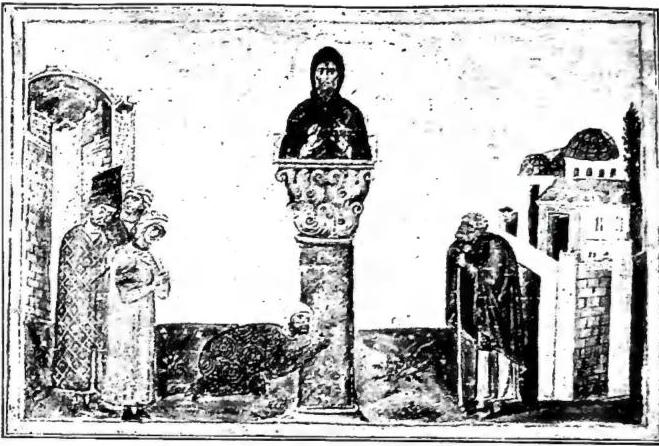
(Int. Biblioteca Vaticana)
Having become in 1172 supreme count (veliki čupan) of Rascia, he made it the core of the future Serbian state, beginning from there the territorial expansion which was continued until 1371 by his successors, all bearing the name of Stefan. But among the Serbs the religious influence of Byzantine "orthodoxy" was stronger than that of the Latin West; therefore their expansion toward the West was constantly accompanied by the spread of "orthodoxy." However, under the Nemanja dynasty, relations with Rome continued, particularly intense in Zeta, where Catholic influence was powerful at the time. Thus Pope Clement III addressed (25 Nov. 1189) a letter « Dilectis filius, nobilibus viris Megajupano, Strascimiro et Miroslavo », brothers of Stefan, in which he commended Archbishop Bernard of Ragusa, who had jurisdiction over the territories of these two princes and that of Rascia. Nemanja then sent gifts to the basilicas of SS. Peter and Paul in Rome and of St. Nicholas in Bari, and was always hostile to the sect of the Bogomils, doing everything to eradicate it from Serbia. On 25 March 1195 Nemanja abdicated the throne, became a monk with the name of S. and lived in various monasteries in Serbia, some of which were founded by him, among them the famous monastery of Studenica, which still exists today. In 1197 he went to Mount Athos where his son Sava was already staying, and founded the monastery of Hilandar, which later became the center of Serbian religious culture, where S. N. died on 13 Feb. 1200.
The Serbian Church celebrates him as a saint on 13 Feb., while his relics were later transported from Hilandar to Studenica.