
MONTENEGRO. – Today, one of the six republics federated within the Yugoslav state.
I. GEOGRAPHY
M. (or Cernagora) consists of the southernmost portion of the Dinaric Alps, on the boundary between Herzegovina and the Albanian Alps; it is a mountainous and rugged land, where broad karstic “dolines” and “fields” alternate with ravines and deep valleys (Zeta, Moraca). It is therefore generally arid and often barren and desolate. The short coast on the Adriatic opens into the winding inlet of the Bay of Kotor and ends at the mouth of the Bojana, which drains Lake Scutari, partly in Albania. The economy is pastoral-agricultural in character (vines, olives, fruit, and tobacco). There are few noteworthy population centres. The capital of the present-day Republic (13,967 sq km, with 376,573 inhabitants; density 27 per sq km), Podgorica (now Titograd, 12,000 inhabitants), has replaced the old capital, Cettigne.II. CIVIL HISTORY
Present-day M. assumed this name and a definite character only in the first half of the fifteenth century, as the development of one of the earliest state formations of the Serbs (the majority of whom among the Montenegrins followed the schism of Michael Cerularius), the so-called Zeta (12th cent.), a territory which, having remained substantially immune—owing to its rugged and mountainous character—from invasions, was later to preserve for a long time a Western and Latin imprint. Indeed, M. entered history in 1452 under the aegis of Venice, which entrusted Stefano Crnojević with the office of captain and duke of Upper Zeta. In this capacity M. long represented in the Balkans the outpost of Venice and of Christendom against the Turks, who, after repeated assaults and the fiercest struggles, overcame the resistance of the Montenegrins in 1499 and occupied Cettigne, expelling the Crnojević family. From this time and for approximately two centuries, the Montenegrins lived isolated in their mountains without actually submitting to Ottoman rule, recognizing their spiritual and, at the same time, political unity in the vladika (bishop) of Cettigne, dependent on the patriarch of Peć, and in the “Orthodox” religion. Those who remained faithful to Rome gathered around Antivari, which had succeeded Dioclea in 1024 as the metropolitan see of Upper Dalmatia or Prevalitana, with primatial rights recognized by Alexander II in 1067 and by Clement III in 1083. When, after Vienna (1683), Christendom resumed its offensive against the Ottoman Empire along the Danube, the Montenegrin tribes were the first to rise under the aegis of Venice, which nevertheless failed at Carlowitz (1699) to free them from Ottoman subjection.In this struggle, which was at once religious and national, the vladika now emerged with a character and duties that were also political and military, in addition to religious and ecclesiastical ones. Thus, from 1700 onward, with the election of Danilo Petrović-Njegoš as hereditary vladika—to whose religious dignity political power was also joined—M. was governed by a kind of hereditary theocratic monarchy passed from uncle to nephew, which continued to fight the Turks relentlessly. From 1711, when they rose in response to the exhortation of Peter the Great of Russia, the Montenegrins began a sentimental and practical association with tsarist Russia, against whose influence that of Venice naturally stood in opposition; but Venice’s decline now shifted the emphasis onto the great Slavic and “Orthodox” power that looked toward the “little Slavs” and presented itself as a contender with the Turks for the Byzantine inheritance.
After lesser figures, between the end of the eighteenth century and the beginning of the nineteenth, the forceful personality of vladika Peter I emerged. In addition to reorganizing the administration and strengthening his own power, he succeeded in annihilating the pasha of Scutari (1706); but despite every effort he failed to obtain the Bocche di Cattaro, which the Congress of Vienna assigned to Austria. Under his successor Peter II (1830–51), known as Vladika Rade, M. enjoyed a period of peace and prosperity, which the wise government of the vladika—an inspired poet, cultured man, and patron of the arts—used to bring a breath of modernity into the patriarchal life of the Black Mountain, with measures in every sphere. His nephew Danilo II relinquished the dignity of vladika and was the first to assume the princely title of gospodar. His struggle against the Turks saw him victorious at Grahovo (1858), but he was assassinated that same year in a private act of vengeance. He was succeeded by Nicholas I (1860–1918), and from the Congress of Berlin (1878) M. saw its independence recognized, expanding southward as far as the Bojana and Lake Scutari, and eastward and northwestward to include, broadly speaking, the valleys of the Lim and the Piva, extending to the Drina. Having thus increased its territory, M. also grew in international importance as a result of the marriages of Nicholas’s daughters, through which he became related to the Russian court, by way of Anastasia and Milica, wives of two grand dukes; to the Serbian court, through Zorka’s marriage to Peter Karageorgević, who later ascended the throne of Serbia; and finally to the Italian court, through Elena’s marriage in 1896 to Vittorio Emanuele, who later became king of Italy. Having entered into an alliance with Serbia, Greece, and Bulgaria against Turkey, it took part in the First Balkan War, obtaining through the peace of Bucharest (10 Aug. 1913) part of the Sanjak of Novi Bazar. During the First World War, Nicholas I adopted a highly equivocal and rather pro-Austrian attitude, which contributed to the dynasty’s removal from M.; on 12 Nov. 1918, M. proclaimed its annexation to Serbia.
After a brief independence, proclaimed on 12 July 1941 during the Second World War (when M. was occupied by Italian troops), M. once again became part of Yugoslavia, of which it now constitutes the sixth federated Republic.
Angelo Tamborra
III. ECCLESIASTICAL HISTORY
Among the dioceses of the Roman province of Praevalitana subject to the metropolitan of Scutari, that of Dioclea is recorded in the sixth century; the city was subsequently destroyed by the Avars in 602, and its ruins are located 5 km north of Podgorica.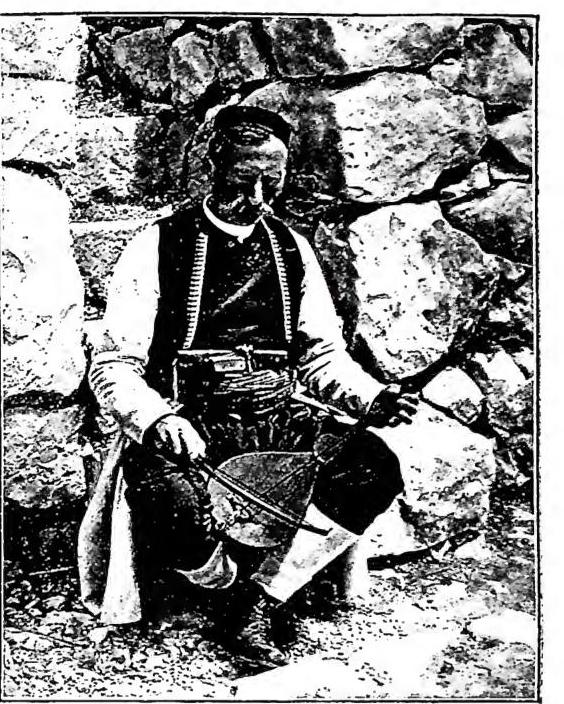
MONTEOLIVETO MAGGIORE, ABBEY of – « How Benedict Recognizes and Welcomes Totila », fresco by L. Signorelli (1497–98). Great Cloister of the Abbey.
With the Turkish invasions, Antivari (v.) remained in the country; from then on it bore the title of « primas Serbiae ». When this, too, fell under the Turks in 1571, Cettigne began to acquire greater importance. There, in 1485, Prince Ivan Crnojević, in fulfillment of a vow made at Loreto, erected the church of the Nativity of the Most Holy Mary, together with the monastery, as the residence of the Orthodox vladika of Zeta. A friend of the Catholic Church and the son of the sister of George Castriota Scanderbeg, the Catholic hero, he could never have imagined that these bishops would later eliminate Catholicism from his land. While a minority of Catholics and small groups of « Orthodox » embraced the faith of the new Turkish rulers, the great majority of Catholics, left without priests, passed to « Orthodoxy » in the sixteenth and seventeenth centuries, especially through the efforts of the vladika Rufino I. The last groups that remained Catholic, such as the Bjelopavlić, Piperi, Bratonožići, and most of the Kući (who remain so even today), fell into schism almost without realizing II. This phenomenon in Montenegro is not an isolated one. Throughout the region into which Serbia, as a result of its later conquests, expanded as far as the Adriatic, « Orthodoxy », whenever it could not absorb the Catholic element, drove it back, thereby creating a strong « Orthodox » wedge between the Catholic regions of southern Croatia and northern Albania. The dioceses of Antivari, Svacia, Budua, Cattaro, Trebinje, and Stagno retained only a small, at times insignificant, number of faithful. The vladika of Cettigne, together with the leaders of the people, succeeded in resolving the question of the Islamization of the country through the bloody massacre of the Islamized population on the eve of Christmas 1702, later celebrated by another vladika, Petar Petrović Njegoš, in the celebrated Serto di montagna (Gorski Vijenac). The hopes of the Church seemed to revive when, around the middle of the seventeenth century, the Montenegrin bishop Mardarius, his successor Bessarion, and also the most venerated national saint, regarded as a miracle-worker, vladika Basil of Ostrog, reunited themselves with the Apostolic See. This event, reinforced by the profession of the Catholic faith at the regional Councils of the monastery of Morača in 1648 and 1653, did not, however, produce lasting results.
The juridical conditions of the Church were definitively regulated by the Concordat between the Holy See and the Kingdom of Montenegro (1886).