
RAGUSA (DUBROVNIK), DIOCESE OF. – A city and diocese in Dalmatia that extends entirely over the territory of the former Republic of R. (including the islands). Until 1828, R. was one of the four metropolitan sees of Dalmatia.
Over an area of 1,315 sq. km., it has 74,000 inhabitants, of whom 72,000 are Catholic; it has 59 parishes served by 46 diocesan priests and 40 regular clergy; within the diocese there are 12 male religious communities and 18 female ones (Ann. Pont., 1952, p. 333).
The city was founded in the 7th century by refugees from ancient Epidaurus (v. EPIDAURUS). Ragusium, the new city, became part of the Byzantine theme of Dalmatia. In the 13th century, a suburb of R., Dubrovnik, inhabited by Slavs, was annexed to II. The city, encircled by fine walls, was then designated by both names (R. and Dubrovnik). The Slavic element gradually infiltrated the city so that by the 13th century some patrician families were of Slavic origin.
The first mention of R. in history dates to around the year 850. Byzantine sovereignty, interrupted in the 11th century by that of the Normans, was for a brief period replaced by Venetian protection, under which it again passed in 1205, remaining there until 1358. Beginning in the 12th century, thanks to its trade with Western and Eastern countries, R. became an important commercial center in the Adriatic. In the 13th–14th centuries, the boundaries of the Ragusan territory were fixed, which, including the islands of Meleda (Croatian Mljet) and Lagosta (Croatian Lastovo) and the Pelješac Peninsula with Stagno (Croatian Ston), extended from the mouth of the Neretva River to the Bay of Kotor. Its aristocratic constitution had its legislative organs in the Consilium Maius of 100 members and the Consilium Rogatorum or Pregadi (30 members), with an executive organ, the Consilium Minus, of 12 members, including the count.
The sovereignty of the kings of Hungary, in fact only nominal, consisted in the payment of a tribute. The count, initially always a Venetian nobleman, was replaced by the Council of Three, and later by a single rector. Enriched by trade with many European countries, the city gradually embellished itself and took on its definitive urban and artistic physiognomy. On the other hand, R. was engaged in numerous struggles during this period to protect its possessions and new territorial acquisitions. With the death of the last king of Hungary, Louis (at Mohács, in 1526), R. found a way to place itself under the sovereignty and protection of the Sultan, paying him a substantial annual tribute; thus the Republic of R., maintaining its traditional autonomy—little different from true independence—and its neutrality in the struggles between Venice and the Porte, succeeded in preserving its old markets in the Balkan territory (Bosnia, Serbia, etc.) and in deepening commercial relations with other countries of Europe and the Mediterranean, retaining the monopoly of trade with the hinterland, which was under the sovereignty of the Sultan. This, however, gradually diminished as the discovery of new lands gave the great world trade entirely different directions. On the other hand, within the Ottoman Empire, symptoms of decline from a political and economic standpoint became more pronounced in the 17th century. In 1806, French troops dealt the final blow to the Republic of R., which was then, at the Congress of Vienna (1815), united with Austrian Dalmatia; after the dissolution of the Austro-Hungarian Empire (1918), R. became part of the new Kingdom of Serbs, Croats, and Slovenes (later Yugoslavia).
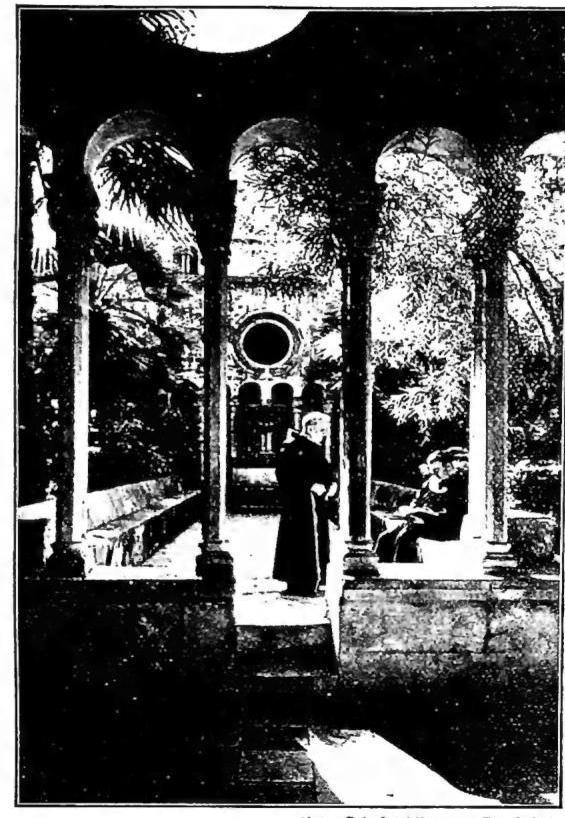
R., the so-called “Athens of Croatia,” was the birthplace of many illustrious men, among whom stand out the merchant Marin Držić and the celebrated poet Ivan Gundulić (Gondola). R. also produced the famous Jesuit mathematician and astronomer Ruggero Bošković (v. 18th cent). Also well-known is the painter Niccolò da R. (N. Božidarević). The city boasts considerable historical and artistic monuments, foremost among them the walls with their towers, the magnificent Rector’s Palace, the Customs House (“Divona”), the cloisters of the Franciscans and Dominicans, the churches of S. Salvatore and S. Biagio (Sv. Vlaho, the patron saint of the city), the Cathedral dedicated to the Blessed Virgin Mary, and the two beautiful fountains attributed to the Neapolitan architect Onofrio de la Cava. In the churches of R. are paintings by Titian (or at least from his school), by Del Sarto, by Pordenone, and by Palma the Elder. Among its very ancient institutions are the pharmacy at the Franciscans, founded in 1317, and an orphanage for illegitimate children (1432).
The diocese of R. seems to have been created at the same time as the new city, in the 7th century. Indeed, the bishops of R. always considered themselves successors of those of Epidaurus. But the first explicit mention of them appears in the acts of the provincial synods of Split, in 925 and 928; as a suffragan see of Split, the new diocese of Kotor (Croatian Kotor) was also created at that time. In 1022, by concession of Benedict VIII, R. became a metropolitan see, but due to the protests of the metropolitan of Split, in 1060 it was again a suffragan of Split, and did not definitively become a metropolitan see until 1120, under Pope Callistus II, when it had ten suffragan sees under it, including Bosnia. The protests and struggles continued until, under Innocent III, the metropolitan see of Bar was reconstituted, and thus there were four archbishops in Dalmatia: Split, R., Zadar, and Bar. In 1828, Leo XII created the single metropolitan see of Zadar but united with R. the ancient dioceses of Ston (Croatian Ston) and Korčula (Croatian Korčula). In 1932, the island of Lastovo (Croatian Lastovo) was placed under the archbishop of Zadar.
Among the most well-known and meritorious archbishops of R. are Giovanni Dominici (1408–19), Gianangelo Medici (1545–49), later Pope Pius IV, and the noted scholar and papal diplomat Lodovico Beccadelli (1555–64).
Currently, the diocese of R. is entirely within the Federal Republic of Croatia. In the city of the see are the diocesan seminary and two philosophical-theological schools, Franciscan and Dominican. – See pl. XX.
Atanasio Matanić-*