
DOMINICI, GIOVANNI, blessed. – Dominican cardinal, born in Florence in 1357 and died at Buda on 10 June 1419.
He was named after his father, Domenico Banchini (or Bacchini), who died before he was born. Received into the Order in 1374 (at S. Maria Novella), and not without many difficulties, owing to his limited education and stammering, he soon made great progress in learning, and later also recovered from his speech impediment, becoming for 25 years a renowned preacher in the principal pulpits of Italy.
Nevertheless, the best energies of D. were devoted to the reform of his Order and to ending the Western Schism, which was then rending the Church.
At Venice (1387) he laid the foundations of the reform. He was first vicar general of the convent of S. Domenico (19 May 1390), and then of all the reformed convents (20 Nov. 1393). Having moved to Florence at the beginning of 1400, he continued his delicate mission as reformer between the Cathedral and the pulpit, founding for this purpose the convent of S. Domenico di Fiesole (1406). Upon the death of Innocent VII
(6 Nov. 1406), D. spontaneously entered the political field in order to help bring the schism to an end. For this purpose he was sent by the Florentine Republic to Rome, so that the election of a new pontiff might be avoided. The mission failed; but D. had the opportunity to win still greater esteem from the newly elected pope, Gregory XII, by whom he was appointed archbishop of Ragusa (26 March 1408) and then cardinal of S. Sisto in the following May. The Dominican’s acceptance of these promotions cost him no few criticisms; he nevertheless used them for good. Indeed, although he acknowledged the Roman Pontiff as the true pope and carried out his delicate commissions, he ultimately succeeded in wresting his abdication from him. Having presented it to the Council of Constance (4 July 1415), he expressed his intention of renouncing the purple. This was not permitted; on the contrary, the new pontiff, Martin V, entrusted the able Dominican diplomat with the difficult burden of a legation to Hungary and Bohemia against the Hussites (10 July 1418). There he was unable to conclude his mission, also because death overtook him almost immediately at Buda. His cult was confirmed by Gregory XVI in 1832. Feast: 10 June.
Many writings by D. are extant, some unpublished: letters, commentaries on Sacred Scripture, and treatises. Among these, special mention should be made of the Latin Lucula noctis, written around 1405, in which the problem of the use of the classics is resolved with a certain severity (eds. R. Coulon, Paris 1908; Moore, Notre-Dame 1940). The two Italian treatises are excellent, also as texts of the language: Regola del governo di cura familiare (Florence 1860) and Amore di carità, probably composed between 1392 and 1394 (Bologna 1889).
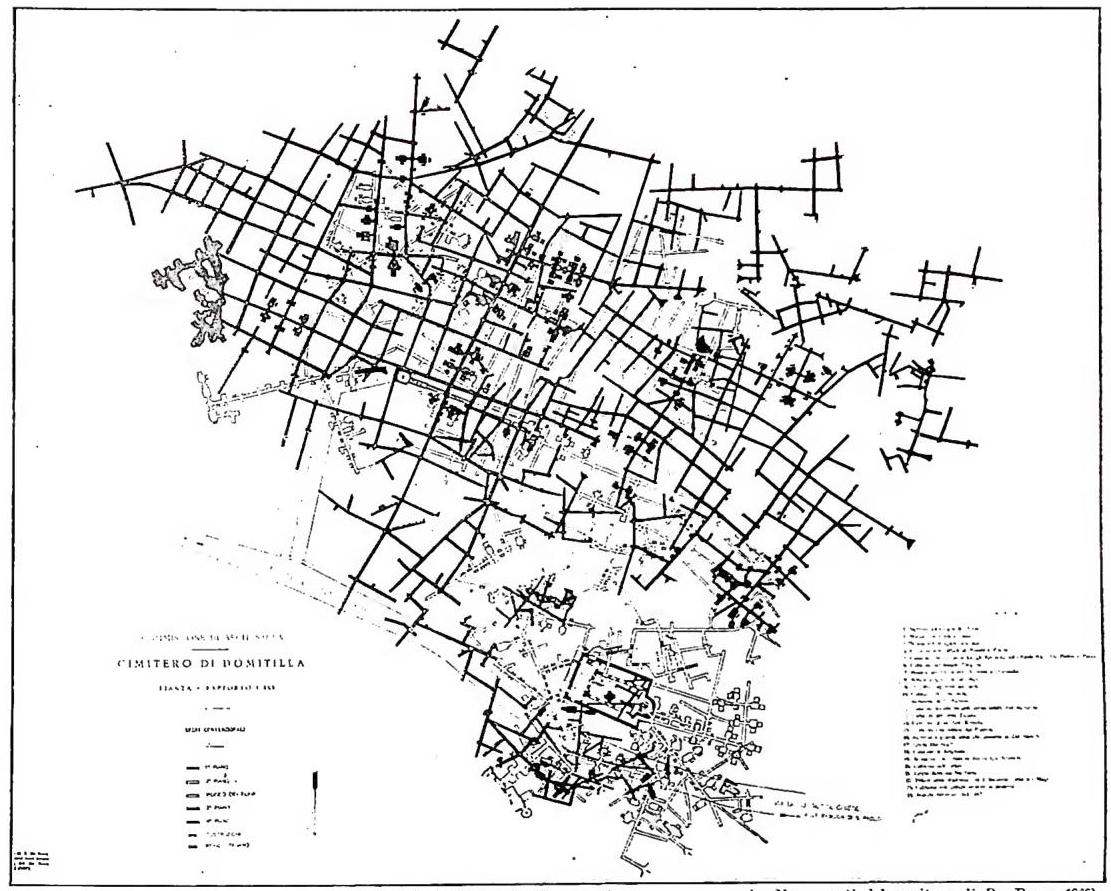
(from O. Marucchi, Roma sotterranea, new series. Monuments of the cemetery of D., Rome 1969)