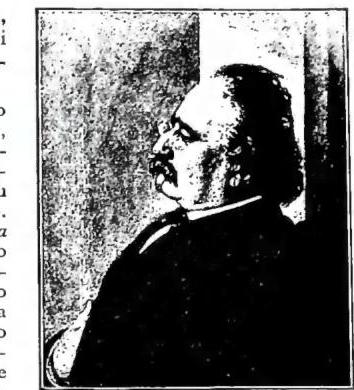
SPAUR, CARLO VON. — Bavarian diplomat, born on 4 January 1794, died on 26 October 1854 in Florence. Count of Winckel and Laudeck, he began his diplomatic career as legation secretary in Berlin and Frankfurt. He then went to Rome, first as chargé d’affaires and subsequently as minister.
In September 1833 he married Teresa Giraud (born in Rome at the beginning of the 19th century, died near Innsbruck on 27 March 1873), niece of the playwright Giovanni Giraud and widow of the English archaeologist Edoardo Didwell, one of the most brilliant women in Rome at the time. The count was held in high regard by Gregorio XVI and later by Pio IX. After the assassination of Pellegrino Rossi (15 November 1848), any further stay by the Pontiff in Rome appeared exceedingly dangerous, and thus the idea took shape in S.’s mind of persuading the Pope to leave Rome, where he was practically a prisoner in his Palace and where his freedom of action had been completely nullified by the events that had unfolded in the preceding months. He therefore made contact with his own ambassador, Martinez de la Rosa, and with the French ambassador, the duke of Harcourt, who approved his plan to have the Pope leave Rome, and succeeded in persuading the Pontiff to make a secret departure. On the evening of 24 November, while Harcourt, who had requested an audience with the Pontiff, diverted the guards’ attention by pretending to be detained inside the apartment in a heated discussion with Pio IX, the Pope, dressed as a simple priest, left through a secondary door of the Quirinal and boarded a carriage that took him to the vicinity of the Colosseum, where Count S. was waiting for him. Having boarded his carriage, they left together through Porta S. Giovanni and reached Ariccia. There Countess S. was awaiting them with her son, Liebl, the boy’s tutor, and two servants. The Pontiff and S. changed carriages again and, the following morning, arrived safely at Mola di Gaeta, where Cardinal Antonelli was waiting for them, having arrived earlier together with the secretary of the Spanish legation. S. was immediately commissioned by Pio IX to take Ferdinand II in Naples a letter in which he requested hospitality in the Kingdom. To thank him for his assistance, Pio IX conferred upon him the Grand Cross of the Piane Order and appointed his son a knight of the Order of Christ. In 1851, during a visit to Turin, S., known as a person highly esteemed by Pio IX, was asked by Vittorio Emanuele II to act as an intermediary with the Pope concerning his good intentions of reaching a modus vivendi for the resolution of the disputes pending with the Holy See. A few years later, while he was preparing to travel to Merano, S. died.