
APT. - City in the department of Vaucluse, on the Coulon river (France). It was founded by the Celtic tribe of the Vulgientes, occupied by the Romans at the end of the 2nd century B.C., and became the Roman colony Apta Iulia. It later passed under the Burgundians and then the Franks; it was a county in the 11th century and a municipality in the 12th. The date of the origins of the Christian Church in Apt is uncertain; the oldest
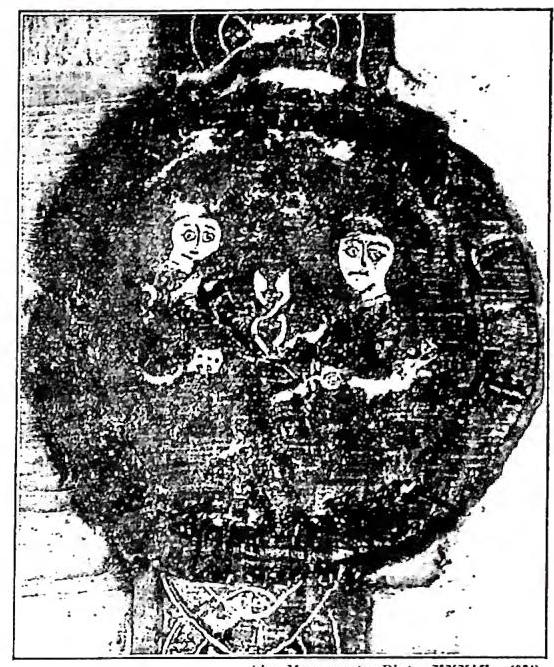
Four abbeys flourished in the diocese of Apt; two for men: one of s. Eusebio, near Saignon, founded in the 6th century and suppressed in the Napoleonic era; the other of Valsainte, near Banon, founded in 1188 and ceased in the second half of the 18th century. The two female abbeys were the Cistercian one of S. Croce, founded in 1234 and suppressed during the French Revolution; and that of S. Caterina of the Canonesses of s. Agostino, founded in 1299 and suppressed in 1748.
The cathedral of Apt, dedicated to s. Anna, is built above two superimposed crypts, of which the first shows remains of Roman constructions, while the other belongs to the 11th century, like most of the building, which is divided into three naves and completed partly in the 12th century, partly in the 14th, with 17th-century restorations, to which period the octagonal chapel of S. Anna belongs.
It contains a 7th-century sarcophagus and medieval sculptures. The treasury holds a series of precious reliquaries and liturgical books. The bishop's palace (1745-80) is now used as a courthouse and town hall.