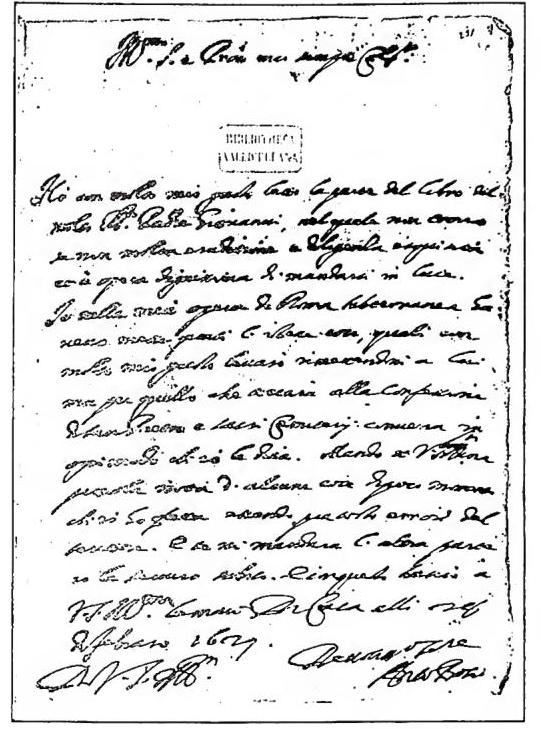
BOSONE. - First bishop of Merseburg (968–970), one of the apostles of the Wends. He was a Benedictine monk at St Emmeram in Regensburg when Emperor Otto I took him as his chaplain and sent him among the German colonists established in the Wendish lands between the Saale and the Elbe. He then preached the Gospel and built the first stone church in the vicinity of Zeitz. He was raised to the episcopal see of Merseburg, recently established by Emperor Otto, despite various objections, and approved by the Council of Ravenna in September 968. After two years, B. died on 10 November 970.
BOSONE. - English cardinal, d. at Rome in 1178. In the drafting of papal biographies, continuing the original nucleus of the Liber Pontificalis, B. succeeded the Anacletan cardinal Pandolfo. A Benedictine monk of St Albans, when his uncle Nicholas Breakspear was created cardinal, he entered the Roman Curia in France under Eugenius III as an apostolic writer. He accompanied his uncle on the legation to Scandinavia; under him, who became pope as Adrian IV, he was named chamberlain, then in 1155 cardinal deacon of SS Cosmas and Damian and legate a latere to England. After Adrian’s death, he actively and fervently supported the election of Alexander III, whom he also aided with arms, securing the possession of Castel Sant’Angelo. The new pope transferred him to the presbyteral title of S Pudentiana. He took part in the struggle between Alexander and Frederick Barbarossa and was among the negotiators of the Peace of Anagni and among those present at the Congress of Venice in 1177. He then returned to Rome with the pope and shortly afterwards ended his active life. Of his historical activity, which is what chiefly preserves his memory, two distinct phases may be discerned: one shows him as a flat, meagre and uniform compiler of biographies, modelled on the ancient ones, from Stephen VI to Innocent
BOSNO - BOSSI MARCO ENRICO 1946
1. - Ancient capital of the Edomites (Heb. Boṣrah) in Arabia Petraea (Gen. 36:33; 1 Chron. 1:44; Amos 1:12), perhaps the modern el-Busjeh, south-south-east of the Dead Sea. It is sometimes used for Edom (Jer. 49:13, 22; cf. Isa. 34:6; 63:1), of which it also assumes the typical sense of opponent of the divine kingdom, as in Isa. 63:1. (Cf. E. Robinson, Palaestina, III [Boston 1843], pp. 125 ff.; A. Musil, Arabia Petrea II, I [Vienna 1907], pp. 320 ff.).
2. - A Moabite city (Heb. Boṣrah), mentioned in Jer. 48:24, which some identify with Barasa (1 Macc. 5:26), others with Bosor (q.v.).
3. - A city mentioned in Josh. 21:27 (Heb. Bē‘eṯrāḥ), perhaps equivalent to Astaroth (q.v.), as the parallel passage 1 Chron. 6:56 suggests.
4. - A city in Hauran (q.V. BOSTRA).
GIOVANNI RINALDI BOSSI, GIUSEPPE. - Painter and writer, b. at Busto Arsizio on 17 Aug. 1777, d. at Milan on 9 Dec. 1815. A Neoclassicist, a superficial follower of Appiani in the Funerale di Temistocle (modern art gallery, Milan), in the frescoes of the Villa Melzi at Bellagio, those of the Villa Marliani at Crevenna, etc. He is livelier and more spontaneous in his portraits, among which notable are the group in the Treccani collection in Milan, the self-portraits in the Ambrosiana and the Uffizi.
B. also made copies of Raphael, whom he studied in Rome from 1795 to 1801; he was even more attracted by Leonardo—he painted a copy of the Last Supper (1807–1809, Sforza Castle) and collected in four volumes Del Cenacolo di Leonardo da Vinci (Milan 1810) the news and his own observations on the work of Vinci. Stendhal drew largely on this study for the pages devoted to the Last Supper in his Histoire de la peinture. Other writings of his are the Discorso sulla utilità politica delle arti e del disegno (Milan 1805) and an “Saggio di ricerche intorno all’armonia cromatica naturale e artificiale,” in Memorie dell’I. R. Istituto Lombardo del Regno Lombardo-Veneto, 2 (1821), pp. 277–316.
He was a collector of works and art objects and formed a notable collection of drawings (now in the gallery in Venice).