
FIBBIA : V. FORMALE.
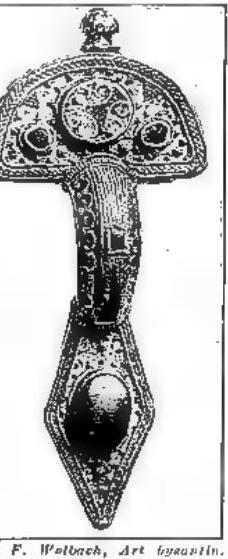
FIBULA. – The Latin term “f.” (in Greek περόνη, πάρτη, δαντή) denotes both the safety pin and the clasp or belt buckle. Archaeologists generally use this term to refer to the safety pin, which, owing to the extraordinary frequency of its discoveries and the great variety of its types, represents a valuable element for chronological classification in the study of ancient civilization, especially of the Western world.
The mission was in full development when the revolution of 1947 halted its progress with the destruction of 117 churches and about fifty schools. The area covers 68,000 sq. km, with a population of approximately 650,000 inhabitants, of whom in 1948 there were about 184,608 Catholics, 95,000 Protestants, and 350,000 pagans. The Jesuit missionaries number 71, including 8 Malagasy, in addition to 2 indigenous diocesan priests. There are 27 brothers, including 17 Malagasy, and 103 sisters, including 32 Malagasy. The catechists number more than 750, and of the 390 teachers, several are university graduates. There are 26 districts, 1 quasi-parish, 800 secondary stations, and more than 220 churches. Three periodicals are published there, with a fair
(from F. Walbach, Art bizantin, Partisi s.c., loc. 3(b))
FIBULA — Gold and enamel fibula. Byzantine art (4th century) — Budapest, National Museum.