
JOYEUSE, FRANÇOIS-HENRI. — French cardinal, born 24 June 1562, died 27 August 1615 in Avignon. Elected archbishop of Narbonne in 1581 and made a cardinal by Gregory XIII on 13 December 1583, at the request of Henry III, he upheld at the court of Rome the policy of his king against the intrigues of the Spanish ambassador. Archbishop of Toulouse (1588), he was appointed a member of the newly created Congregation of the Consistory and of the Printing Office of the Papal States.
Although he had been opposed to Henry IV, after the latter’s abjuration and absolution he became, together with Ossat d'Arnaud, his representative in Rome and one of the commissioners who declared the king’s marriage to Marguerite de Valois null. Cardinal protector of the Capuchins from 1602, he fostered their development, especially in his archdiocese. Having become archbishop of Rouen (1604), he established the Seminary there, adopted various reforming measures, as he had already done at Toulouse, and presided over the General Assembly of the clergy (1605). In 1605 he took part in the Conclave, in which he was head of the French party and exercised decisive influence in the election of Cardinal Alessandro de' Medici as supreme pontiff (Leo XI). As mediator in 1607 in the bitter dispute then underway between the Holy See and the Republic of Venice, he acted with great skill and succeeded in obtaining a compromise between the two parties and the lifting of the interdict on Venice. Henry IV appointed him a member of the regency council, and he presided over the Estates General of 1614.
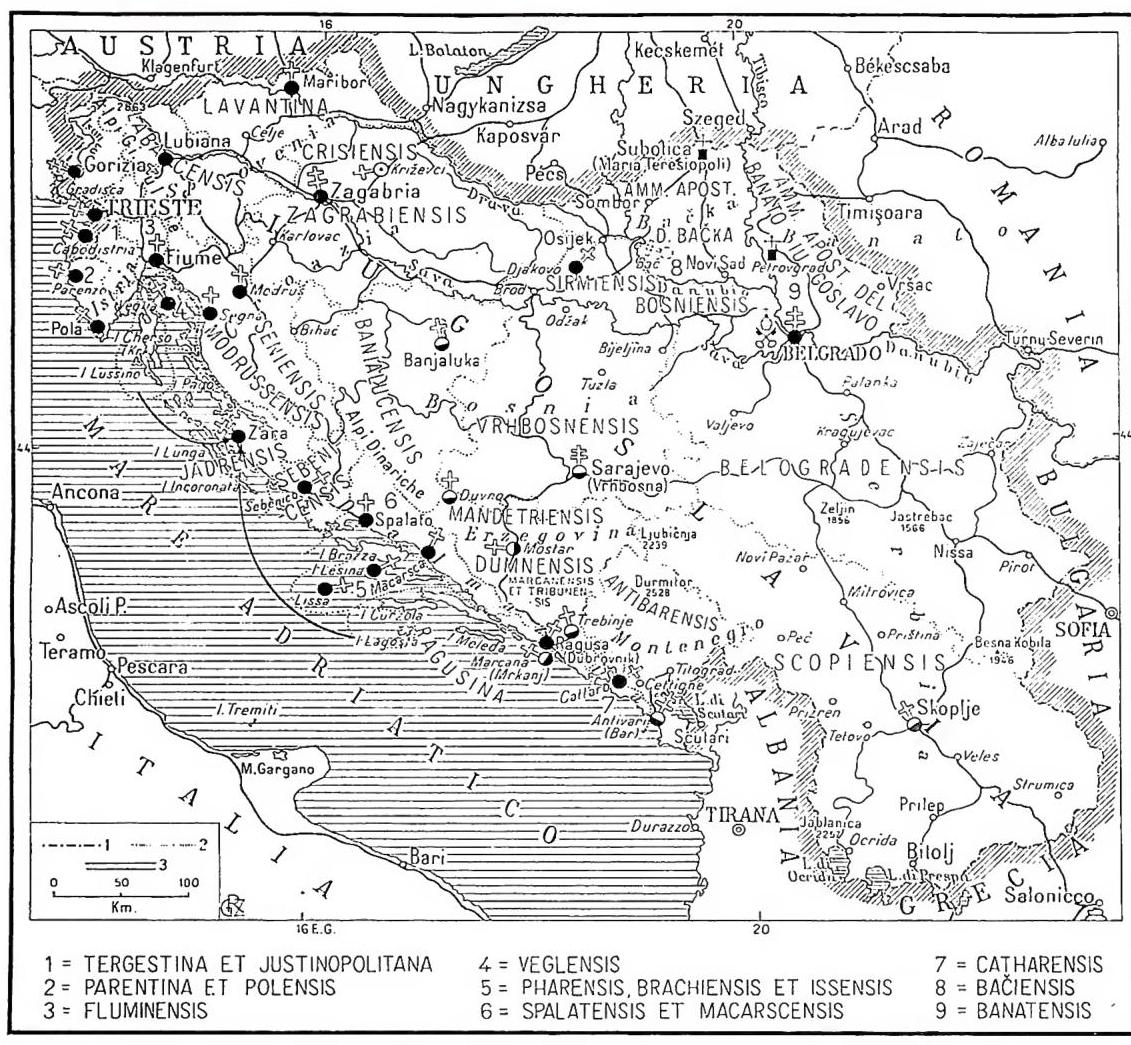
JUGOSLAVIA - 1) State borders; 2) railways. Part of the territory of the dioceses of Gorizia and Trieste-Capodistria is now, under the Peace Treaty of 10 February 1947, under J.