
PALMERSTON, HENRY JOHN TEMPLE. - English statesman, born 20 Oct. 1784 in London, died 18 Oct. 1865 at Brocket Hall (Hertfordshire). First
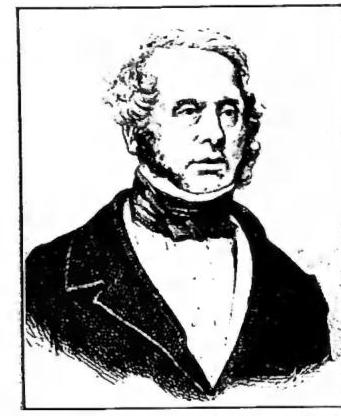
The action carried out by P., both as head of the Foreign Office and as Prime Minister, clearly reflects England's conduct of international relations for a long period of the 19th century. The years from 1830 to 1865, dense with events that gave a new face to Europe and the world, marked the end of absolutist or otherwise paternalistic regimes and the advent of liberal and parliamentary institutions; they determined the victory of the idea of the nation and the secure assertion of a policy of commercial, economic, and colonial expansion that brought peoples and countries closer together. Throughout this continental and global evolution, England was represented precisely by P. He did not believe in a determined "system," nor did he intend to follow precise directives in foreign policy; indeed, he confessed that he was anchored to no principle, and had as his sole guide the interest of his own country, while supporting the cause of liberal and parliamentary institutions in the international arena. It is doubtful whether his system depended on considerations of the advantage England derived from it or on a sincere attachment and desire for the spread of liberal systems. Ever since the Belgian question, which arose in 1830, P. succeeded, by coming to an agreement with France, in guaranteeing the freedom and independence of the Belgians, and at the same time in maintaining the European balance of power, which was not to be broken by excessive French influence in Belgium. The constitutional principle, so dear to P., also served admirably to prevent the predominance of any power or coalition on the European continent. For this reason he opposed the Carlists in Spain and the Miguelists in Portugal. When finally even the France of Guizot, after 1846, approached Austria with the threat of a Franco-Austrian duarchy, once again P. supported the other side; he opposed the Catholic defense movement within the Swiss Confederation of the Sonderbund and sent Lord Minto to Italy to fully support the implementation of reforms by the individual Italian states. Metternich's reactionary policy was always an object of bitter condemnation on his part. The events of 1848-49 corroborated his forecasts. P. shared the opinion of granting reforms, which of course were meant to strengthen the Habsburg monarchy and secure liberal systems for Italy, Hungary, and the other territories of the Empire, but he could not accept the dismemberment of Austria and the secession of Hungary, because for him the Habsburg monarchy constituted the pivot of the European balance and the main barrier against Russian power. After the Congress of Paris, where the Italian problem had also been raised, P., during the discussion of the Peace Treaty, criticized with overt acrimony on 6 May 1856 the government of the Papal States, and complained that the advice given by Lord Minto to Pius IX in Nov. 1847 on the necessity of reforms had not been followed. P.'s polemical declarations greatly outraged Catholic circles and were refuted by Montalembert in his pamphlet Pie IX et lord P.. As Prime Minister in 1859-60, England was the first power to recognize the Kingdom of Italy on 30 March 1861. P. was ultimately an individualist, outside of any party, who voted in 1829 in favor of Catholic emancipation and supported electoral reform in 1832, but opposed it twenty years later. He was certainly one of the greatest English statesmen, and knew how to meet the desires of European liberal public opinion.