
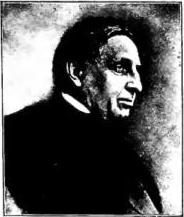
TOSTI, ANTONIO, Cardinal, born in Rome on 4 October 1776, died in Rome on 20 March 1866. Having zealously exercised the priestly ministry in the Pia Unione di S. Paolo Apostolo among the clergy of Rome, he devoted himself successfully to both a diplomatic and an administrative career. Chargé d’affaires of the Holy See in Turin, he returned to Rome in 1834 to succeed Cardinal Brignole in the office of treasurer general, which at that time was equivalent to that of Minister of Finance.
He demonstrated the qualities of a wise organizer and played a very important role in the measures issued by Gregory XVI for the reorganization of public finances, the execution of important public works, and the advancement of industry and commerce. His initiative was responsible for the notification concerning the increase of the duty on woollen fabrics and the granting of prizes to manufacturers in Rome and the Papal States; the publication of the collection of laws and provisions concerning public administration issued in the Papal States; the regulations for reforming the monetary system; the admission of the Jews of Rome to participate in the distribution of subsidies from the Monte di Pietà; the regulations for collecting the taxes and other revenues belonging to the Presidency of the Ripe (of interest for the information relating to the taxes on boats that docked at the Porto di Ripetta and to the regulations concerning fishing licences); the internal disciplinary regulations for the administration of the postal service and its offices; those for the Casse Camerali; the regulations for implementing the rules of the Secretariat for Internal State Affairs; and the measures aimed at suppressing smuggling. He also played a very significant role in the establishment of the Banca romana and the Cassa di risparmio di Roma (1836), and earned great merit in connection with the Papal military navy.
Created cardinal and reserved in pectore by Gregory XVI in the Consistory of 12 February 1838, he was proclaimed in that of 18 February 1839, with the title of S. Pietro in Montorio; at the explicit wish of the Pontiff he continued in the office of treasurer general, from which he resigned at the beginning of the pontificate of Pius IX. To justify the activity he had undertaken, he had the Bilancio generale delle rendite e spese nel decennio dal 1835 al 1844 published (Rome 1847).
A great lover of the arts and artists, T. (who, among other things, was appointed by Pius IX librarian of S. Romana Chiesa [1854], as the successor of Angelo Mai), had the buildings of the Lateran restored, as well as the churches of S. Pietro in Montorio, of SS. Vito, Modesto e Crescenzia, of
He also breathed new life into the Academy of Music Professors, under the invocation of S. Cecilia and based at S. Carlo a' Catinari, demonstrating deep concern for the spiritual life of musicians and for the greater advancement of sacred music. Among his writings, the following should be mentioned: Relaz. dell'origine e de' progressi dell'Ospizio Apostolico di S. Michele (Rome 1832); A Gregorio XVI. Epigrafi (s. n. t.), a valuable collection of all the inscriptions commemorating the public works of that Pontiff.
Mario de Camillis