
ELISABETTA of TURINGIA, saint. — Principal patroness of the Third Order of St Francis and of Catholic charitable works.
I. LIFE
Born in 1207 to Andrea II of Hungary and Geltrude of Andechs-Merano, she was betrothed by her parents to Ludovico IV of Thuringia as early as 1211 and was taken to Eisenach, to the castle of Wartburg. In 1221 she married Ludovico, by whom she had three children. She was under the strict spiritual discipline of the secular priest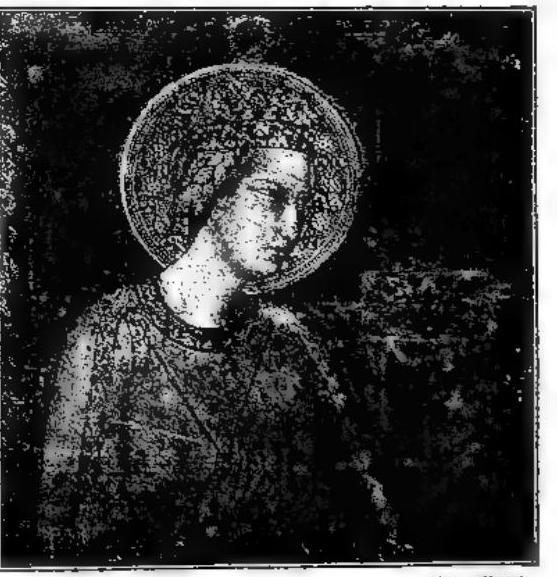
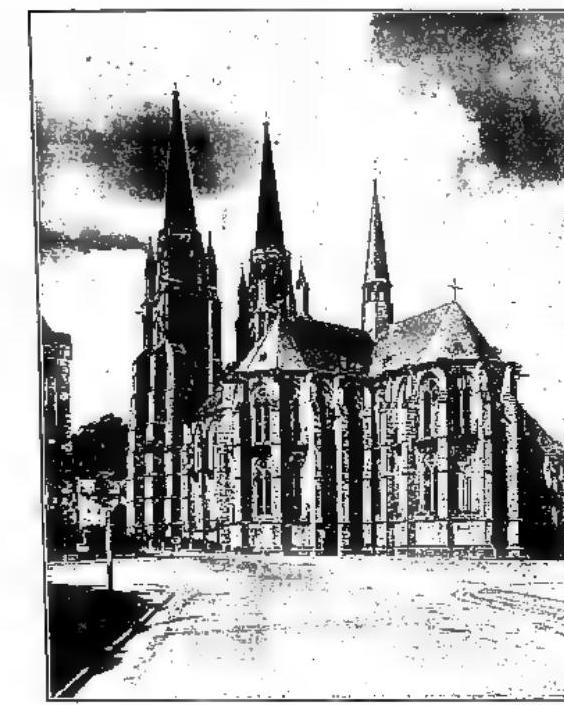
(fot. Marburg) ELISABETTA di TURINGIA, santa - Church of S. E., begun in 1235, consecrated in 1283 - Marburg.
II. CULT
The miracles that occurred immediately after her death led to the initiation of the canonization process, which concluded on 27 May 1235 with her proclamation as a saint by Gregory IX at Perugia. Frederick II, accompanied by a great retinue of princes, was present at the translation of her remains; he later wrote a letter about the event to the minister general of the Franciscan Order, Brother Elia (Acta Imperii inedita, ed. E. Winckelmann, I, Innsbruck 1880, p. 299 ff.). The cathedral of Marburg was a destination for pilgrimages until, at the time of the Protestant Reformation, Filippo d’Assia dispersed E.’s relics, some of which are now preserved in Vienna. The head preserved at Besançon is of doubtful authenticity (cf. Rev. d’hist. franciscaine, 2 [1923], p. 273). Numerous religious congregations, especially Franciscan tertiaries, are dedicated to her. The Conferences of S. E. were founded for the first time at Trier in 1840 (W. Liese, Gesch. d. Caritas, Freiburg 1922; the letter of Pius XI for the centenary of her death in AAS, 23 [1931], pp. 525–27). Feast day: 19 November.III. ICONOGRAPHY
The iconographic representations of s. E. are extremely numerous throughout Europe (cf. S. Elsner, in Franziskanische Studien, 18 [1931], pp. 205–231). The Saint is depicted distributing bread with a poor man at her side, or, after the fifteenth century, concealing in her lap a bouquet of roses, referring to a miracle in which she transformed into roses the bread that she did not wish to reveal she was carrying to the poor (cf. L. Lemmens, Zum Rosenswunder, in Katholik, 24 [1902], 381–82). Evidence of the rapid spread of the cult of s. E. in Italy is provided by the fourteenth-century pictorial cycle in the church of S. Maria Donna Regina in Naples. — Vedi tav. XX.BIBLI: Sources: The sources of the life of s. E. are listed, together with their editions, in Arch. Franc. hist., 2 (1909), pp. 243–49. Among them is a letter from Gregory IX, written while E. was still alive. Corrado di Marburgo, who was working for the process of her beatification, wrote an Epistola de vita ad დავით, in 1232; the Dieta IV Ancillarum, before 1244, expanded in the Libellus edited by A. Huyskens, Der sog. Libellus de dictis IV Ancillarum, Munich 1911; the Vita written by Cesario di Heiberbach before 1237, ed. by Huyskens, Cologne 1908; BBL, nos. 2488–2514; U. Chevalier, Biobibliog., I, 2nd ed., Paris 1913, cols. 1304–1307. Modern biographies: E. Horn, Sr. E. de Hongrie, Paris 1902, Italian translation Milan 1924; M. Maresch, E. Landgrölln von Thüringen, Munich-Gladbach 1921; K. Adam-Kappert, E. von Thüringen Vienna 1929; P. Dörfler, Die heilige E., Munich 1930; J. Ancelot-Hustache, Ste Elisabeth de H., Paris 1947. Studies: L. Crick, Culte de ste E. de Hongrie en Belgique, ste E. de Hongrie, Paris 1902, Italian translation, Milan 1924; St. V. Dumin-Borkowski, Die hl. E., in der E. kirche zu Bonn, in Katholik, 49 (1917), pp. 218–23; G. Hassibock, Die hl. E. und ihre Beichtsäter Br. Rodeger u. Konrad u. Marburg, in Frana. Stud., 18 (1931), pp. 294–308; id., Die hl. E. in ihrem seelischen Wachsen u. Werden, in Thuring. Fran., 15 (1931), pp. 108–57; id., Das religiöse Wollen der hl. E., ibid., 15 (1935), pp. 247–77; E. Hermelink, Ein Jahrhundert Elisabethforschung, in Theol. Rundschau, 4 (1932), pp. 121–38. Ottocato Bonmanno