
PEIRESC, NICOLAS-CLAUDE FABRI de. — Polymathic humanist, born at Beaugensiers on the Var on 1 December 1590, died at Aix in Provence on 24 June 1637.
He travelled throughout Italy as far as Malta, Germany, Austria, Greece, Turkey, Egypt, and Asia Minor; then to England, Holland, and Flanders. In 1607 he became a magistrate and subsequently a member of the Parliament of Aix. He was a collector of coins, manuscripts, minerals, and copies of inscriptions and sarcophagi, including Christian ones; he possessed a substantial library, dispersed after his death, like his collections. He concerned himself with all the sciences and was in contact with the scholars of his time. Ph. Tamizey de Laroque published seven volumes of his correspondence in the Collect. de docum. inéd. de l'hist. de France (Paris 1888–98). The National Library of Paris preserves many drawings collected by him, especially in ms. franc. 9530 and ms. lat. 8958. At La Gayolle he discovered the celebrated Christian sarcophagus (Wilpert, Sarcofagi, I, p. 7 and pl. 1, 3), subsequently reused for the burial of a Syagria, and the other used for Ennadius Felix, son of Magnus, consul in 460, which P. acquired and which has now been lost (L. Chaillan, in Bull. archéol. du Comité, 1913, p. 317, pls. 25–26). The chalice of Suger of the abbey of St-Denis, brought to the Louvre and stolen there in 1804, was identified in the collection of J. E. Widener in Philadelphia by Seymour de Ricci through P.’s description and drawing (Un calice du trésor de St-Denis, in Comptes rendus de l'Acad. des inscr. et belles lettres, 1923, pp. 335–39). P. described to Girolamo Alendro, librarian of the Vatican Library (cod. Barb. lat. 2154, fols. 104 f–109 v), the now-lost codex containing the chronograph of 354 (v.), which he had obtained on loan from Cristoforo di Assonville of Arras and failed to return; the letter dated 18 December 1620 from Paris was published by T. Mommsen (MGH, Auct. antiquis., IX, 1, Berlin 1892, pp. 19–29); the drawings of the Calendar preserved partly in the said codex and partly among the papers of G. Marini (cod. Vat. lat. 9135) were edited by J. Strzygowski (Die Ka-
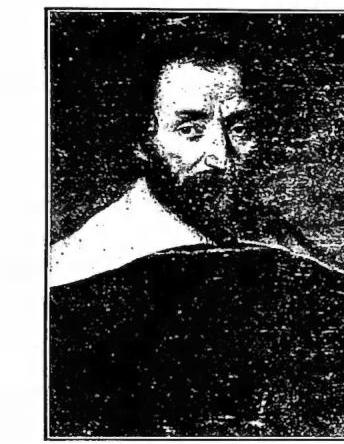
Portrait painted by L. Finson (1580–
1617) — Aix-en-Provence, P.
Arbaud Museum.
A church was erected over the tomb, in which St John Chrysostom delivered a speech. From this it emerges that P. was a fifteen-year-old girl; surprised alone at home by the soldiers who wished to arrest her, and fearing for her purity, she managed by a stratagem to elude their vigilance and threw herself from a window, reaching the ground dead.