
PIE, LOUIS. — Apologist and cardinal, born at Pontgenin (diocese of Chartres) on 26 September 1815, died at Poitiers on 18 May 1880. A student of S. Sulpizio, he was ordained a priest in 1839, became bishop of Poitiers on 28 September 1849, and cardinal on 12 May 1879.
His oratorical and pastoral works, in Oeuvres (Paris 1887, 9th ed., 9 vols.), etc., excel in force of reasoning and majestic eloquence.
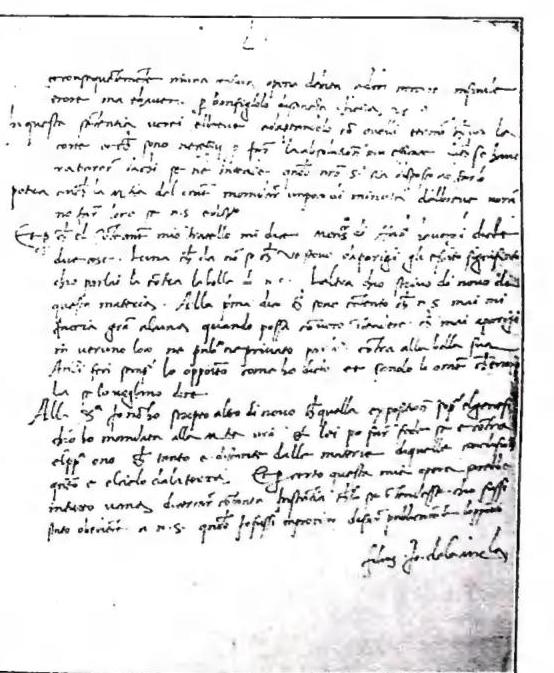
PICO, GIOVANNI, CONTE DELLA MIRANDOLA – Final part of an autograph letter by P. d. M., addressed to Lorenzo de' Medici (27 Aug. 1489) – Florence, State Archives.
(from Panthéon des illustrations françaises au XIXe siècle, published under the direction of Victor Freud, Clergé, Paris, n.d.)
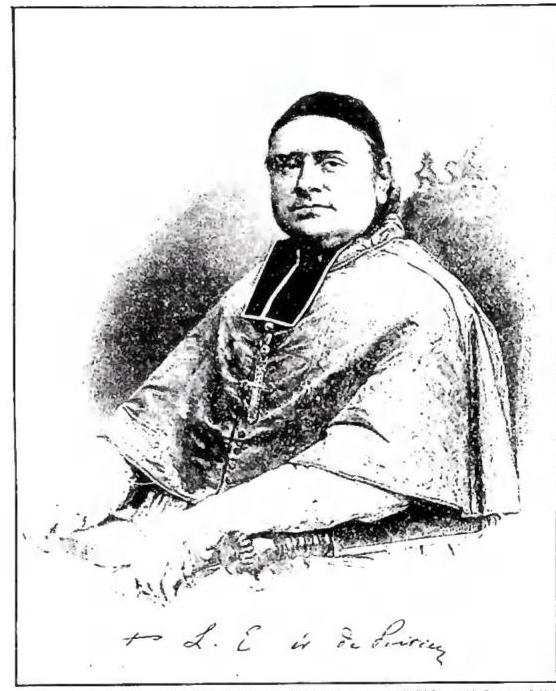
PIE. LOUIS—Portrait. Lithograph by Lemercier.
He opposed the liberal Catholics and contributed to the formulation and promulgation of the Syllabus, whose positive interpretation he defended against political naturalism. He placed his hopes for religious restoration in Napoleon III, hopes that collapsed after the Congress of Paris in 1856. He stigmatized the Emperor’s attitude toward the annexation of part of the Papal States to the Kingdom of Italy (1861) as a pilate-like act. This earned him a condemnation by the Council of State. A friend of the count of Chambord, in 1873 he drafted a plan for a monarchical constitution similar to the Charter of 1814. An opponent of Dupanloup and Maret, whose famous book on the Council he considered deserving of the gravest theological censures, P. exercised great influence at the First Vatican Council because of his knowledge of Sacred Scripture, the Fathers, and theology. He was one of the twenty-four members of the Deputation of the Faith and, within it, also belonged to the restricted Commission of Three. At the Council he delivered two reports: the first on the amendments proposed by Ginhouliac to chapter 4 of the constitution Dei Filius, which were rejected, though they were taken into account; the second, a general report, on Pastor Aeternus, appealing for concord, defending the urgency of discussion concerning papal infallibility, and praising the precision of the proposed formula. Faithful to the directives of Pius IX, he moderated them under Leo XIII, for whom he served as an unofficial intermediary with the government of the Republic.