
RONCAGLIA, IMPERIAL DIETS of. — A hamlet of Piacenza, at the border between that city, Lodi, and Pavia (Runcalea, from runcare), near the Lambro and the Po, at the intersection of the land and river routes from Lombardy to Genoa, Lucca, Bologna, Ravenna, and a favored location for the diets convened by the emperors. Not only the greater feudatories participated in them, but also the greater and lesser valvassors, arimanni, and citizen milites.
As in the early Middle Ages, political questions de stabilitate Ecclesie et regni were dealt with there, and the supreme royal tribunal was held there, as was the muster of the army before the Emperor at the beginning and end of the Diet. The first assemblies at R. (established by Solmi) were summoned by the archbishops of Milan: Arnolfo in 1002 and Ariberto in 1021; only the assembly of May 1055 is the first imperial assembly historically attested. These were followed by those of the royal vicars: Ottone in 1068 and Everardo in 1075; of Enrico V in 1110; of Lotario II in 1132 de statu ecclesie atque imperii and in 1136 concerning the alienation of fiefs; of Federico I from 30 November to 5 December 1154 with the consules civitatum; and the most solemn of all, from 11 to perhaps 28 November 1158. Another was held in April–May 1159; then came the war. The army with Enrico VI merely stopped there on 7 June 1194, and from then on R. housed only Milanese troops.
At the Diet of 1158, the German side was represented by the bishops, the great feudatories, and the imperial army encamped on the left bank of the Po. Feudal laws were promulgated there and the imperial tribunal operated there. Having crossed the Po over the bridge built in two days, the Emperor moved to the right bank, in the territory of Piacenza (in Cotrebia), where the Italian contingent was encamped: the great feudatories, the consules and indices civitatum; the jurists Bulgaro, Martino, Jacopo, and Ugo as advisers; and the milites of Lombardy and Emilia. Here, on the 23rd, he decided the question of the regalia, and peace was sworn, the concluding act of the Diet. Its aim was to restore to the authority of the State the public functions and related rights that had been dispersed and fragmented in the hands of ecclesiastical bodies, lords, and Communes (Solmi); moreover, it marked the first great affirmation of the revived Roman law in medieval life, preventing the oppression of one of the parties—a principal merit of the four doctors. When questioned by the Emperor ut iudicament et in veritate omnia regalia iura, they refused to pronounce sine consilio aliorum iudicum universarum Langobardiae civitatum ibi astantium. Two judges were elected for each city; numbering twenty-eight, they established, together with the four doctors and after mature examination, the royal rights: arimauniae, viae publicae, flumina navigabilia, portus, ripatica, vectigolia, moneta, mulatarum poenarum compendia, bona vacantia, quae ab indignis legibus unferentur, bona contrahentium incestas nuprias et damnatorum et proscriptorum, angariarum perangariarum plasustorum et navium praestationes, extraordinaria collatio, potestas constituendorum magistratum, argentarie et palatia, piscaticum redditus et salinarum, bona committentium crimen maiestatis, dimidium thesnuri in loco Caesaris iuveni. By equating the communal cities with the feudatories, who were no longer restored to their old privileges but replaced by officials directly dependent upon him, Federico intended to hasten the decline of feudalism and initiate the centralization of the State. But the creation of imperial judges at the head of the cities, to receive the tributes and administer justice, was immediately opposed by the Lombards, and their administration soon provoked the revolt of Milan, Piacenza, Cremona, Bergamo, Brescia, Parma, Mantua, and the Veronese March against what was called the Teutonicorum imperium, while the feudal hierarchy and communal organization prevented the complete application of Roman law to the needs of the Empire, imposing a serious limitation on Federico’s effective power. In vain the ancient formulas were invoked to exalt him as the sole legislator and arbiter of politics. More truthful appears the ironic saying: De tributo Caesaris nemo cœtabat, Omnes erant Caesares, nemo censum dabat. Already in May 1159 Federico declared to Bishop Alberto of Freising that, rather than endure the ruin of the Empire, he would have preferred death in battle: maluimus honestum mortem inter hostes.
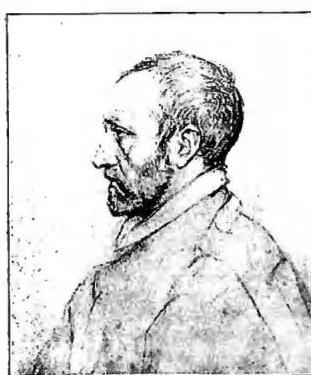
Assistant in the parish of Grottkau, suspended a divinis in 1843 for an anti-Roman article, he refused to submit and addressed an appeal to the clergy of Germany, urging them to break with the hierarchy, with Rome, with ecclesiastical celibacy, and with the Latin liturgy, in order to form a German national Church on a synodal basis. Excommunicated and degraded by his bishop, R. founded in January 1845 the German-Catholic community of Breslau, to which another 100 communities soon joined, drawn into schism by his skill as an agitator. The Confessio fidei that R. gave to the Breslau community is rationalistic in tone, in complete opposition to the teaching of the Church.
At the “Council” of Leipzig (22 March 1845), the movement initiated by R. merged with that promoted shortly before in the parish of Scheidemühl by J. Czerski; in the merger, R.’s rationalist orientation prevailed over Czerski’s more conservative one. In the following years, during his propaganda journeys through Germany, R. was hailed as the new reformer by freethinkers, nationalists, and liberal Protestants, while he was received with reserve by the various governments and by conservative Protestants. The new “reformer” lacked any genuine religious content, and this soon led to a rupture with Czerski’s adherents, which was not remedied even at the “Council” of Berlin in 1847.
During the upheavals of 1848, R. and his adherents acted in a radical direction, and during the reaction of 1849 R. had to go into exile in England. Returning to Germany in 1861, he founded the Religiöser Reformverein in Frankfurt am Main in 1863, with a program aligned with freethought and anticlericalism.