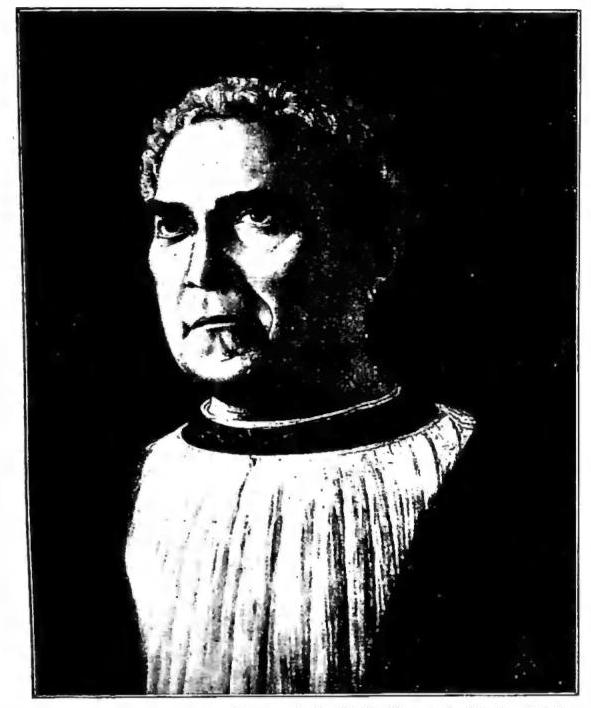
He graduated in arts and medicine at Padua on 9 July 1425; he began as physician to Cardinal Gabriele Condulmer and was his familiar when the latter became Pope Eugenius IV. Writer of apostolic letters, he became Bishop of Traù on 24 October 1435, then Archbishop of Florence on 6 August 1437, and as such subscribed to the Council in 1439. In that same year he was named Patriarch of Aquileia, where he almost never resided, and was appointed Camerlengo on 11 January 1440. In March 1440 he took command of the Church’s forces as legate, following the murder of Cardinal
V. TARVISIO
The southern branch of the Brenta’s resurgent waters gave Tarvisium its paleoethnographic features and its name, probably from the Illyrian tribe of the Taurisiani. Military records, inscriptions and coins confirm it as a municipium of ius Latii (perhaps from 91 BC), enrolled in the Claudia tribe, enlarged after the fall of Altino.
The late and contaminated legend (12th century) of the apostolic mission of St Peter, and of the proto-episcopate of St Prosdocimus (titles respectively of the Cathedral and of an ancient adjacent chapel), cannot be accepted, since there is no evidence of an episcopal see at T. prior to the 4th century (Bishop John, 396), when the Aquileian metropolis probably had to counter, with more fragmented jurisdictions, the Arian challenge: to this indeed are also linked the Altinum traditions of the preaching and cult of the bodies of St Liberalis the Confessor (d. 434) and of the itinerant Gothic martyrs, Bishop Theonistus and Deacons Tabra and Tabrata (d. 396), who were received as principal patrons of the diocese.
The uncertain catalogue of the early bishops (lacunose from 541 to 564 and from 590 to 743) and the discordant distortions of later chronicles prevent a sufficient picture of diocesan religious life in the early Middle Ages, when T. was successively the Gothic comital stronghold (Cassiodorus, Procopius), seat (with mint) of a Lombard duchy (Paulus Diaconus, Venantius Fortunatus) and a Frankish county of the March of Foro Iulii (815), of Verona (867) and of Treviso (867).
The jurisdictional upheavals of the neighbouring sees of Padua (occupied; the Bishop of T. from 605 to 743 also held that title), and of Altino and Oderzo destroyed by the Lombards (647; 671); the feudal investitures of bishops of German nationality and imperial allegiance (1047–1124), in opposition to simultaneous apostolic ones and especially to the detriment of the county (hereditary from its origins [958] in the Collalto family); and moreover the incorporated temporalities of the ancient (589–827) and defunct bishopric of Asolo (diploma of Otto I, 969), not only enlarged the bishop’s spiritual jurisdiction (bull of Eugenius III to Boniface, 1152), but raised his feudal power to the degree (not the title) of dominus, dux, comes et marchio, with a vast defensive system and a considerable mass of allodial and feudal property and fiscal rights, from which the so-called “quartesi” parish churches (Statute of 1231) historically and juridically derive their dominical nature. Also dating from this period are the oldest vestiges and memories of the vanished monasteries of SS. Peter and Theonistus at Casier (777, Venetian), of St Fosca, of St Paul at Lanzago (898, Nonantolan); of the Cassinese rural abbeys of St Mary at Mogliano (995), of St Mary of the Pear-tree at Monastier (1017), of St Eustace at Nervesa (1062), of St Euphemia at Villanova (1085); of the leper hospitals of St Peter and Vitus in Foro (991) and of St James dello Schirial (11th century); of the first Chapter Library (catalogue of 1135); and of the oldest pievi.
The presence of only minor ecclesiastical feudal lords and of the forensic bourgeoisie in the earliest evidence of civic participation in government; and, on the other hand, the almost universal origin of the rural Commune from ecclesiastical practice especially of emphyteutic and judicial concessions to collectivities in the district (plebes, viciniae, etc.), do not allow us to determine exactly the part undoubtedly played by the Church in the formation and legal recognition of the first civic Commune (early 12th century). Indirect, in any case, and officially unrecorded was the influence of the hierarchy on the policies and institutions of the Commune, already fully autonomous under a podestà regime (1176) and intent on substituting its own jurisdiction for the various particular ones, especially those of the count and the bishop (Statutes of Pusterla, 1193–94): at least this is the impression given by the fact that in the earliest statutory compilation (original codex 1207–18) there is no regulation of relations with the Church; by the severe financial crisis which, under Ambrose (1199–1207) and Tiso (1209–1245), affected the bishop’s temporalities, gradually confiscated or ceded to the Commune (1218) and reduced, from 322 fiefs in 1178, to 63 in 1189 and 15 in 1200.

Trevisano, Lodovico — Portrait of Cardinal L. T. (once thought to be of the Scarampi family), by A. Mantegna (c. 12429). Berlin, Friedrich Museum.
1209; and, finally, by a significant turn in the religious sentiment of the time towards extra-hierarchical and more spiritual forms and institutions, such as the new mendicant Orders of the Dominicans and Franciscans, then invited and subsidized by the Commune (statute 1231) to build in the city the great churches and convents of St Nicholas and St Francis. The ambitious expansionist policy of the oligarchic and anti-corporatist Commune (statute 1231) and the struggles between the Caminesi and the Ezzelini for pre-eminence in government and lordship over the city and district reduced the so-called “joyous march” first to the hands of Ezzelino IV, the excommunicated imperial vicar (1237), then under the dark and ferocious tyranny of his dissident brother Alberico (1239–60), from which the Commune did not free itself except through the crusade proclaimed in Venice by the exiled Bishop Alberto (1257) and through the grim popular justice of 24 August at the castle of St Zenone: occasions not least for the penitential movements (1262) from which later arose the school and hospital of St Mary of the Battuti (statute 1299), and the lay order of the Knights Gaudenti (1261); having until then exercised great spiritual influence throughout the region also the Franciscan St Anthony of Padua (Camposampiero, 1231), the Benedictine Bl. Jordan of Saxony (hostage of Ezzelino at St Zenone, 1237–38), the Cardinal St Parisio of Bologna (in T. in 1267) and the Benedictine Bl. Juliana of Collalto (in Venice in 1264). The rich and splendid Guelf lordship of “Good Gerard” da Camino in exchange for political independence (original statute 1284) brought the State splendid prosperity and even public religious deference, not always sincere (cf. G. Biscaro, The complicity of Gerard and Rizzardo da Camino in the murder of Jacopo del Cassero, 1298, Bishop of Feltre, Venice 1915; id., Heretics and Inquisitors in the March of Treviso, 1280–1308, Turin 1921), and a fellow-countryman to the papacy: Bl. Benedict XI (Nicholas Boccasini, Dominican).
The diocese, then governed by Tolberto Calza and of the same extent as today, counted 35 monasteries and hospitals, 56 parish churches, and 208 chapels (cf. *Rationes decimarum Italiae, Venetiae* [Studi e testi, 132], Città del Vaticano 1941, 129, 1295). After the violent death of Rizzardo in the ignoble "trap" (1312)—the sumptuous mausoleum of the Caminesi in S. Francesco was destroyed in 1612—a bloodless revolution led by Bishop Salomone Castellano (1310–22) saved the city from the treachery of his brother Guccellone against Can Grande della Scala. During this period, T. experienced the brief existence of the restored Guild Commune (1313–18), proud of its incomparable *Statuta*, a sought-after *Universitas studiorum*, and well-attended public schools of philosophy, theology, and law at the Augustinians, Conventuals, and Dominicans (1313–1797). It also witnessed the extraordinary death, the great amnesty, and the immediate popular cult that flourished around the relics of the blessed carpenter Enrico da Bolzano (10 Oct. 1315), to whom the city dedicated a sculpted ark in the Cathedral and Boccaccio a skeptical tale in the *Decameron*.
During the subsequent Gorio (1318–28), Scaliger (Can Grande died in the episcopal palace in 1329), Venetian (1338–81), and Austrian (1381–84) dominations, notable events included: the founding of the Certosa del Montello (1340); the last episcopal election by the clergy (P. Paolo Dalla Costa, 1336); and the long and active episcopate of Fr. Dom. da Baone (1359–84), a familiar of Petrarch, who witnessed his death and authored a *Vita b. Henrici*, founded a confraternity and a boarding school-convent of S. Liberale (1365) for training priests and notaries. Violent, rapacious, and sacrilegious was the five-year Carrarese occupation, which besieged the elderly Da Baone, sequestered his successor, Nic. Beruti (1386–94), in Padua, and left T. only Petrarchan noble remnants and the remains of Francesco Petrarca interred in S. Francesco, where the tomb of Pietro di Dante, who died there in 1364, was also later reassembled.
With the second Venetian dedication (1389), T. lost all political importance and, from a religious standpoint, experienced both undeniable benefits (defense of orthodoxy and public morality) and the negative effects of Venetian jurisdictionalism: a humanistic and secularized direction in the culture and life of the clergy; absenteeism, nepotism, and non-residence among bishops, most of whom were of Venetian origin and election; ecclesiastical policy.
In Udine, the Church enjoyed freedom and state protection, including in the management of public schools (the only ones existing before Napoleonic reforms), entrusted to the Somaschi (grammar and rhetoric, 1624–1806) and the Seminary (humanities and philosophy, 1668–1797). Thanks also to the figures of the blessed Barbarigo and bishops Morosini, Zacco, De Luca, and P. Giustiniani (1710–87), the last Venetian bishop, the diocese remained almost entirely untouched by Jansenist influences. The short-lived municipalist experiment of 1796–97 inaugurated a series of secularizations and confiscations, later completed during the anticipatory episcopal governance of Bernardino Marini (1788–1817) by Napoleon (1806) and the Kingdom of Italy (1810). The Austrian restoration (1813), which reserved for itself the right to appoint bishops (1818–80) and imposed a six-year vacancy on the diocese due to the failed imperial candidacy of Jappelli, viewed with favor the solid governance of Bishop G. Grasser (1822–29), vainly supervised Sebastiano Soldati (1829–49), did not adorn itself with the pious Baron G. A. Farina (1850–60), and found no hoped-for "instrument of rule" in the "Austrian-leaning and temporalist" theologian of the Basilica of San Marco—rapporteur of the *De Fide* Commission at Vatican Council I—Federico Zinelli (1861–79): bishops of the Risorgimento. The latter, through doctrine and charity, succeeded in making even local sectarianism forget the Austrian bayonets and infernal machines with which he entered the diocese; he was especially meritorious for having provided the hierarchy, in the person of his most faithful interpreter and collaborator, Canon Giuseppe Sarto, the blessed Pius X.
II. SANCTUARIES
S. M. Maggiore (Assumption): of very ancient origins; in 780 in the hands of the Nonantolans, then of the Canons Regular of S. Salvatore, now of the Somaschi, after St. Jerome Emiliani deposited there on 27 Sept. 1511 the chains and key of the fortress of Quero. Rebuilt in 1474 in Venetian Gothic style, it preserves an image of the Virgin (the third), restored by Tomaso da Modena (1352). It has been a basilica since 1917 and is the most frequented sanctuary of the diocese.III. ILLUSTRIOUS PERSONS
Rambaldo dei conti Azzoni Avogadro (b. 12 Nov. 1719, d. 12 Sept. 1790), generous primicerius of the Cathedral, most erudite librarian of the Chapter, which he largely rebuilt, enlarged, and endowed, author of 33 printed works, including: *Memorie del b. Enrico*; *Trattato della zecca e delle monete che ebbero corso in Trevigli*; *Considerazioni sopra le prime notizie di Trevigli*; a monumental manuscript collection of extracts from the Chapter Archive in 20 volumes; and an original correspondence with the most illustrious contemporaries in 27 volumes (Bibl. capit.).IV. ART
Rising above the modest urban skyline is the unchallenged Gothic bulk of S. Niccolò (m. 88 x 27.50 x 33.35), distinguished by the pronounced verticality of its brick façade, slightly striped with stone. Begun by public decree, on a more modest design, in the mid-13th century and continued slowly throughout the following century in its current form—perhaps with the assistance of Cardinal Niccolò Boccassino (1305), whose monument is in the presbytery, a work by G. Comin—the construction remained unfinished in the height of the nave until 1858. Like the contemporary S. Francesco and S. Margherita, and their cloisters, S. Niccolò long served as a burial place for the illustrious and as a church for grand occasions and crowded Dominican preaching.The present structure of the Duomo results from elements joined together in different eras: the crypt of the ancient Romanesque cathedral with the urns of Sts. Fiorenzo and Vendemmiale; Renaissance reconstructions (Chapel of the Immaculate, of the Lombards, 1481–88) with the cenotaph to Bishop Zanetto, by P. Lombardo, and to Alexander VIII, by Bonazza; Chapel of the Sacrament, by the Bregno, with the Lombard-style monument to Bishop Niccolò Franco (1501–1514); Chapel of the Annunciation (1519–23) with frescoes by Pordenone and a panel by Titian: benefactions of the vicar canon Broc. Malchilostro, buried there; and the 18th-century body, adapted to the end chapels by G. Riccati, replacing the now dilapidated three Romanesque naves (the atrium dates to 1836). The hagiographic frescoes (aisle) are by Seitz; the apotheosis of Pius X (presbytery) is by Biagetti.
The oldest pictorial testimony in T. is provided

Treviso, diocese of — St. Catherine, holding the city of T.: the saint speaks the words: *"Haec est civitas Tarvisina pro qua Deum meum rogo."* Fresco attributed to Tomaso da Modena (1352), discovered in 1946 — Treviso, church of S. Caterina.
by the Byzantine-Romanesque frescoes of the apse of S. Vito (Christ and the Apostles, 12th century); but T. preserves the largest and most characteristic part of the work of Tomaso da Modena (1349–60): the frescoes in the churches of S. Francesco, S. Maria Maggiore, S. Lucia, S. Niccolò, S. Caterina, and the former S. Margherita (Stories of St. Ursula, now in the Pinacoteca), and—remarkable for its truthfulness and variety of psychological studies and expressive realism—the gallery of the Forty Illustrious Figures of the Dominican Order in the former Chapter House of S. Nicolò (Seminary). In the adjacent monastery of S. Teonisto (Benedictine) was, until 1692, the enormous lunette (7.60 x 3.79 m) of the *Wedding at Cana* by P. Veronese (1580), now in Montecitorio; and from the same church, the *Crucifixion* by J. Bassano has recently been transferred to the Pinacoteca.
Considerable is the artistic heritage of the diocese: paintings and sculptures, even by the greatest masters; vestments, furnishings, and goldsmith works from the 13th to 18th centuries (Cathedral Treasury).
The art of paper, imported from Fabriano, led early on to the flourishing of printing in T., also thanks to the arrival of skilled foreign masters (Gerardo de Lisa, Fleming, 1460-86), who enriched the city’s libraries of the time (now the Capitular and the Communal) with splendid editions, including xylographed and illuminated ones.
The Musical Chapel of the Cathedral also boasts glorious traditions, founded in the mid-14th century and renowned, especially between 1500 and 1633, for master composers, organists, and singers (Gabrieli, Anerio), for polyphonic and orchestral performances, both at home and abroad, and for its rich repertoire of unpublished codices and rare editions, some of which were lost in the fire of the Capitular Library and Archive (bombardment of 7 April 1944). Other precious collections of codices and parchments from the 10th to 16th centuries are shared between the Capitular and Communal Libraries, including the most complete original series of ancient municipal statutes in Italy (1207-1555). — See plate LI.