
SANSEPOLCRO, DIOCESE OF. - In Tuscany, in the province of Arezzo. The diocese of Borgo S. S. has an area of 2160 sq km with a population of 60,000 inhabitants, of whom 54,600 are Catholics, distributed in 136 parishes, served by 102 diocesan priests and 18 religious; it has a seminary, 6 male religious communities and 22 female (Ann. Pont. 1952, p. 360).
A privilege of Benedict VIII of 1013, in favor of the monastery of S. S., constitutes the first historical record concerning the origin of the church and town of Borgo S. S. The monastery undoubtedly arose at the end of the 10th century or the beginning of the 11th, over the oratory of St. Leonard, erected in 934 by the pilgrims Arcano and Egidio on their return from Jerusalem, whence they had brought relics of the Holy Sepulchre. At first owned by the monks of St. Benedict, it passed to the Camaldolese in the following century and gave rise to the formation of a typical and prosperous village around it. Monastery and village were under the jurisdiction of the bishop of Città di Castello, with whom they long and tenaciously had to struggle for their freedom, until Leo X on September 2, 1515 created the diocese there, appointing as its first bishop the abbot Galeotto de Gratianis and endowing it with the lands and goods of numerous abbeys, among them the distinguished one of S. Bartolomeo de Subcastello (Badia di Succastelli). From that time it is a suffragan of Florence. Among the bishops of S. S. worthy of mention: N. Tornabuoni (1560), theologian and controversialist; D. Bussotti (1638), former general of the Servites and theologian; G. L. Tilli (1704), founder of the Seminary.
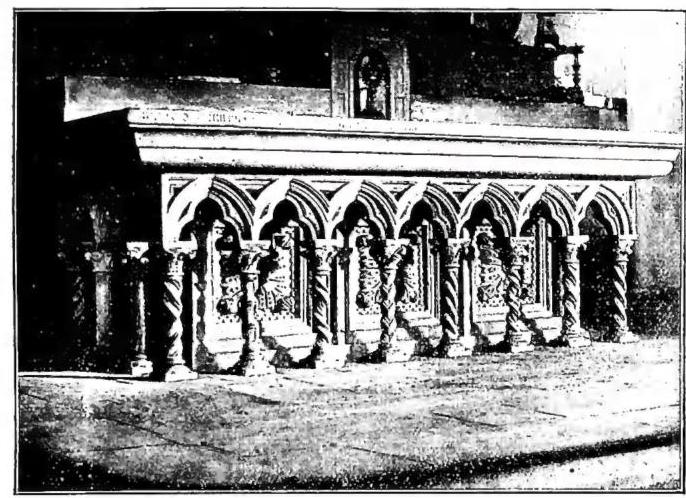
Among the sacred monuments of the city, mention should be made of the Cathedral with its ancient facade, where nevertheless from the 12th century continuous rebuildings followed one another; S. Francesco of the 13th century, noteworthy for its altar and choir of great artistic value. The archive of the ancient abbey was destroyed in 1353. A part of the later papers is collected in the Archive of the Episcopal Curia.
Bibliography3 works
Serafino Prete