
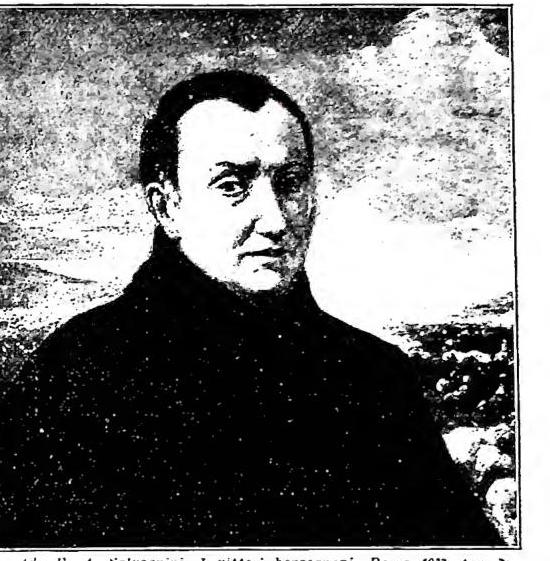
COURTOIS, Jacques, called Il Borgognone. -
Painter and engraver, b. 12 Feb. 1621 at St-Hippolyte
in Franche-Comté and d. in Rome on 14 Nov. 1675.
A pupil of his father, the painter Jean-Pierre C., he came
to Italy as an adolescent (1636) and, at Milan, enlisted
in the Spanish army, without however neglecting
painting.
Having left the army and gone to Bologna to the shop
of a Lorrain landscape painter, one Jérôme, he there met Guido
Reni and Albani, after whose example he resolved to become
a painter of religious pictures. But after passing
through Florence and Siena, in about 1640 he moved to Rome
where the friendship of Pieter van Laer called il Bamboccio,
of Michelangelo Cerquozzi and of Pietro da Cortona - whom
he met while he was painting in the refectory of the convent
of S. Croce in Gerusalemme, where, as soon as he arrived, he had been
given lodging - led him back to his true path, which was
that of the painter of battles, painted with « French fury »
using the many sketches taken from life during his
military life. In Rome, in about 1647, he married a certain Maria Vaiani, but
serious frictions embittered his life and drove him out
of the house. He was again in Florence and Siena (1652 and 1654-55)
in the service of Mattias de' Medici. Having gone for a short time
to his homeland around the beginning of '55, he painted, together with his brother
Gianfrancesco, some pictures for the convent of the
Ursulines of Fribourg where two sisters of his were nuns. On
his return to Italy, he passed through Bergamo and Venice, was
perhaps in Padua and through Siena and Florence returned to Rome
where on 13 Dec. of '57, he entered as a temporal coadjutor
among the Jesuits of S. Andrea al Quirinale and here he pronounced
his final vows on 2 Feb. 1668.
Meanwhile he had continued to paint. In 1658,
together with his brother Guglielmo, he began the decoration
of the chapel of the Congregazione Prima Primaria
at the Collegio Romano, which can be considered
the best of his religious works and which still
demonstrates his predilection for agitated
battle scenes. Some pictures, today lost, he painted for the
refectory of the casa professa at the Gesù, others for the
novitiate of S. Andrea al Quirinale, and in the last years
of his life he busied himself preparing the drawings for a work
that he was to have painted in the tribune of the Gesù.
Then he is found at Genoa; in Lent of '75
he is at Pisa, then at Florence, where he left with the grand duke
Cosimo III his self-portrait, then, having returned to Rome,
death overtook him suddenly.
There has already been occasion to mention how C. at times
made use of the collaboration of his brothers, also
painters: GUGLIELMO, b. at St-Hippolyte in 1628 and
d. in Rome on 15 June 1675, had been a pupil of Pietro
da Cortona and left various engravings besides paintings
in the Roman churches of S. Marco, of S. Giovanni in
Laterano, of S. Prassede, of S. Lorenzo in Lucina and in
some others; GIAN FRANCESCO (and not Giambattista, as
has often been repeated) was a Capuchin in a Roman
convent and painted predominantly religious pictures
for the houses of his Order.
Bibliography2 works
Gilberto Ronci