
PEKING [BEIJING], ARCHDIOCESE OF. - Peking, a city in the province of Hopeh, formerly the capital of China, is rich in monuments of ancient Chinese civilization. The vicissitudes of the spread of Christianity up to the middle of the last century are narrated under the entry China (Enc. Catt., vol. III, coll. 1656-71, where under the heading Christian Art, coll. 1669-71, some Christian monuments of the place are also mentioned). On May 30, 1856, the diocese of Peking having been suppressed, its jurisdiction having been reduced to the civil province of Celi (or Chihli, today Hopeh) alone, its territory was divided into the three apostolic vicariates of Northern Peking, Eastern Peking and Western Peking, which were subsequently designated respectively by the names of Northern Celi with its see at Peking, Central-Eastern Celi, with the seat of the Ordinary at Sienhsien (v.), and South-Western Celi, with the seat of the Ordinary at Chengting (v.). The first and third were entrusted to the Congregation of the Mission, the second to the Society of Jesus.
The first was repeatedly divided to give life to the following circumscriptions: Eastern Celi, today Yungping, on Dec. 23, 1899; Central Celi, today Paoting (v.), on Feb. 14, 1910; Maritime Celi, today Tientsin (v.), on Apr. 27, 1912; Suanhwaifu on May 10, 1926. On May 25, 1929 it ceded the district of San Puo, which, with three civil sub-prefectures taken from Paoting, formed the mission sui iuris of Yihsien (v.). On Dec. 3, 1924 it changed its name from Northern Celi to that of Peking, and on Apr. 11, 1946 it was elevated to a metropolitan archdiocese of the ecclesiastical province of Hopeh with the suffragan dioceses of Ankwo, Chaohsien, Chengting, Paoting, Shunteh, Sienhsien, Suanhwa, Tientsin, Yungnien and Yungping, to which in 1947 Kinghsien and Tamig were added. On May 25, 1946, with the appointment as archbishop of Card. Tien Kenhsin, Peking passed to the Chinese secular clergy.
It has an area of about 30,000 sq km. As of June 30, 1947, out of a total population of about 5,000,000 inhabitants, Catholics numbered 215,918 and catechumens 1,756; Chinese secular priests 75, Lazarists 63 of whom 30 native, major seminarians 15, minor seminarians 50. Auxiliary personnel: 8 Lazarist lay brothers, of whom 7 Chinese; 71 Marist brothers; 246 sisters; 105 catechists. On the territory, divided into 6 districts: primary stations 90, secondary stations 1,918, with 57 churches and 389 chapels. The Catholic University Fujen, founded in 1924 at Peking and entrusted to the American Benedictines, later passed to the Society of the Divine Word: it had 4 Faculties. At Chala, near Peking, is located the regional Seminary, entrusted to the Lazarists.
When at the end of the 16th century and the beginning of the 17th the missions were resumed, the whole of China, ecclesiastically, was under the jurisdiction of the diocese of Macao (v.). The developments obtained by the Jesuits and then by the Dominicans (1631), by the Franciscans (1633), by the Augustinians (1680) and by the priests of the Paris Foreign Missions (1683) induced Pope Alexander VIII, urged also by the Kings of Portugal, to erect two other dioceses: of Nanking and of Peking (Apr. 10, 1690), suffragan, like that of Macao, of the archdiocese of Goa (v.). To the diocese of Peking were assigned the civil provinces of Peking (= Hopeh), Shantung, Lesotung (= Mongolia, Manchuria, Korea and Tartary), Shansi, Shenni, Honan and Szechwan. But already on Oct. 15, 1696 Innocent XII reduced the diocese of Peking to the provinces of Peking, Shantung and Lesotung alone; on Sept. 9, 1831 Korea was detached, on Aug. 14, 1838 Mongolia, Manchuria and Tartary and on Sept. 3, 1839 Shantung, so that Peking remained restricted to the province of Celi alone.
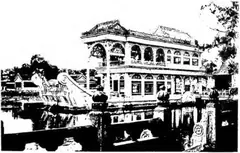
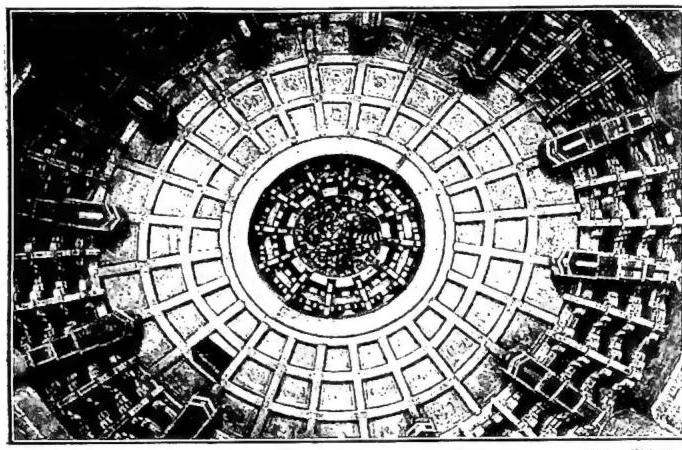
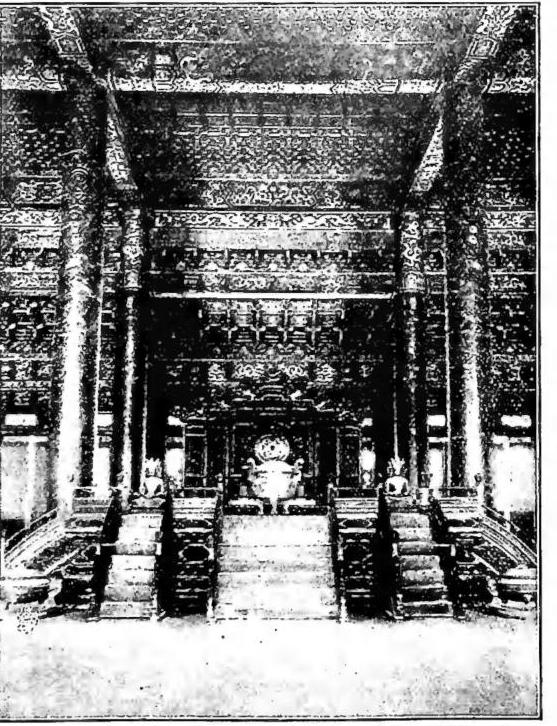
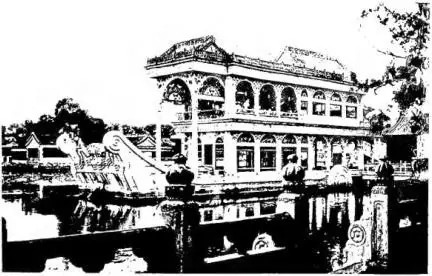
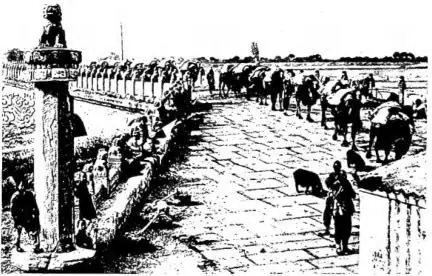
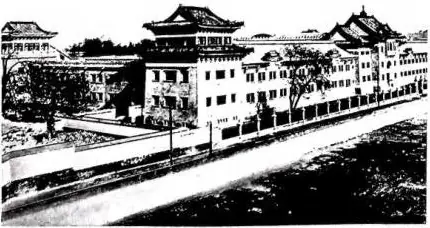
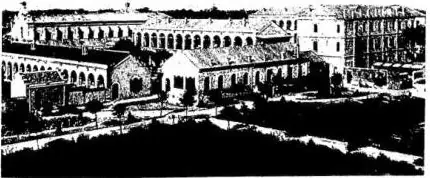
Persecutions of the Church of Peking were not lacking, during which the missionaries had to go into exile at Canton and Macao, where Msgr. Gioacchino de Souza Saraiva, C.M., also took refuge, elected in 1808 and who was the last bishop of the diocese, having had as successors at his death (1818) four apostolic administrators, who governed it until 1856, the year in which it was suppressed. The mission was able to rise again after 1860. - See plate LXXV.
Bibliography3 works
Adamo Pucki