
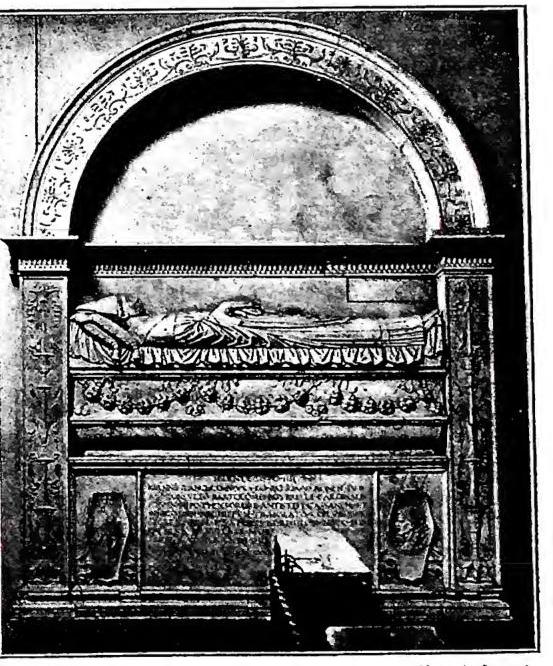
CAPPONI, SERAFINO. — Dominican theologian, born at Porretta in 1536. He entered the Dominican Order at Bologna on 25 October 1552 and took the name Annibale. He taught philosophy in the convents of Finario, Modiano, and Faenza; theology at Reggio; and metaphysics at the Studium generale of Bologna. In 1583 he transferred to the Congregation of the Abruzzi, teaching at Rieti and Aquila. He was subsequently regent at Ferrara. He resided for 25 years in Venice, occupied with the printing of his works. Because of the Serenissima’s anti-papal attitude, he returned to Bologna in 1606, where, after teaching for two years among the Carthusians, he lived and died in a reputation for holiness on 2 January 1614. His tomb is located in an honored place in the basilica of S. Domenico.
In addition to teaching, he devoted himself fervently and fruitfully to preaching. A prolific author, he left the Elucidationes formales in Summam theologiam s. Thomae de Aquino, 5 vols. in-fol. (Venice 1588 and 1596); the 1612 edition, in 6 vols., bears the title Summa totius theologiae s. Thomae de Aquino cum elucidationibus formalibus and contains additions drawn from Gaetano, Iavelli, Tocco, etc. Other editions appeared at Padua in 1698 and, in 10 vols., at Rome in 1773. In vol. I of the Elucidationes, C. prefixed a De altitudine doctrinae thomisticae proloquium omni veritate innixum. Other works: Tota theologia s. Thomae Aquinatis in compendium redacta (there 1597); Compendium theologicae veritatis b. Alberti Magni (that is, by Ugone Ripelin) cum scholiis utilissimis (there 1588 and 1590); Sacerdos in aeternum (explanations of the Holy Mass, ceremonies, vestments, etc. [there 1588, Rome 1729]). An Explanatio totius fidei christianae and Observationes super praedicabilia and other Aristotelian books
For exegesis, in addition to the manuscript commentaries on Mark and Luke, C. published the Veritates aureae super totam legem veterem (Gen., Ex., Lev., Num., Deut. [Venice 1590]); commentaries on Matteo (ibid. 1602) and Giovanni (ibid. 1604), while the commentary on the Salmi was published posthumously (Bologna 1692 and 1736–45). As an exegete, C. seeks and explains the literal and spiritual sense of the sacred text and presents the doctrine in the form of conclusions, based on extensive comparisons, interwoven with questions concerning matters of faith and Christian life. In his own time, the exegetical works were valued mines of information and instruction.