
CITTÀ DI CASTELLO, DIOCESE of. — In Umbria (province of Perugia), immediately subject to the Holy See. It has an area of 875 sq km,
comprises 156 parishes with 112 diocesan priests and 10 religious priests, and has a population of 64,130 inhabitants, of whom 64,050 are Catholics (1948).
The rapid spread of Christianity in Umbria and the favorable position of the Roman city (Tiferum Tiberinum) contributed to the antiquity and renown of the Church of Tifernum. Although a tradition concerning local martyrs does not merit credence, there is nevertheless certain information about the episcopal see as early as the middle of the 5th century. At the time of St. Gregory the Great, the bishop of Tiferum was Florido, a saint who left a great reputation in the history of that Church, especially in its hagiographical records (BHL, 1962). The diocese
extended its jurisdiction over a vast territory; it underwent divisions in 1325 in favor of the Church of Cortona, and in 1636, when Urban VIII established the diocese of S. Angelo in Vado. The city and its territory, after the ancient Lombard rule (Castrum Felicitatis), temporarily passed under papal dominion, to which they definitively returned after the 16th century, following the end of the lordship of the Vitelli.
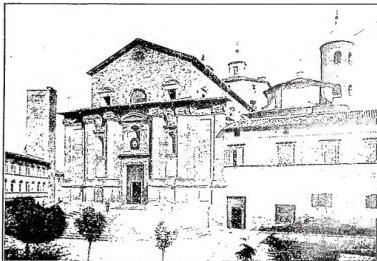
(Alinari photograph)
CITTÀ DI CASTELLO - Cattedrale. Facciata di F. Lazzeri (1531), con completamenti della fine del sec. XVI.
delle Muratte). Molte abbazie si contavano un tempo e di considerevole antichità : di una di esse, l'abbazia benedettina di S. Giovanni di Marzano furono commendatari i vescovi di C. di C. La storica abbazia è rimasta, dopo le devastazioni del '400, nella chiesa parrocchiale di S. Giovanni in Marzano (presso Monte S. Maria Tiberina).
La Cattedrale anticamente intitolata a S. Lorenzo, nel sec. XI ai SS. Florido e Amanzio, fu rinnovata quasi al completo tra il 1466 e il 1529 dai Gagini. Actualmente presenta i segni delle varie epoche costruttive : il campanile del sec. XII, il portale trecentesco di fianco, la facciata del '600. Due edifici romanico-gotici sono le chiese di S. Francesco, pur con i molti cambiamenti, e S. Domenico con artistico portale sul lato sinistro. Nella sala capitolare e più nel tesoro del Duomo si conservano pregevoli opere : un paliotto d'argento sbalzato e dorato del sec. XII e il tesoro di suppellettile liturgica rinvenuto presso la pieve di Canoscio. Ricchissima di soggetti sacri la Pinacoteca comunale al palazzo Vitelli.