
BARETTI, GIUSEPPE. - Polymath, b. in Turin on 25 Apr. 1719, d. in London on 5 May 1789. He received his first literary education and his taste for Bernesque poetry at Guastalla from Carlo Cantoni; in Turin he was a pupil of Tagliazucchi. A true literary gypsy, he made more or less lengthy stays in Parma, Mantua, Venice, and Milan, where he was enrolled among the Trasformati. In Venice in 1747-48 he published an unfortunate translation of the Tragedies of P. Cornelius; in '50, in Turin, his best Piacevoli poesie, and in Milan, in the same year, the Primo cicalamento against the regio professor Giuseppe Bartoli, his first battle against the "time-wasting" antiquarians. The seizure of the copies of this cicalamento not yet circulated was not the least cause of the decision, which he made the following year, to leave his homeland for a freer land. And so we find him in '51 in London, where he was attached to the direction of the Italian Theatre, and he set about teaching our language and studying English, French, and Spanish, languages he mastered to the point of being able to write in them as in his own. He became a friend of Samuel Johnson; and in the art of rapid, sparkling, aggressive conversation he soon rivaled the master. He published in English didactic and polemical works on the Italian language and literature, of which the most famous is a still today appreciated English-Italian dictionary (1760). Once this was published, he accompanied a young "English madman" on a journey through Portugal, Spain, and France; and he finally returned to Italy.
In Milan he set about writing an account of his journey in the form of Lettere familiari a' suoi tre fratelli: but, once the first volume came out in '62, publication was suspended because of certain remonstrances from the minister of Portugal. The following year, B. managed to publish in Venice, amid many adversities, the second volume, with which the work remained interrupted. All the very numerous letters of the eighteenth century are surpassed by those of B. not so much for the novelty of the facts and the acuteness of the judgments as for the beauty and vivacity of the prose. In Venice, which was the most active center of Italian journalism, B. began, hiding under the highly significant pseudonym of Aristarco Scannabue, on 1 Oct. 1763, a periodical, entirely written by him, of combative criticism, La Frusta letteraria, which he continued to publish every fortnight, until 15 Sept. 1764. Having proposed to transform his periodical into a monthly, he published its 25th number on 15 Jan. 1765: after which the Venetian Government, in order to get rid of the turbulent journalist, suppressed the Frusta. Then B., having retired to Monte Cardeto near Ancona, under the protection of Cardinal Acciaiuoli, continued his periodical, dating it from Trento, for another eight numbers (1 Apr. - 15 July 1765), almost all filled by eight violent and dazzling Discorsi against Father Appiano Buonafede, who, to avenge himself for an innocuous criticism that Aristarco had made of his Saggio di commedie filosofiche, had attacked him with the Bue pedagogo. This is the most famous and scandalous polemic of the 18th century. (In La Frusta one should note B.'s essay on ascetic books in Italy [ed. Laterza, I, Bari 1923, pp. 78-83], in which he recommends in such matters a limpid and elegant style and adherence to history, against the abuse of pious narratives, woven of dubious or false miracles). He left his "hiding place," and, still watched by the inquisitors of the Venetian Republic, went to Bologna, Florence, Livorno, and Genoa, whence he returned in '66 to London, carrying in his heart the homeland he loved. And when Samuel Sharp came out with certain of his travel letters (1766) slandering Italy, B. fell upon him with a book in English, in which he defended Italian customs and culture of those years (An account of the manners and customs of Italy, London 1768). This book gave him so much fame that in that same year he was elected secretary of the Academy of Fine Arts for foreign correspondence. He traveled with the family of one of his pupils through France and Flanders; and then alone, once again, he visited Spain, completing the Lettere a' fratelli in the English language (A journey from London to Genoa, through England, Portugal, Spain and France, London 1770). For this book B. is judged the most original and ingenious Italian describer of Spain and revealer of the Spanish soul and poetry. He returned to Italy in '70; but, having failed in his attempt to remain there permanently, he returned the following year to London, and never again left England. He continued always to work and to publish with tireless energy: one cites his critical masterpiece, the Discours sur Shakespeare et sur Monsieur de Voltaire (London 1777), a discourse of European importance, in which he exalts, in polemic with Voltaire, the excellence of the greatest modern poet; and the Scelta di lettere familiari (London 1779), for the use of English students of Italian, all written by him under different names (not finding - but he exaggerated! - tolerable letters by others) with the exception of the first, which is by Caro.
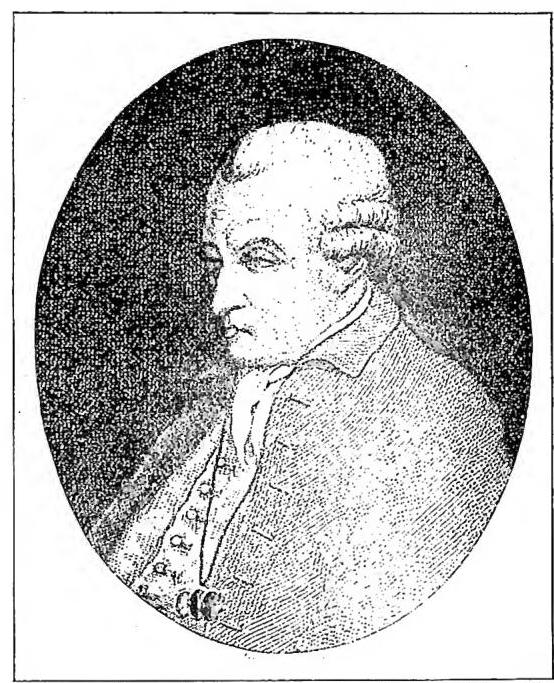
The man, with all his faults, comes across as quite likable. Frank, loyal, sincere, strong in adversity, proud in poverty, generous in comfort, gruff at times, but gruff with a good heart; he practiced honorably the profession of man of letters, without bending his back to princes and patrons; and in that age in which ignoble adventurers dishonored Italy, he held high the name of his homeland in England.
Of the two praises that are customarily given to B., that of a herald of innovative ideas and that of a writer who was among the first to contribute to the renewal of our prose, the first is quite debatable, the second is undeniable. More than a critic, he was a formidable polemicist, a terrible rout of the "paladins of the inkwell," an inexorable executioner of the "versiscioltaj," of the "raccoltaj," of spineless scholars, of impotent Arcadians. But, as a describer of travels, a versatile connoisseur of foreign cultures, a defender of Italy, a polemicist worthy of grappling with Voltaire, a mind made of witty good sense, he holds the primacy among our prose writers and polymaths of the eighteenth century.
Bibliography12 works
Giulio Natali