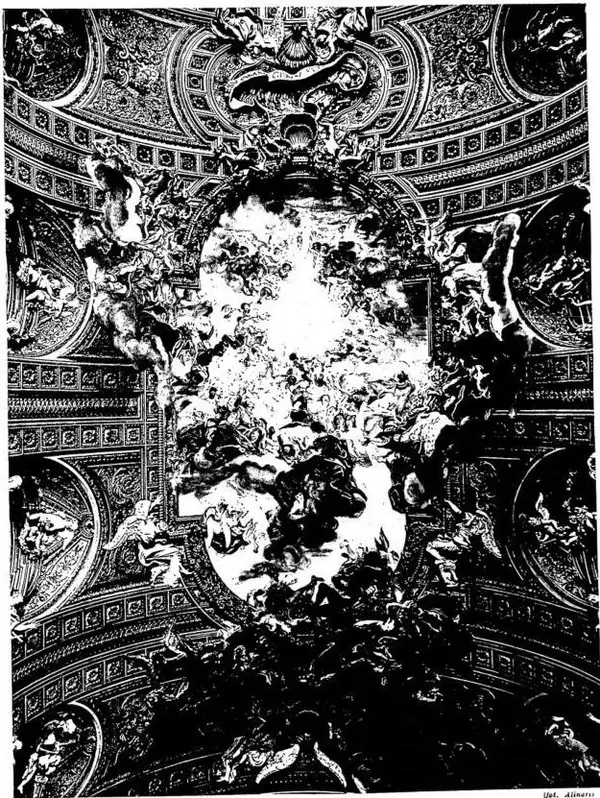
BACICCIA (Gaulli, Giovanni Battista), Known As. - Painter, b. in Genoa on 8 May 1639, he went to Rome in 1657 and remained there until his death (2 April 1709), except for a brief stay in Modena (1669) and in Genoa: in 1674 he was elected prince of the Academy of St. Luke.
In the Roman artistic milieu, where he benefited from the friendship and support of Bernini, B. was at first famous as a portraitist, and he executed countless portraits of popes and cardinals, from the time of the pontificate of Alexander VII to that of Clement XI: in them, the courtly Van Dyckian conception is enlivened by an intense richness of color and by an expressive mobility, achieved through contact with Bernini's art (portraits of Clement IX, gallery of St. Luke and the Rospigliosi collection in Rome; portrait of Card. Leopoldo de' Medici, at the Uffizi). The painter's complex figurative formation, which took place in Genoa under Borzone and in contact with the fertile workshop of the De Wael, is reflected in his first Roman works (altarpiece with the Madonna, the Child and saints, in S. Rocco, 1660-65; Pietà, Incisa collection, 1667; Assumption, formerly Chigi property at Castelfusano, 1667), revealing, alongside the Flemish manners of Rubens and Van Dyck and a Correggism often mediated through the Lombards, the study of the monumental altarpieces of the Carracci and of Reni. The intimate pictorial conflict inherent in B.'s impassioned colorism with respect to a closed drawing-based form, is resolved through the Roman encounter with the sculpture of Bernini, of which B. understood the essential significance of color, which allowed a new solution to the mass-movement problem: from it there follows a freer chromatic vision of form, understood however always with plastic solidity, so as to permit the rhythmic flowing of the contour for an effect of musical harmony.
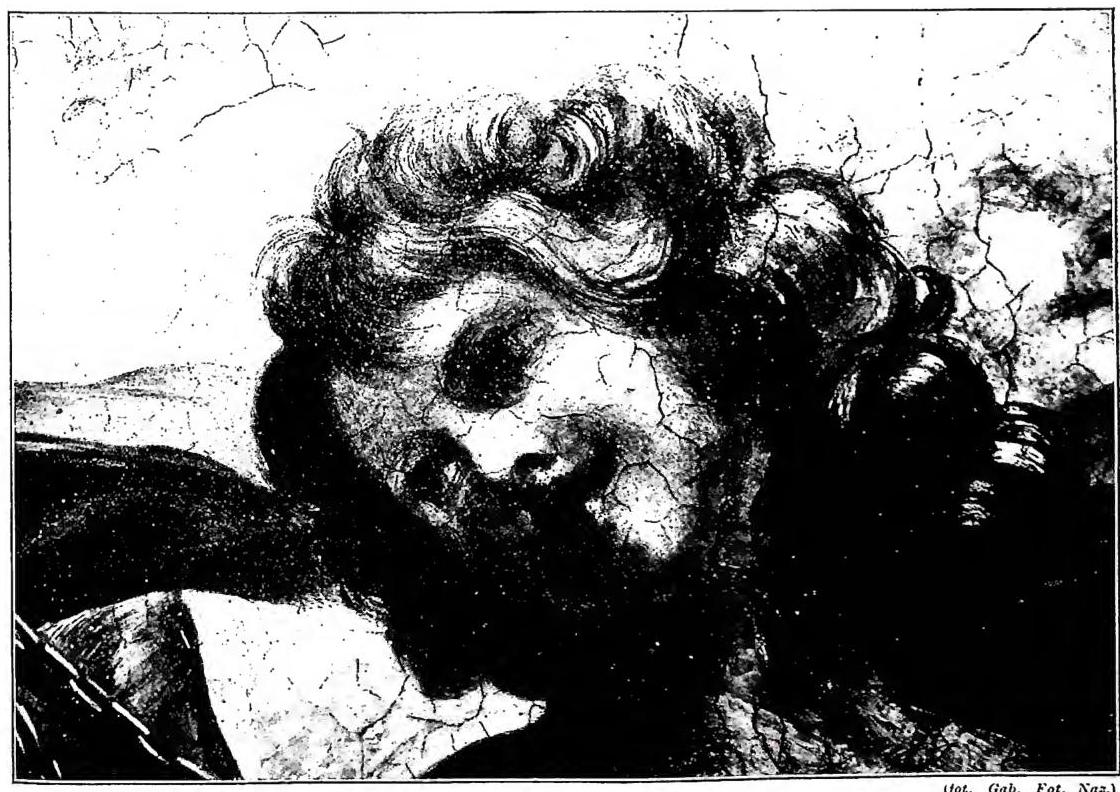
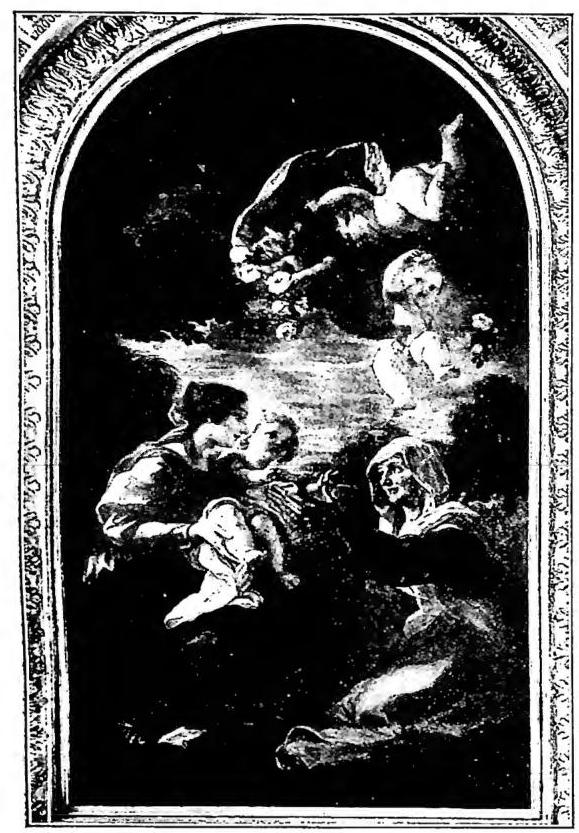
The 4 Allegories of the Virtues in the pendentives of S. Agnese in Piazza Navona (1668-71) represent the first complete affirmation of the painter's style: there follow the decoration of the ceiling of S. Marta (1672; the two side roundels are owed in their execution to another hand) and the grandiose one of the Gesù (1672-83: it comprises the frescoes of the vault, of the dome, of the pendentives, of the apse basin and of the vault of the chapel of St. Ignatius) commissioned from B. by the general of the Order, Fr. Oliva. In the fresco of the great vault, with the Triumph of the Name of Christ, B. makes use of his own skill in foreshortening and of the magnificent substance of his color to realize the most audacious conception of masses in movement, sweeping away every architectural term in a manner analogous to what Bernini had achieved in the Cathedra of St. Peter: the decorative tradition summed up by Pietro da Cortona himself was thus thoroughly renewed, opening the way to subsequent developments.
To the same period as the works in the Gesù belong some of B.'s most noble canvases (St. John the Baptist in the Desert, in S. Niccolò da Tolentino; St. Ludovico Bertrando, in S. Maria della Minerva; Death of St. Francis Xavier, in S. Agostino at Ascoli Piceno; Nativity, in the Carmine at Fermo; Christ and the Samaritan Woman, Spada gallery); while in the later activity, the merely decorative values end up at times prevailing, accentuating theatrical effects (Birth of the Baptist, in S. Maria in Campitelli; St. Nicholas of Bari, in S. Maria Maddalena, 1697-98), deadening the very vitality of color so as to bring its possibilities back within the terms of a customary manner. In the decoration of the ceiling of the SS. Apostoli (1707) with the Triumph of the Franciscan Order, B. reveals a veiled adherence to the schemes and manners proper to the imminent eighteenth century, contrary to his best style. - See Pl. XLI.