Machine translation of the 1948–1954 Italian original. The original text is authoritative.
GENUFLECTION. — This is the act of bending the right knee as a gesture of veneration and, by extension, the posture adopted in prayer by remaining supported on one’s knees for a certain length of time at particular moments. The first Christians did no more than continue the same Jewish practices. It is indeed known from Hegesippus that St. James the Apostle, bishop of Jerusalem, spent a long time kneeling in the Temple, so much so that he developed calluses on his knees (Eusebius, Hist. eccl., II, chap. 23, 6). St. Stephen knelt in his final prayer; St. Peter and St. Paul prayed on their knees; and the Christians who accompanied St. Paul to the ship carrying him away knelt to pray on the seashore (Act. 7, 60; 9, 40; 20, 36; 21, 5).
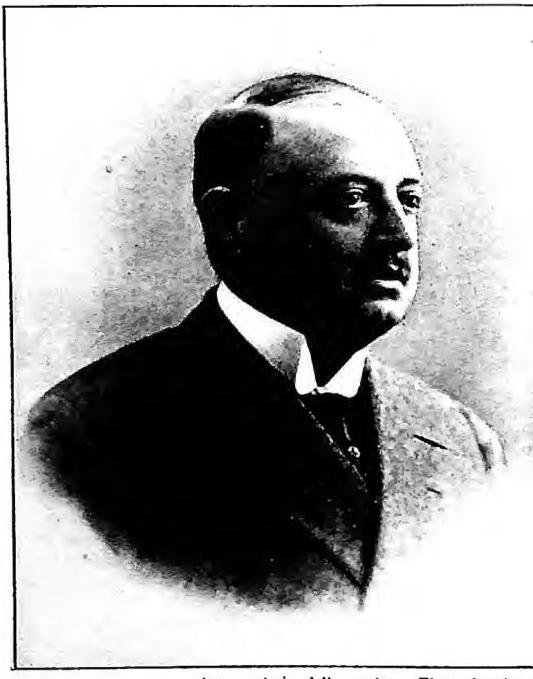
(courtesy of Countess Elena Gentiloni) GENTILONI, VINCENZO OTTORINO — Portrait.In Christian antiquity, prayer on one’s knees was very common, and monks were accustomed to genuflect at the end of every psalm. In Ireland, g. was widely practiced, and it is known that some saints practiced it hundreds of times a day. In Gaul, according to canon 37 of the Third Council of Tours of the year 813, people did not genuflect on Easter Day or during the Easter season. In the Ember Masses, which are very ancient and have a strongly penitential character, there is still the deacon’s invitation to the faithful to genuflect: Flectamus genna. G., performed by bending the right knee all the way to the ground, was introduced rather late, and only in the Latin Church, for the Most Blessed Sacrament, the Pope, and bishops. The Easterners have in its place the metanoia, which is a profound bow down to the ground, followed by kissing the tips of the joined fingers with the right hand and making the sign of the cross.
Bust.: H. Leclercq, Génuflexion, in DACL, VI, cols. 1017–21; F. Cabrol, Le livre de la prière antique, Tours 1929, p. 118 ff. Silverio Mattei
Cite this article
“GENUFLESSIONE.” Enciclopedia Cattolica, vol. VI (1951), p. 50. Azione Romana digital edition, https://azioneromana.com/article/genuflessione.