Machine translation of the 1948–1954 Italian original. The original text is authoritative.
GIORDANO - S. Messa celebrata sulle rive del G.
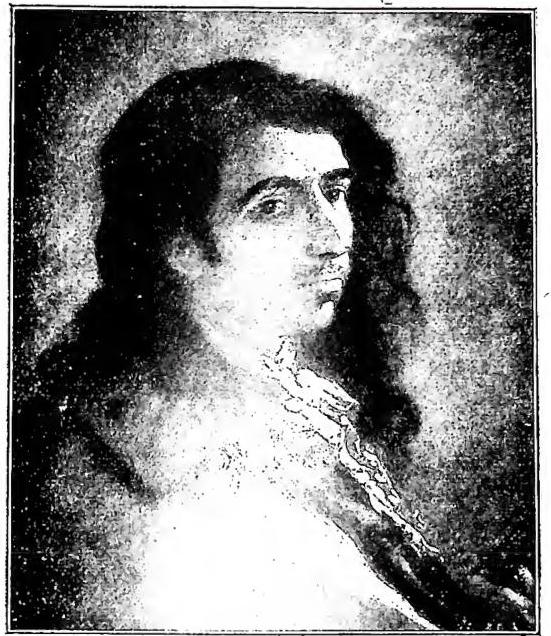
In 1692 he went to Spain and stayed there until 1702; he then returned to his homeland. (fot. Anderson) GIORDANO, LUCA - Self-portrait - Rome, Galleria nazionale d'arte antica.An artist exceptionally endowed with a fertile imagination, sureness of drawing and touch, master of every subtlety of his craft, capable of reproducing the characteristics of any painter to the point of forgery, G. in nearly 60 years of uninterrupted labor composed at a dizzying pace — hence his nickname "fa presto" — a brilliant, pleasing output aimed at scenographic decoration, dramatic movement, and the architecture of masses, yet tending toward facile effects and often devoid of depth of thought. After his youthful Riberesque production, one discerns in his works, from time to time, the decisive influence of Pietro da Cortona, Veronese, Rubens, and Lanfranco; and this happens without any order, but rather through a bold recreation that can only be defined as Giordanesque. His astounding output detracted from the quality of his production. Nevertheless, the selection of a dozen works can lead to placing G. in the front rank of Neapolitan Baroque painting. The mythological scenes in the hall of Palazzo Riccardi in Florence (1682), the Expulsion of Heliodorus in the church of the Gerolamini in Naples (1684), the sumptuous vault of the Escorial staircase in Madrid, with the Exaltation of Philip II (1692-94), demonstrate his gifts as a great fresco decorator. The Rubensian Judgment of Paris in the Bode Museum in Berlin, the monumental Martyrdom of St. Peter in the Galleries of Venice (1692), the Calling of SS. Peter and Andrew and the Tribute Money from the Certosa di S. Martino in Naples (1704), Christ Among the Doctors in the Corsini Gallery in Rome — the latter expressed in the so-called blonde manner of Veronese taste — show his great potential in oil painting. Yet his absolute masterpiece remains the frescoed vault with the Triumph of Judith in the treasury chapel of S. Martino (1704), an aerial composition that constitutes the first example of authentic Baroque painting in Naples and the starting point for the grand decoration of the Southern eighteenth century. L. G. was also a painter of portraits, still lifes, and genre scenes.
He is best appreciated in his wonderful drawings and sketches, where the impetuosity and freshness of his inventiveness are most evident.
BIBL.: A. De Rinaldis, Su alcuni disegni di L. G., in Ausonia, 5 (1910), pp. 146-47; E. Petracone, L. G., Napoli 1919; H. Posse, s. V. in Thieme-Becker, XIV, pp. 75-79; G. Ceci, Bibliografia per la storia delle arti figurative nell'Italia meridionale, Napoli 1937, pp. 189-91; A. De Rinaldis, s. V. ENOCH. Ital., XVII, pp. 171-72. Mario d'Orsi
Cite this article
“GIORDANO.” Enciclopedia Cattolica, vol. VI (1951), p. 282. Azione Romana digital edition, https://azioneromana.com/article/giordano.