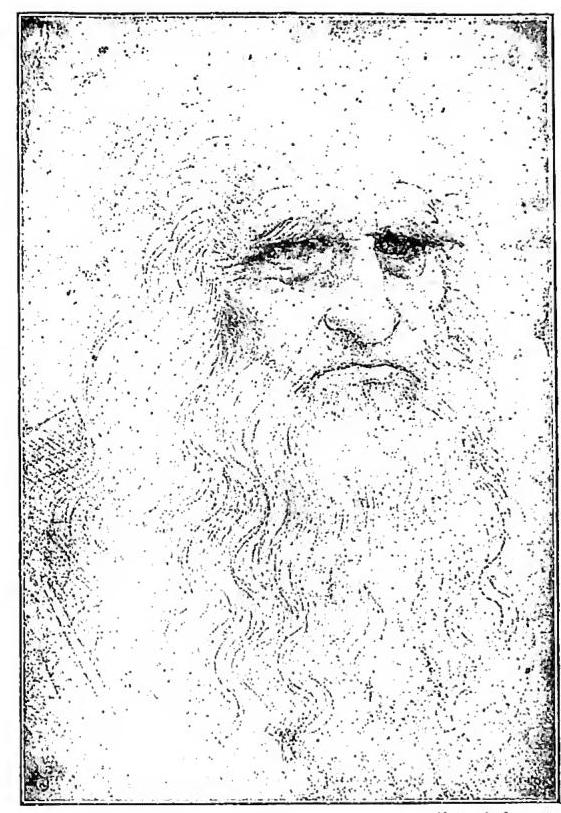
LEONARDO da PORTO MAURIZIO, santo. -
I. LIFE
Paolo Girolamo Casanuova, later L. da P. M., born at Porto Maurizio (Imperia) on 20 December 1676, died in Rome on 26 November 1751. Orphaned by his mother at the age of two, he had other siblings from his father’s second marriage, two of whom followed him into the Franciscan life. Around 1690, he studied privately in Rome for two years, then for another five at the Collegio Romano (under the Jesuits, who left a strong imprint on his spiritual formation), and in 1697 entered the Friars Minor at S. Bonaventura al Palatino.Having completed his novitiate at Ponticelli in Sabina and his theological studies in Rome, he was ordained a priest in 1702 and taught philosophy; after falling ill, he spent some time in Naples, then five years in the convent of his native town (1704–1709). He recovered after making a vow to the Virgin, and in 1709 moved to Florence, where he was among the first religious called by Grand Duke Cosimo III to establish the Franciscan retreat of Monte alle Croci. He remained there until 1730, serving several times as guardian. From 1730 until his death he lived in Rome, where, at S. Bonaventura al Palatino, a few hours after returning from a missionary tour in Tuscany, he died, personally attended by Pope Benedict XIV, who was greatly devoted to him. His remains are preserved in this church. He was beatified on 19 June 1796 and canonized on 29 June 1867. In 1923 Pius XI proclaimed him patron of indigenous missionaries. Feast day: 26 November.
II. APOSTOLIC ACTIVITY
His missions to the people assumed particular importance, to which he gave a distinctive character of his own. At least 339 of them are known, preached especially in Tuscany, Latium, Romagna, Corsica, and Liguria. Particularly noteworthy are those held in Rome, by order of Benedict XIV, in 1749–50 in preparation for and during the Holy Year, when, because of the great influx of the faithful, he was obliged to preach in Piazza Navona. He also preached Lent sermons and spiritual exercises for the people and religious on several occasions.He was also a great propagator of the pious practice of the Way of the Cross, which until then had been confined to Franciscan sites and, through successive apostolic privileges obtained by him, was extended to its present form. A list preserved by him himself enumerates 576 Ways of the Cross erected from 1731 onward, but it is certainly incomplete. The most memorable was the one he erected in the Colosseum on 27 Dec. 1750. It is to him that we owe the method of preaching at each station. He also founded, especially in order to make the fruits of his missions more lasting, various confraternities, such as the Congregation of the Little Crown and the Company of the Lovers of Jesus and Mary.
III. WRITINGS.
Among his oratorical works, particular mention should be made of the Quaresimale, the Prediche delle missioni (which partly coincide with the Quaresimale), the Esercizi Spirituali al popolo, the Fervorini sopra il S.mo Sacramento, etc.; four complete series of fervorini for meditation on the individual stations of the Way of the Cross; and six Viaggi (that is, six further complete Ways of the Cross), published only in 1911. The influence of Fr. P. Segneri is noteworthy in his works.
Among his spiritual works, the following deserve particular mention: the Manuale sacro (Rome 1734), for nuns; La Via del Paradiso; La Via Sacra spianata e illuminata (there 1731), an exposition of the Way of the Cross and a method for practicing it properly; Il tesoro nascosto (there 1737), on the Holy Mass. The correspondence of St. L. has not yet been systematically collected, but several small collections of letters exist.
IV. THE SPIRIT OF S. L. — At first s. L. appears as a rigid and austere ascetic. In the letters, however, and in the affective pages, one finds that “sweetness of spirit” which Fr. Giuseppe da Roma had already noted when publishing eighty-six of his letters. Along with the most characteristic features of Franciscan spirituality (love of poverty, of the humanity of Christ, contemplation, etc.), notable in him are the spirit of faith, apostolic zeal, austerity toward himself, and the cultivation of retreat and solitude despite his intense and active apostolic ministry. The principal source for knowledge of his spirit is the booklet of his Proponimenti. While still alive he was called the Apostle of Italy.
296. Paolo Toschi LEONARDO DA VINCI
I. THE LIFE
Giorgio Vasari being poorly informed and not very reliable, the life of L. can be reconstructed only from secure documentary data: records, his notes, letters from contemporaries, etc. Documents show that L. was born at Vinci on 15 April 1452, the illegitimate son of ser Piero, a notary; Piero must be supposed to have shown care and affection for this son, whom he kept with him in Florence.L. probably attended school very little, since his father must soon have noticed his artistic abilities and directed him toward art, placing him in the workshop of Andrea del Verrocchio, with whom he was still present in 1476. In the autumn of 1478 he began, as he writes in one of his notebooks, two “Vergini Mario”; in March 1481 the monks of S. Donato degli Scopeti commissioned him to paint, as an altarpiece for their high altar, the Adorazione dei Magi, which, left unfinished, was acquired first by the Benci and then by the Medici. “He was 30 years old,” says the Anonimo gaddiano, “when the Magnificent Lorenzo sent him to the Duke of Milan to present him, together with Atalante Migliorotti, with a lyre, which was unique in the playing of that instrument”; but much more extensive offers of service to Lodovico il Moro emerge from a draft letter, though not an autograph, of the