
MICROBIOLOGY. - Microbiology studies extremely small living beings, invisible to the naked eye and visible only through special optical devices (various microscopes), known as microorganisms or microbes (μικρός, small). These do not constitute a specific zoological or botanical group but include beings belonging to both the animal and plant kingdoms, of a nature not always well-defined and difficult to classify.
The microbiological era began at the start of the sixteenth century with the new tendency expressed by Girolamo Fracastoro (1478-1553), who, with remarkable intuition, asserted that the transmission of infectious diseases occurs through animated corpuscles capable of rapid multiplication, which he called «seminaria», or germs. These ideas of Fracastoro were revisited in the following century and developed by others, such as Pier Giovanni Faber, a physician from Montpellier, Father Athanasius Kircher, and Augusto Hauptman of Frankfurt, who in his Tractatus de viva mortis imagine even affirmed that the cause of infectious diseases lies in the presence of tiny worm-like animals in the blood of the sick. However, only in the second half of the seventeenth century (1675) was the existence of these minuscule beings confirmed by the Dutch naturalist Van Leeuwenhoek (1632-1723). This scholar, particularly skilled in the construction of microscopes, using a simple microscope of his own making—consisting of a small biconvex lens that allowed magnifications of approximately 270 times—was able to observe and describe in vegetable infusions, putrid waters, dental tartar, saliva, and the feces of humans and various animals, some very small elements shaped like straight or curved rods, filaments, spirals, and small spheres. Van Leeuwenhoek also succeeded in determining the size of these elements, which he called "little animals," by comparing them to dust particles with a diameter of a quarter of a millimeter. Unfortunately, neither this researcher nor others who made similar observations understood their true significance, so much time passed before microbes were recognized for their importance as agents of infectious diseases and as producers of fermentations and other natural phenomena. Nevertheless, the idea that these tiny beings were capable of multiple actions took hold in the minds of many scholars even in the absence of experimental proof, which soon arrived, thanks especially to Italian biologists.
First among these are the memorable experiments of Lazzaro Spallanzani (1729-99), who, to demonstrate the groundlessness of the theory of spontaneous generation—based on the principle of «corruptio unius, generatio alterius»—succeeded in proving that the "little animals" did not arise spontaneously in decomposing liquids but were themselves the cause of putrefactive processes. Subsequently (1824), the Italian Vincenzo Sette demonstrated that the reddening observed on some

(courtesy of Prof. Stejanelli) MICROBIOLOGY - Portrait of Robert Koch (1843-1910).

Microorganisms, despite sharing the common characteristic of extreme smallness that renders them invisible to the naked eye, differ from one another in size. Some, the largest, are on the order of a micron, that is, a thousandth of a millimeter, while others, the smallest, are on the order of a millimicron, or a millionth of a millimeter. The largest microorganisms are easily observable with ordinary microscopes, also called optical microscopes; the smallest, which are a thousand times smaller, cannot be observed, in the vast majority of cases, even with the aid of the most powerful optical microscopes and possess such an elementary structure as to make any attempt at definition, classification, and investigation into their nature difficult. These beings are called ultramicrobes, infraviruses, ultraviruses, or simply viruses, and the science that studies them is currently termed virology (v. VIRUS).
Microbes, named "animalcules" by van Leeuwenhoek, who first observed them, were for a very long time still considered part of the animal kingdom because they appeared, in the vast majority of cases, to be endowed with movement. Only when, around the mid-nineteenth century, it was demonstrated that many microorganisms, such as that of anthrax, were immobile and investigations into their nature were deepened, was it established that they mostly belong to the plant kingdom, though some belong to the animal kingdom: the former are called protophytes, the latter protozoa. However, there are microbes, such as spirochetes, for which considerable uncertainty still exists regarding their classification in one kingdom or the other. In light of these difficulties, Haeckel proposed uniting all unicellular beings into a single group, naming them protists (from the Greek πρότιστος), precisely to indicate that they are the first among all organisms, from which multicellular animals and plants originate. Among protophytes, myxomycetes and unicellular algae have little importance for microbiological studies, at least given the current state of our knowledge; bacteria and fungi are more significant, with the importance of bacteria in relation to other microorganisms being such that, for a long time, all microbes, including animal ones, were included under this designation.
Bacteria are unicellular plant organisms lacking chlorophyll, of extremely small dimensions, being on the order of a micron, with the smallest measuring even less than half a micron. From a systematic standpoint, bacteria occupy an intermediate position between unicellular algae and fungi.
The morphological study of bacteria is conducted using the optical microscope, an instrument whose main part consists of two lens systems arranged to achieve a double magnification of the object under observation. Today, improved microscopes are available that allow images of bacteria to be magnified up to 2,500 times. For particular investigations, the electron supermicroscope can also be used, permitting magnifications of over 50,000 times. Bacteria appear in the form of small spheres or straight or curved rods: spherical forms are called cocci and, in turn, are termed micrococci if isolated, diplococci if paired,
tetrads if grouped in fours, sarcinae if grouped in eights in a cubic arrangement, streptococci if arranged in chains like links, staphylococci if clustered irregularly like grapes. Rod-shaped bacteria represent the bacteria proper (from the Greek βακτήριον, small rod) or bacilli and may appear isolated or grouped in various ways; sometimes they form short
(per cortesia del prof. Stejanelli)
MICROBIOLOGY - Portrait of Luigi
Pasteur (1822-95).
chain-like formations, taking the name of streptobacilli. Bacteria with curved rod shapes are called vibrios if their body presents a single curvature resembling a comma, and spirilla if the curvatures are more numerous. Spirochetes are closely related to spirilla in form. Bacterial cells, regardless of their shape, have a very simple structure, consisting of a small cytoplasmic mass, rich in various nuclear substances, bounded by a thin wall. Many bacteria are equipped on their surface with extremely fine, very long filaments—even two or three times the length of the bacterium itself—called flagella, which, depending on the bacterial species, vary in number from one to a hundred and are arranged in different ways: around the entire bacterial body, at one end only, or at both ends. Flagella represent the organs of locomotion for bacteria, imparting true translational movements to them. Bacterial cells nourish themselves by absorbing from the environment the substances necessary for metabolic processes; these cross the cell wall through complex osmotic and enzymatic mechanisms. Regarding respiratory processes, bacteria are divided into three groups: aerobes, which live only in the presence of atmospheric oxygen; anaerobes, which live in the absence of air, as oxygen is harmful to them; and finally, facultative aerobes, capable of living both in the presence and absence of air.

The conditions that favor bacterial multiplication are not the same for all species; indeed, they vary for each one, and sometimes it occurs that a factor which facilitates the multiplication of one species distinctly hinders that of another. A very characteristic example in this regard concerns aerobic and anaerobic bacteria: the former multiply in the presence of air, the latter in its absence, so that when aerobic and anaerobic germs are found together in the same material, the former develop preferentially if there is an abundance of air, or the latter in its absence. Under certain conditions, it is precisely the aerobic bacteria that, by consuming atmospheric oxygen, create favorable conditions for the development of anaerobes.
Temperature also significantly influences bacterial multiplication, as each species requires specific thermal conditions for its development. Most bacteria develop well between 15° and 40° C, but there are some, such as psychrophiles, that prefer low temperatures near zero, and others that are capable of developing even at high temperatures (up to 70°-80° C).
(courtesy of Prof. Stejanelli)
MICROBIOLOGY - Bacteria observed under the electron supermicroscope.
These latter bacteria, which are therefore called thermophiles, represent an exception to biological laws, managing to live and multiply at temperatures above that of the coagulation of the protein substances of living organisms. Almost all bacteria succumb at temperatures near 60° C, while they tolerate low temperatures well, at which they are able to resist for several months, remaining in a state of latent life until the temperature returns to higher values.
From the foregoing, it is clear that bacterial multiplication can be hindered by multiple causes, the most notable of which are the scarcity of nutrients, an unsuitable degree of temperature and humidity, and the presence of substances eliminated by the bacteria and harmful to them. Such unfavorable conditions create an environment unconducive to bacterial life, leading to the death of the least resistant and hindering the multiplication of others. Often, some bacterial species give rise to the production of spherical or ovular corpuscles, called endospores, which form inside the bacterial body, one per cell. These spores, due to a thick membrane with which they are coated, are highly resistant to external agents, particularly desiccation, sunlight, and the action of high temperatures. Moreover, they have great biological importance because they ensure the preservation of many bacterial species.
Among the biological manifestations produced by many bacteria, the production of colored substances or pigments, which diffuse into the material in which they multiply, is noteworthy. This frequently occurs in various foods contaminated by germs: thus, milk may appear colored blue or yellow due to the vigorous growth of special chromogenic bacteria, and bread and various sweets may take on a characteristic blood-red coloration due to the active proliferation of a small bacterium known as the bacterium prodigiosum.
Another extremely interesting phenomenon is that of luminescence produced by photogenic bacteria, which are found especially on cod and other fish and impart to them a particular luminosity, visible at night. These photogenic bacteria are also found on meat when putrefactive processes begin and, sometimes, in sweat and urine.
Bacteria are extraordinarily widespread in the environment: they are found in the soil, where temperature, humidity, and the presence of organic substances often create extremely favorable conditions for their life; in water, to which they arrive from the soil; in the air, where they live adhering to dust particles or on minute droplets of various liquids; in our food, where they often produce serious alterations; on the skin and mucous membranes of humans and animals; on plants, clothing, and sur—
MICROBIOLOGY - Optical microscope.
(courtesy of Prof. Stefanelli)
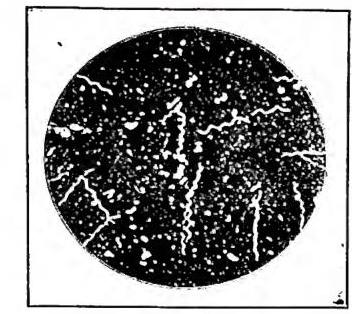
MICROBIOLOGY - Spirochetes observed in dark field.

Very similar to tubercular bacteria is that discovered by Hansen, which causes in humans the terrible disease of leprosy, almost absent in Italy but still affecting several million people worldwide today. Two other bacteria infamous for the massive epidemics they provoked in the past are those of plague and cholera, which still represent a non-negligible danger, as there remain foci of plague in Tibet, Mongolia, and Arabia, and of cholera in India, Indochina, Malaysia, and other regions of Asia. Other pathogenic bacteria include those of typhoid and paratyphoid, which cause the various clinical forms of typhoid fever; those of dysentery, which provoke the homonymous disease, especially among small children and troops operating in hot periods; as well as the bacteria of diphtheria, tetanus, anthrax, whooping cough, etc. Even among spirochetes, pathogenic ones are not lacking, and among these, the primacy belongs to the spirochete of syphilis, which, with great likelihood, was introduced into Europe from America when Christopher Columbus and his men returned from their famous voyage. This germ, named Treponema pallidum by its discoverer, Schaudinn, spares no part of the body, causing nephritis, hepatitis, various cardiopathies, severe afflictions of the nervous system, such as progressive paralysis and tabes dorsalis, and also produces most serious alterations in newborns. A fatal prerogative of pathogenic bacteria is their ability to pass easily, sometimes with a simple cough, from a sick host to a healthy individual, making them ill, so that bacterial diseases are contagious. And since many bacteria are common to humans and animals, cases of diseases transmitted from animal to human frequently occur. Thus, for example, milk from a dairy animal (cow, goat) infected with pathogenic bacteria, such as that of bovine tuberculosis or Malta fever, can cause the respective diseases in humans. The penetration of pathogenic bacteria into the human or animal organism occurs through the skin and various mucous membranes, more easily if there are even minimal lesions of continuity. Thus, the bacterium of plague and that of anthrax penetrate through intact skin or skin presenting minimal erosions from scratching. Sometimes the penetration of pathogenic bacteria can occur through the skin by means of the bite of various insects. The bacterium of tuberculosis, instead, normally penetrates through the mucosa of the bronchi, lung, or intestine. Another entry point for bacteria is constituted by the tonsils, which, with their particular anatomical structure, facilitate their penetration. Once inside the organism, bacteria begin to multiply in tissues, organs, and humors and to exert their aggressive actions, which consist primarily in the production of particular highly toxic substances, called bacterial toxins, which are distinguished into exotoxins and endotoxins: the former are secretion products of bacteria, of a protein nature, and act independently of the bacteria that produced them, spreading throughout the organism and producing severe lesions in various tissues; endotoxins are also endowed with high toxic capacity but are released only following the disintegration of the bacterial body. Some germs act predominantly through exotoxins, others through endotoxins, and others through both exo- and endotoxins.
Among bacteria that exert their pathogenic power by means of exotoxins, particular importance is held by the diphtheria and tetanus bacteria. These two bacteria, once they have penetrated the human organism, show no invasive tendency but remain localized at the point of entry, where they secrete their exotoxins, which spread throughout the organism, producing severe lesions of the nervous system elements. A highly toxic exotoxin is the botulinum toxin, which, if ingested by humans, produces botulism. It is interesting that the botulinum bacillus, producer of this highly active toxin, is incapable of parasitic life, that is, of living in the human organism; instead, it is found in soil or in preserved vegetable or animal foods, in which it grows, abundantly forming its powerful toxin, which renders the foods themselves harmful to humans. Unfortunately, cases of botulism, even fatal ones, occur not infrequently.
Bacteria can be distinguished into pathogenic and saprophytic: the former exert an aggressive and harmful action on the organism of humans and animals, the latter live in the environment. It can be affirmed that bacteria are present everywhere; they are absent only in the upper layers of the atmospheric air, far from any manifestation of animal or plant life.
To combat the deleterious effects of bacterial exotoxins in humans, antidiphtheric, antitetanic, antibotulinic, and other sera are advantageously employed (v. below). Among the better-studied endotoxins, also in terms of chemical constitution, is that of the typhoid bacterium, which exhibits a strong affinity for the intestine, where it produces characteristic ulcerations. The endotoxin of the plague bacterium, by contrast, causes severe alterations in the circulatory system and nervous tissue. The dysentery bacterium of Shiga-Kruse, however, exerts its pathogenic power through an exotoxin with a selective action on nervous tissue and an endotoxin that produces severe intestinal alterations. The study of bacteria is now conducted using appropriate techniques that allow for the examination of their fine structure and biological properties, their isolation from the environment in which they are found through artificial cultivation in special nutrient media where they can develop and multiply, and the testing of their pathogenic power in laboratory animals. Among the many classifications proposed for bacteria, the simplest is that based on morphological characteristics, dividing them into cocci, which have a spherical or slightly oval shape;
bacilli, which are rod-shaped; and spirilla, which appear as variably curved rods.
Fungi (Mycophytae in Engler’s classification) are microorganisms of the plant kingdom, like bacteria devoid of chlorophyll, consisting of a single cell or an aggregate of several cells that are identical or only slightly different from one another. They possess a well-defined cellular structure and exhibit reproductive phenomena that are sometimes highly complex, placing them among the most evolved microbial forms. They present two fundamental vegetative types with distinct morphological characteristics: one with a globular cellular structure and the other with a filamentous structure. Fungi of the first type, also called blastomycetes and saccharomycetes, appear as large cells 6–8 microns in diameter, round or oval in shape, occurring singly or grouped in clusters of variously arranged elements. Each individual cell consists of a cell wall or membrane, composed predominantly of chitin, cellulose, and hemicellulose; cytoplasm, with vacuoles and granules of various reserve materials; and nuclear bodies often exhibiting all the characteristics of true nuclei. Sometimes these cells elongate, assuming a filamentous form. Filamentous fungi, also known as molds, appear as long filaments called hyphae, more or less branched and intertwined, forming characteristic structures with the appearance of tubercles, compact tissues, or velvety felts. The individual filaments may consist of several identical cells joined together or of a single syncytial formation.
Fungi reproduce by the division of one cell into two or more daughter cells, or through the production by the mother cell of one or more round or oval buds (budding or blastogony), or even through the process of sporulation or propagation, which involves the production of small, highly resistant spherical or elliptical bodies that form either inside the cells (endospores) or outside them (exospores), assuming various arrangements such as clusters, chains, or brush-like formations, as seen, for example, in fungi of the genus Penicillium, which are characterized by filamentous cells, the hyphae, bearing chains of exospores at their tips, giving the whole a brush-like appearance. Many fungi exhibit characteristic processes of sexual reproduction, ranging from simple autogenous fertilization, consisting of the union of two identical cells, to complex heterogamous processes, in which true copulation may occur between two sexually differentiated elements, one male and one female. Fungi have a chemical composition similar to that of bacteria, consisting of large amounts of water, proteins, fats, carbohydrates, and minimal quantities of mineral salts.
Like bacteria, fungi are widely distributed in nature: they are found in very large numbers in water, air, soil, on foodstuffs, clothing, and nearly everywhere. As soon as environmental conditions favorable to their development arise, they begin to multiply rapidly, covering the materials on which they grow with a dense, characteristically colored vegetation—white, black, green, red, or yellow—thus giving rise to the well-known phenomenon of mold. This frequently appears on the walls of damp environments, and sometimes the growth of particular molds on walls painted with arsenic-based colors can lead to the formation of volatile arsenic compounds that are highly toxic to those who inhale them. Damp wood also undergoes invasion by molds, so that wooden parts of a structure, such as beams and shutters, may under certain humidity conditions take on a yellowish or reddish-brown color, become covered with minute water droplets, and lose their normal consistency, becoming friable.
Generally, fungi lack pathogenic power; however, some are capable of causing particular morbid conditions in humans and animals, sometimes severe, collectively known as mycoses. One of these is thrush in infants, an affection of the oral and pharyngeal mucous membranes, which become covered with characteristic whitish deposits due to the proliferation of various fungi. Other mycoses of great importance due to their spread and contagiousness are ringworms, diseases of the skin, hair, and nails, caused by fungi belonging to the genera Ctenomyces, Sabouradites, Trichophyton, and Epidermophyton. Pneumoconioses and various forms of actinomycosis are also of particular importance in human pathology. In recent years, studies and research on fungi have received further impetus due to the fact that they produce substances (penicillin, streptomycin, etc.) with strong antibiotic action against many pathogenic microbes.
Among the many classifications proposed for fungi, the most accepted divides them into two major classes: that of the Eumycetes, which includes all fungi exhibiting sexual reproduction processes, and that of the Deuteromycetes (δεύτερος, secondary), which includes all others for which such higher reproductive processes are unknown. The class of Eumycetes is further subdivided into three subclasses (Basidiomycetes, Ascomycetes, and Phycomycetes) depending on the type of sexual reproduction that leads, respectively, to the formation of basidia, asci, and particular zygotic formations. These three subclasses are in turn divided into orders, suborders, families, etc. The class of Deuteromycetes comprises three orders, characterized by different sporal formations.
Protozoa are animal organisms composed of a single cell that performs both vegetative functions and those related to the life of relation. They constitute a highly heterogeneous group of great biological importance, which some authors even consider as a subkingdom of the animal kingdom. Their size ranges from a few microns, in some species, to several microns, up to 200 and even more in others, thus placing almost all of them among microorganisms. Their shape is also extremely variable; the same can be said for their structure, which is very simple, almost elementary, in some protozoa and notably complex in others. Unlike other microbes, in protozoa there is always a clear distinction between nucleus and cytoplasm, and the latter is almost always differentiated into endoplasm and ectoplasm. The endoplasm, located internally, is more fluid, often presents vacuoles and various granules, and generally performs vegetative functions; the ectoplasm is found externally, is denser, and manages nutritional exchanges and the functions of the life of relation. The nucleus is never absent; indeed, many protozoa have two, a smaller one called the micronucleus, which governs reproductive phenomena, and a larger one, the macronucleus, with vegetative functions; some species have an even greater number. Many protozoa are also equipped with a centrosome and other organelles. The body of protozoa, exceptionally devoid of any covering, is normally delimited all around by a more or less thick membrane, which in some classes appears as a very resistant cuticle.
The type of nutrition varies among species: in some protozoa, it occurs, as in bacteria, through the absorption by the cytoplasm of nutrients present in the surrounding liquid; in more evolved forms, there is a true holozoic nutrition, which consists of the intake of minute food particles, which are brought inside the cell, then digested and utilized. Movement is a very common phenomenon in protozoa and is produced either by small contractile fibrils or by short and slender extensions of the cytoplasm, known as cilia, which vary in number and arrangement within the cell body, or by large filaments called flagella, or finally by small protrusions of the ectoplasm shaped like clubs, thick and thin, which the protozoon itself emits and retracts; the latter are called pseudopodia and serve, in addition to locomotion, for the intake of food particles. Protozoa exhibit the most diverse reproductive processes: simple or multiple division, in which the nucleus first and the cytoplasm afterward divide into two or more parts, endogenous or exogenous budding, various phenomena of sexual reproduction, including
those of parthenogenetic type. Furthermore, reproductive phenomena by division or budding frequently alternate with sexual ones, giving rise to interesting biological cycles, which are of great practical importance when dealing with protozoa parasitic to humans and animals. Protozoa are poorly resistant to external agents; however, many of them, when environmental conditions become unfavorable, transform into cysts, surrounding themselves with a highly resistant particular capsule that protects them from harmful stimuli. Protozoa are widely distributed in nature, found as saprophytes in soil and water or as parasites in humans and various animals.
Protozoa are divided into four classes: flagellates, rhizopods, ciliates or infusorians, and sporozoans.
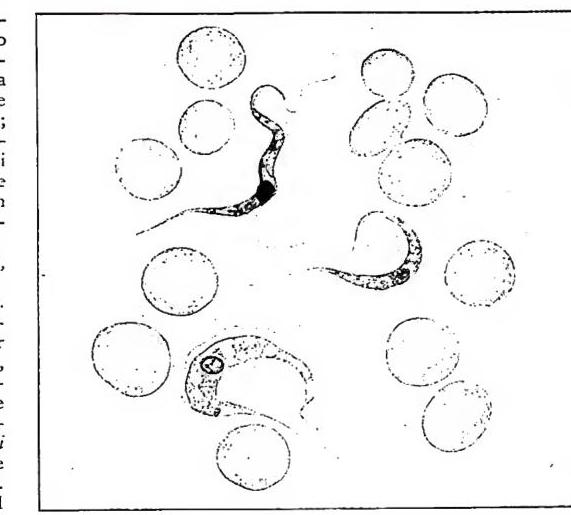
Flagellates are characterized by one or more flagella. This class includes many species parasitic to humans, such as Trypanosoma gambiense, first observed in the blood of natives of Gambia in Africa, which causes sleeping sickness, and the leishmanias, which cause oriental sore, an ulcerative condition of the skin and mucous membranes, and a severe febrile anemia accompanied by large tumors of the spleen and liver. Rhizopods are protozoa equipped with pseudopodia, which serve, as mentioned, for locomotion and the capture of food. This group includes amoebae, which owe their name to the fact that they continuously change shape. Some of them live saprophytically in water and in the intestines of humans and other animals; other amoebae are pathogenic: for instance, Entamoeba histolytica, which can produce a serious contagious intestinal disease called amoebic dysentery or amoebiasis, characterized by intestinal lesions with diarrhea, often bloody, and liver disorders. Ciliates, among protozoa, are the most differentiated, being very large and even equipped with a rudimentary oral and anal opening. Only one species, Balantidium coli, which lives as a commensal in the intestine of pigs, can cause intestinal disorders in humans, sometimes severe. All other ciliates live in fresh or saltwater as saprophytes. The class of Sporozoans, which includes telosporidians and neosporidians, is characterized by the alternation of sexual reproduction phenomena with asexual reproduction phenomena. These protozoa are very small and are all parasites of vertebrates and invertebrates. This class includes the various plasmodia or hemosporidians of malaria, which complete their life cycle in mosquitoes and humans, in whom they produce the various forms of malarial fever.
Microbes carry out in nature a series of complex transformations of organic matter, so important for the life of higher beings that it justifies the assertion that, without microorganisms on Earth, life would come to a halt. Microbial actions are facilitated by the fact that microbes are extremely widespread and tend to multiply rapidly, reaching an infinitely large number in a short time. Among the many and interesting manifestations of microbial life, particularly important is that connected to the cycle of organic matter, which occurs between the animal and plant kingdoms through the action of numerous microorganisms and consists of a series of decomposition and reconstruction processes. Indeed, organic substances of animal origin, such as corpses, carrion, feces, urine, etc., once they reach the soil, are decomposed by the various microbes found there in great numbers and transformed through successive reductions into simpler structured bodies. Some of these, like water and carbon dioxide, are rapidly and directly utilized by plants, while others, such as nitrogen and ammonia, are further elaborated through the intervention of particularly specialized microbes, transformed into mineralized complexes (nitrites, nitrates, etc.), and utilized by plants. It is interesting that gaseous nitrogen, resulting from the decomposition of organic matter, could not be utilized by plants without the providential intervention of particular nitrogen-fixing microbes, some of which, called azotobacteria, are capable of fixing nitrogen alone by transforming it into usable products; other microbes, instead, carry out these
(Courtesy of Prof. Stefanelli)
MICROBIOLOGY - Trypanosoma.
The fixation and transformation of nitrogen by microorganisms living in symbiosis with legumes, within whose roots they reside, also occur. The remarkable activity of these microorganisms results in the enrichment of soils with numerous nitrogenous substances and explains the long-known fact that legumes increase soil fertility.
Other manifestations of microbial life of great importance are fermentations, which are substantial transformations of organic matter, with or without gas development, carried out by various microbes.
IMMUNITY. - In a biological sense, it is the property possessed by certain organisms to oppose, through reactive processes, the offensive actions of pathogenic microbes, in order to defend their own biological integrity. These defensive processes are employed by the organism to prevent the penetration of pathogenic microbes through the skin and mucous membranes that line the mouth, nose, conjunctivae, and other natural openings, and to oppose the spread of the microbes themselves in tissues and organs, should they have overcome the cutaneous or mucosal barrier. When the defensive powers of the organism succeed in preserving it from the microbes of a given disease, it is said that the organism is immune and thus refractory to II. If, however, the microbes, having overcome the defensive barriers, invade the organism causing damage to tissues and organs and severe disturbances to its functions, it is said that the organism is not immune, that is, it is receptive. Between the two extreme limits of maximum immunity, that is, complete refractoriness, and a complete lack of immunity, that is, complete receptivity, there exists a whole range of intermediate degrees of immunity.
Immunity is distinguished into natural, acquired, and ar-
tificial. Natural immunity consists in the state of refractoriness possessed from birth by an organism toward a specific infection, which may be related to the hereditary characteristics of an entire species, a race, or individual organisms. Natural immunity is therefore further distinguished into natural immunity of species, of race, and individual. Man is endowed with natural immunity against many infections of other mammals and birds, while he lacks it toward others. Indeed, he is highly receptive to measles infection, which is contracted sooner or later by all humans, and to other exanthematous diseases such as smallpox and chickenpox, as well as whooping cough, typhoid fever, dysenteries, cholera, diphtheria, pneumonia, and other serious infections. No animal species is naturally immune to tuberculosis infection, as mammals, birds, and even cold-blooded animals are receptive to II. Great similarities regarding immunity exist among zoologically related species, for example, between man and higher apes, which allows the use of these animals in the experimental study of many human infectious diseases. A classic example of natural racial immunity is that of Algerian sheep, which are almost immune to anthrax infection, unlike other sheep. Among human races, there are only minor differences concerning natural immunity: for instance, Negroes resist malaria and yellow fever better than whites and less so tuberculosis.
Significant differences are observed, however, in the natural immunity of various individuals, so that among people equally exposed to the same infection, some contract it immediately, others later, and others remain unaffected. An interesting fact is that in the first months of life, children rarely fall ill with measles, scarlet fever, diphtheria, smallpox, and other infectious diseases due to the natural immunity they possess as a result of the passage of immunizing substances from the mother to the fetus during intrauterine life.
Natural immunity may weaken or disappear entirely due to various causes, such as qualitatively or quantitatively insufficient nutrition, excessive work, certain intoxications (alcoholism, lead poisoning), pregnancy, the puerperium, other intercurrent diseases, and finally, unfavorable climatic conditions with excessive cold or heat. Acquired immunity, or naturally acquired immunity, is that which appears in an organism after it has overcome an infectious disease: an individual, for example, who has once been ill with smallpox, even in a mild form, becomes almost certainly refractory to this infection for the rest of his life. The same occurs with chickenpox, scarlet fever, measles, yellow fever, typhus, and other diseases. With regard to other infections, such as diphtheria and pneumonia, acquired immunity is far from consistent.
The mechanism of action of natural and acquired immunity is related to complex functions performed by certain cell groups (cellular or histogenic immunity) and by the various humors of the organism (humoral immunity). The most important manifestation of cellular immunity is phagocytosis, which consists in the ability possessed by many cells, especially the white blood cells, to engulf microbes and digest them. On the other hand, the humors are endowed to varying degrees with the properties of immobilizing microbes, killing them, dissolving them, and neutralizing their toxic products, known as bacterial toxins. These properties possessed by the humors of the organism are attributed to the presence of substances, not yet fully identified, called antibodies or immune bodies. These, which are primarily an expression of acquired immunity, appear in the humors of an organism following the introduction of microbes or their toxins, which are called antigens because they have generated the corresponding antibodies. Immunity is also distinguished into antimicrobial, which is responsible for fighting against microbes, and antitoxic, which consists in the ability to neutralize microbial toxins.
Artificial immunity, or artificially acquired immunity, is that which is conferred on an organism against a specific infection through appropriate treatments. Artificial immunity can be active or passive. The former is obtained by introducing into the organism to be immunized against a specific infection the microbes of that infection, killed or deprived of their pathogenic power; in some cases, instead of microbes, their completely detoxified toxins are used. Following the introduction of microbes or toxins, which act as antigens, the organism reacts actively with a set of defensive modifications, both cellular and humoral, similar to those occurring in natural infection and leading to naturally acquired immunity.
The microbes and toxins introduced into organisms to confer active artificial immunity are called vaccines, owing to the fact that the material first used to provoke artificial immunity consisted of lymph taken from pustules of a bovine disease called "vaccine" (Jenner 1796). Vaccines are introduced into the organism through skin scarifications, injections, or orally. They are normally used in humans for preventive purposes and represent a very important prophylactic means in the fight against many infectious diseases, such as smallpox, diphtheria, typhoid fever, cholera, rabies, and others; the effectiveness of these vaccinations is now so well-established that in some countries, including Italy, the obligation of smallpox and diphtheria vaccination for all children within the second year of life and of typhoid vaccination in particular circumstances is prescribed. Vaccinations are widely used in armies, which are particularly exposed to the dangers of infections, especially in wartime. They also find useful application in the veterinary field to protect economically important animals. In addition to preventive purposes, vaccines can be used in the treatment of some infectious diseases (e.g., typhoid fever) to stimulate the organism's defensive powers.
BIBL.:
E. Metchnikoff, Immunité dans les maladies infectieuses, Paris 1901; P. Ehrlich, Gesammelte Arbeiten zur Immunitätsforschung, Berlin 1904; A. Besredka, Anaphylaxie et antianaphylaxie, Paris 1917; F. Neufeld - H. Bieling, Die Immunitätsforschung, Wien 1926; W. W. C. Topley - G. S. Wilson, The principles of bacteriology and immunity, London 1936; J. Bordet, Traité de l'immunité dans les maladies infectieuses, Paris 1939; C. Levaditi - P. Lépine, Les ultravirus, Paris 1943; trattati di patologia generale e di batteriologia, V. GENERALE; BATTERIOLOGIA.
A. GIUFFRIDA
Artificial passive immunity is obtained by parenterally inoculating (generally subcutaneously) into the organism to be immunized against a specific infection the blood serum of an animal (e.g., the horse) that has previously been actively immunized and thus already contains antimicrobial and antitoxic principles in its blood. These sera are called immune sera and are used in practice for both preventive and curative purposes. Widely used are antidiphtheria and antitetanus sera, which prove highly effective in preventing and combating the respective infections. Immune sera sometimes cause adverse effects and disturbances, especially when inoculated into individuals who have previously received other serum injections.
Immunological phenomena have also been demonstrated in invertebrates, protozoa (single-celled animal organisms), and plants. In the latter, it is possible, through various technical methods, to induce an increased resistance against certain diseases.
Beyond the immunological phenomena that represent the defense of animal and plant organisms against microbes, other biological phenomena of a clearly immunological nature have been observed, the study of which has led to results of the utmost theoretical and practical interest. Among these phenomena, those related to the structure of red blood cells in individuals of the same species and of different species are particularly important, having enabled the widespread practice of blood transfusion and significant medico-legal applications.
No less interesting and important is that other group of immunological phenomena known as anaphylactic phenomena, as they represent a state contrary to immunity and manifest as maximum sensitivity to substances that are otherwise harmless. The classic anaphylactic phenomenon occurs when normal or immune serum is injected into an individual who has previously received one or more serum injections. It manifests almost immediately with local disturbances at the injection site,
and general disturbances, which can be severe and, very rarely, may culminate in death.
Anaphylactic phenomena, characterized by extensive urticaria, may arise in particularly predisposed individuals following the ingestion of eggs, shellfish, strawberries, and other foods (food anaphylaxis). Another form of anaphylaxis is respiratory anaphylaxis, which presents with asthma attacks, coryza, conjunctival disturbances, and sometimes also urticaria, and is related to the inhalation of pollen from certain plants or other substances of various origins.