Also known as:
German: Heilige Kosmas und Damian;
Greek: Anargyroi;
Spanish: San Cosme y San Damián;
French: Saints Côme et Damien;
Italian: SS. Cosma e Damiano
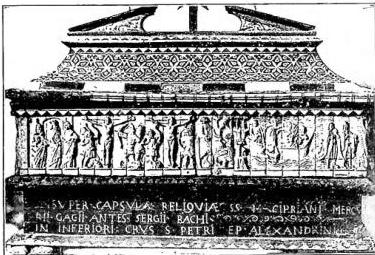
COSMAS AND DAMIAN, saints, martyrs - Ivory reliquary with scenes of the martyrdom of Sts. C. and D., work of Baldo degli Embriachi (14th-15th century) - Amalfi, chapel of the Choir.
SAINTS COSMAS AND DAMIAN, Martyrs. - The information about their life and their martyrdom is scanty and uncertain. It can only be affirmed with certainty that they perished in the persecution of Diocletian at Cyrrhus in Syria, where a basilica was erected over their tombs, later enlarged by Justinian. The Passio belongs to the genre of hagiographic legends in which the supernatural plays a great part; according to it, C. and D., after having endured the torments of fire, of stoning and of arrows, all of which proved vain, were beheaded. Feast on September 27; they are considered patrons of physicians.
Their cult spread very quickly in the East and in the West: their relics were widely distributed and numerous churches were dedicated to them. Famous above all was the Basilica built at Constantinople in the first half of the 5th century; in it the faithful went to ask for the healing of their ailments, practicing the rite of incubatio. Collections of the prodigies worked by the martyrs (Θαύματα) were soon made, the first redaction of which goes back to the 6th century; and since it was related in them that the martyrs generally came to the aid of the devout by prescribing natural remedies rather than healing miraculously and directly, there arose the belief that C. and D. had been in life physicians who took no payment (v.), since they would have practiced their profession out of charity. The spread of their cult also led to the multiplication of the persons of the martyrs, so much so that in the Hieronymian Martyrology they are commemorated as martyrs of different places and on different days: but it is certainly a question of the same group. At Rome the pope Symmachus (498-514) dedicated an oratory in their honor at St. Mary Major, and Felix IV (526-30) the Basilica near the Roman Forum obtained from the union of two pagan temples: one round, generally known by the name of Templum divi Romuli, the young son of Maxentius who died in 307, which came to form the atrium of the Basilica; the other commonly regarded as the temple of the Penates or Templum sacrae Urbis; it constitutes the actual hall of the Basilica, in whose apse was executed the grandiose mosaic depicting the ApostlesPeter and Paul presenting to the Redeemer the two martyrs C. and D., and the inscription was placed there, still in situ, which records the event. Probably on the same occasion C. and D. were also inserted into the canon of the Mass. Six other small churches were dedicated in Rome to the two martyrs. - See plate XXXVIII.
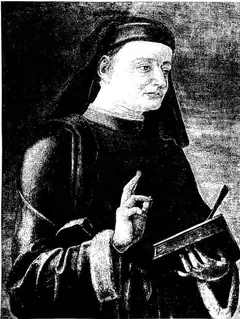
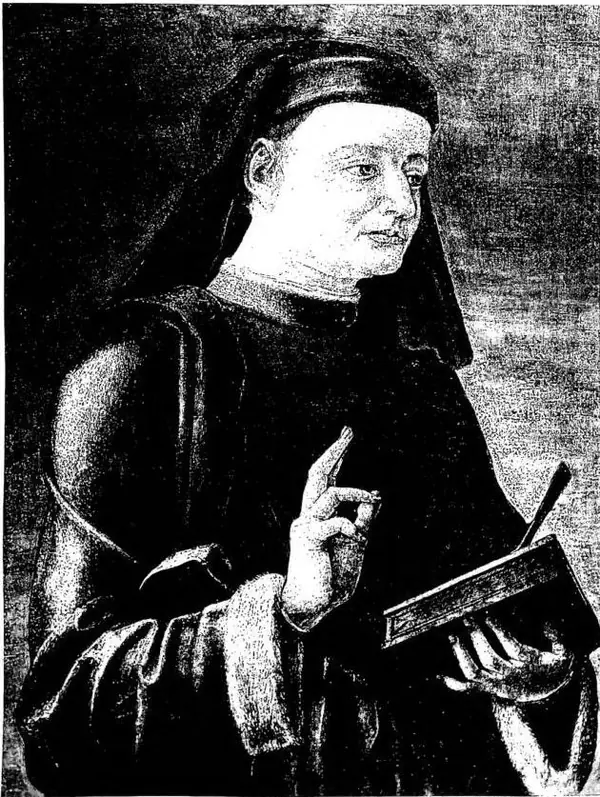
Plate XXXVIIIST. COSMAPainting by Bartolomeo Vivarini (15th cent.) - Amsterdam, Lanz collection.(per cortesia del dott. B. Degenhart)Bibliography12 worksMartyr. Hieronymianum, p. 528; Acta SS. Septembris, VII, ed. Paris 1867, pp. 400-48; L. Deubner, Kosmas und Damian, Leipzig 1907; G. Biassio
BIBL.:Martyr. Hieronymianum, p. 528; Acta SS. Septembris, VII, ed. Paris 1867, pp. 400-48; L. Deubner, Kosmas und Damian, Leipzig 1907; G. Biassiotti-Ph. B. Whitehead, La chiesa dei SS. C. e D. al Foro romano e gli edifici preesistenti, in Rendic. della Pont. accad. romana di archeol., 3 (1925), pp. 83-122; H. Delehaye, Les recueils antiques de miracles des Saints, in Anal. Boll., 43 (1925), pp. 8-18; id., Les origines du culte des Martyrs, 2nd ed., Brussels 1933, p. 190 ff.; E. Rupprecht, Cosmae et Damiani sanctorum medicorum vita et miracula, Berlin 1935; R. Krautheimer, Corpus basilicarum christianarum Romae, I, Vatican City 1937, pp. 137-43; V. L. Kennedy, The Saints of the Canon of the Mass, ibid. 1938, pp. 137-40; E. Donckel, Ausservömischen Heilige in Rom, Luxembourg 1938, pp. 60-63; M. Armellini, Le chiese di Roma dal sec. IV al XIX, ed. C. Cecchelli, Rome 1942, pp. 196-99, 1279-81; G. Lugh, Roma antica. Il centro monumentale, ibid. 1946, p. 225 ff.
Amore, Agostino. “Cosma e Damiano, santi, martiri.” In Enciclopedia Cattolica, vol. IV, coll. 686–688. Città del Vaticano: Ente per l’Enciclopedia Cattolica e per il Libro Cattolico, 1950. https://azioneromana.com/article/cosma-e-damiano-santi-martiri.
MLA
Amore, Agostino. “Cosma e Damiano, santi, martiri.” Enciclopedia Cattolica, vol. IV, Ente per l’Enciclopedia Cattolica e per il Libro Cattolico, 1950, coll. 686–688. Azione Romana, https://azioneromana.com/article/cosma-e-damiano-santi-martiri.
BibTeX
@incollection{ec4_cosma_e_damiano_santi_martiri,
  author    = {Amore, Agostino},
  title     = {Cosma e Damiano, santi, martiri},
  booktitle = {Enciclopedia Cattolica},
  volume    = {IV},
  pages     = {686--688},
  note      = {Cited by column},
  publisher = {Ente per l’Enciclopedia Cattolica e per il Libro Cattolico},
  address   = {Città del Vaticano},
  year      = {1950},
  url       = {https://azioneromana.com/article/cosma-e-damiano-santi-martiri}
}
One of some 20,000 entries brought back from the twelve printed volumes (1948–54). Spotted something? Help us improve it.
Click or scroll to zoom · drag to pan · Esc to close