HIRAM

HIRAM. - Name of a king and other personages of Tyre who were in relation with Israel.

1. King of Tyre (Hebrew Hīrām; Hīrām in 1 Kings 5:24; Hīrām in 1 Chronicles 14:1), who, at the time of the capture of Jerusalem, sent David an embassy of homage, bearing cedar as a gift and accompanied by a group of artisans who “built a house for David” (1 Sam 5:11). When Solomon succeeded David, the Phoenician hastened to send a new legation to Jerusalem: from that occasion Solomon began negotiations, as set forth in 1 Kings 5, to obtain skilled workers and a supply of cedars and firs from Lebanon, needed for the construction of the Temple and the royal palace. To the Phoenician artisans (1 Kings 5:18) Solomon added in great numbers local laborers (1 Kings 5:6, 13ff.; 9:20-21); as for the timber, Hiram had it cut and transported from the mountains to the sea and thence on rafts to Joppa, from where Solomon’s workers conveyed it to Jerusalem. Solomon compensated Hiram in kind (1 Kings 5:11), but later, to settle his debt, he also delivered to him a list of land in Galilee where twenty towns were situated (1 Kings 9:10-14). When Solomon later wished to have a long-distance fleet (the “ships of Tarshish”), Hiram still supplied him with sailors to direct and train the Israelite personnel (1 Kings 9:27).

2. Artisan of Tyre (Hebrew Hīrām; Hīrām in 1 Kings 7:40; Hīrām in 2 Chronicles 2:11; Hīrām ’ābhî in 2 Chronicles 2:12; Hīrām ’ābhîthû in 2 Chronicles 4:16), son of a Phoenician father and an Israelite mother, sent by King Hiram to Solomon for the fabrication of bronze objects needed for the palace and temple (ornamentation and furnishings), described in 1 Kings 7:13-47. The casting was carried out in a valley near the Jordan (1 Kings 7:46), where clayey soils were found.

3. Another king of Tyre (Assyrian Hurummi), mentioned among the tributaries of Tiglath-pileser II (Annals, I, CLI, in H. Gressmann, Altorientalische Texte, 2nd ed., Berlin and Leipzig 1926, p. 346), after the victory of 738 B.C. over the anti-Assyrian league, led by Azriyau of Jaudi, in northwestern Syria.

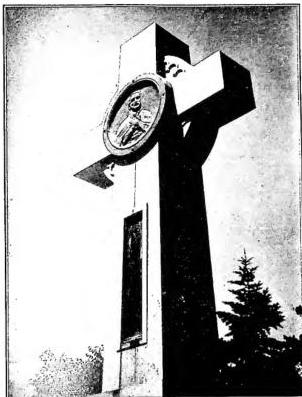
Hiroshima, apostolic vicariate of - Monument to St. Francis Xavier.

Hiroshima, apostolic vicariate of - Monument to St. Francis Xavier.

3. Altro re di Tiro (assiro Hurummi), nominato fra i tributari di Theglathphalasar II (Annali, I. CLI, in H. Gressmann, Altor. Texte, 2a ed., Berlino e Lipsia 1926, p. 346), dopo la vittoria del 738 a. C. sulla lega antiasiria, capeggiata da Azrija di Jaudi, nella Siria nord-occidentale.

Hiroshima, vicariato apostolico di - Monumento in I Reg. 7, 40; Hiraim' abhitu in II Par. 4, 16), figlio di padre fenicio e di madre israelita, inviato da H. re a Salomone, per la fabbricazione degli oggetti di bronzo occorrenti per la reggia e il tempio (ornamentazione e arredamento), descritti in I Reg. 7, 13-47. La fusione fu eseguita in un avvallamento presso il Giordano (I Reg. 7, 46), ove si trovavano terreni argillosi.

3. Altro re di Tiro (assiro Hurummi), nominato fra i tributari di Theglathphalasar II (Annali, I. CLI, in H. Gressmann, Altor. Texte, 2a ed., Berlino e Lipsia 1926, p. 346), dopo la vittoria del 738 a. C. sulla lega antiasiria, capeggiata da Azrija di Jaudi, nella Siria nord-occidentale.

Hiroshima, vicariato apostolico di - Monumento in I Reg. 7, 40; Hiraim' abhitu in II Par. 4, 16), figlio di padre fenicio e di madre israelita, inviato da H. re a Salomone, per la fabbricazione degli oggetti di bronzo occorrenti per la reggia e il tempio (ornamentazione e arredamento), descritti in I Reg. 7, 13-47. La fusione fu eseguita in un avvallamento presso il Giordano (I Reg. 7, 46), ove si trovavano terreni argillosi.

3. Altro re di Tiro (assiro Hurummi), nominato fra i tributari di Theglathphalasar II (Annali, I. CLI, in H. Gressmann, Altor. Texte, 2a ed., Berlino e Lipsia 1926, p. 346), dopo la vittoria del 738 a. C. sulla lega antiasiria, capeggiata da Azrija di Jaudi, nella Siria nord-occidentale.

Hiroshima, vicariato apostolico di - Monumento in I Reg. 7, 40; Hiraim' abhitu in II Par. 4, 16), figlio di padre fenicio e di madre israelita, inviato da H. re a Salomone, per la fabbricazione degli oggetti di bronzo occorrenti per la reggia e il tempio (ornamentazione e arredamento), descritti in I Reg. 7, 13-47. La fusione fu eseguita in un avvallamento presso il Giordano (I Reg. 7, 46), ove si trovavano terreni argillosi.

3. Altro re di Tiro (assiro Hurummi), nominato fra i tributari di Theglathphalasar II (Annali, I. CLI, in H. Gressmann, Altor. Texte, 2a ed., Berlino e Lipsia 1926, p. 346), dopo la vittoria del 738 a. C. sulla lega antiasiria, capeggiata da Azrija di Jaudi, nella Siria nord-occidentale.

Hiroshima, vicariato apostolico di - Monumento in I Reg. 7, 40; Hiraim' abhitu in II Par. 4, 16), figlio di padre fenicio e di madre israelita, inviato da H. re a Salomone, per la fabbricazione degli oggetti di bronzo occorrenti per la reggia e il tempio (ornamentazione e arredamento), descritti in I Reg. 7, 13-47. La fusione fu eseguita in un avvallamento presso il Giordano (I Reg. 7, 46), ove si trovavano terreni argillosi.

3. Altro re di Tiro (assiro Hurummi), nominato fra i tributari di Theglathphalasar II (Annali, I. CLI, in H. Gressmann, Altor. Texte, 2a ed., Berlino e Lipsia 1926, p. 346), dopo la vittoria del 738 a. C. sulla lega antiasiria, capeggiata da Azrija di Jaudi, nella Siria nord-occidentale.

Hiroshima, vicariato apostolico di - Monumento in I Reg. 7, 40; Hiraim' abhitu in II Par. 4, 16), figlio di padre fenicio e di madre israelita, inviato da H. re a Salomone, per la fabbricazione degli oggetti di bronzo occorrenti per la reggia e il tempio (ornamentazione e arredamento), descritti in I Reg. 7, 13-47. La fusione fu eseguita in un avvallamento presso il Giordano (I Reg. 7, 46), ove si trovavano terreni argillosi.

3. Altro re di Tiro (assiro Hurummi), nominato fra i tributari di Theglathphalasar II (Annali, I. CLI, in H. Gressmann, Altor. Texte, 2a ed., Berlino e Lipsia 1926, p. 346), dopo la vittoria del 738 a. C. sulla lega antiasiria, capeggiata da Azrija di Jaudi, nella Siria nord-occidentale.

Hiroshima, vicariato apostolico di - Monumento in I Reg. 7, 40; Hiraim' abhitu in II Par. 4, 16), figlio di padre fenicio e di madre israelita, inviato da H. re a Salomone, per la fabbricazione degli oggetti di bronzo occorrenti per la reggia e il tempio (ornamentazione e arredamento), descritti in I Reg. 7, 13-47. La fusione fu eseguita in un avvallamento presso il Giordano (I Reg. 7, 46), ove si trovavano terreni argillosi.

3. Altro re di Tiro (assiro Hurummi), nominato fra i tributari di Theglathphalasar II (Annali, I. CLI, in H. Gressmann, Altor. Texte, 2a ed., Berlino e Lipsia 1926, p. 346), dopo la vittoria del 738 a. C. sulla lega antiasiria, capeggiata da Azrija di Jaudi, nella Siria nord-occidentale.

Hiroshima, vicariato apostolico di - Monumento in I Reg. 7, 40; Hiraim' abhitu in II Par. 4, 16), figlio di padre fenicio e di madre israelita, inviato da H. re a Salomone, per la fabbricazione degli oggetti di bronzo occorrenti per la reggia e il tempio (ornamentazione e arredamento), descritti in I Reg. 7, 13-47. La fusione fu eseguita in un avvallamento presso il Giordano (I Reg. 7, 46), ove si trovavano terreni argillosi.

3. Altro re di Tiro (assiro Hurummi), nominato fra i tributari di Theglathphalasar II (Annali, I. CLI, in H. Gressmann, Altor. Texte, 2a ed., Berlino e Lipsia 1926, p. 346), dopo la vittoria del 738 a. C. sulla lega antiasiria, capeggiata da Azrija di Jaudi, nella Siria nord-occidentale.

Hiroshima, vicariato apostolico di - Monumento in I Reg. 7, 40; Hiraim' abhitu in II Par. 4, 16), figlio di padre fenicio e di madre israelita, inviato da H. re a Salomone, per la fabbricazione degli oggetti di bronzo occorrenti per la reggia e il tempio (ornamentazione e arredamento), descritti in I Reg. 7, 13-47. La fusione fu eseguita in un avvallamento presso il Giordano (I Reg. 7, 46), ove si trovavano terreni argillosi.

3. Altro re di Tiro (assiro Hurummi), nominato fra i tributari di Theglathphalasar II (Annali, I. CLI, in H. Gressmann, Altor. Texte, 2a ed., Berlino e Lipsia 1926, p. 346), dopo la vittoria del 738 a. C. sulla lega antiasiria, capeggiata da Azrija di Jaudi, nella Siria nord-occidentale.

Hiroshima, vicariato apostolico di - Monumento in I Reg. 7, 40; Hiraim' abhitu in II Par. 4, 16), figlio di padre fenicio e di madre israelita, inviato da H. re a Salomone, per la fabbricazione degli oggetti di bronzo occorrenti per la reggia e il tempio (ornamentazione e arredamento), descritti in I Reg. 7, 13-47. La fusione fu eseguita in un avvallamento presso il Giordano (I Reg. 7, 46), ove si trovavano terreni argillosi.

3. Altro re di Tiro (assiro Hurummi), nominato fra i tributari di Theglathphalasar II (Annali, I. CLI, in H. Gressmann, Altor. Texte, 2a ed., Berlino e Lipsia 1926, p. 346), dopo la vittoria del 738 a. C. sulla lega antiasiria, capeggiata da Azrija di Jaudi, nella Siria nord-occidentale.

Hiroshima, vicariato apostolico di - Monumento in I Reg. 7, 40; Hiraim' abhitu in II Par. 4, 16), figlio di padre fenicio e di madre israelita, inviato da H. re a Salomone, per la fabbricazione degli oggetti di bronzo occorrenti per la reggia e il tempio (ornamentazione e arredamento), descritti in I Reg. 7, 13-47. La fusione fu eseguita in un avvallamento presso il Giordano (I Reg. 7, 46), ove si trovavano terreni argillosi.

3. Altro re di Tiro (assiro Hurummi), nominato fra i tributari di Theglathphalasar II (Annali, I. CLI, in H. Gressmann, Altor. Texte, 2a ed., Berlino e Lipsia 1926, p. 346), dopo la vittoria del 738 a. C. sulla lega antiasiria, capeggiata da Azrija di Jaudi, nella Siria nord-occidentale.

Hiroshima, vicariato apostolico di - Monumento in I Reg. 7, 40; Hiraim' abhitu in II Par. 4, 16), figlio di padre fenicio e di madre israelita, inviato da H. re a Salomone, per la fabbricazione degli oggetti di bronzo occorrenti per la reggia e il tempio (ornamentazione e arredamento), descritti in I Reg. 7, 13-47. La fusione fu eseguita in un avvallamento presso il Giordano (I Reg. 7, 46), ove si trovavano terreni argillosi.

3. Another king of Tyre (Assyrian Hurummi), listed among the tributaries of Tiglath-Pileser II (Annals, I. CLI, in H. Gressmann, Altorientalische Texte, 2nd ed., Berlin and Leipzig 1926, p. 346), after the victory of 738 B.C. over the anti-Assyrian league, led by Azriyau of Jaudi, in northwestern Syria.

HIROSHIMA, apostolic vicariate of — Monument in 1 Kings 7:40; Hiraim’ abhitu in 2 Chronicles 4:16), son of a Phoenician father and an Israelite mother, sent by King Hiram to Solomon for the manufacture of the bronze objects needed for the palace and the temple (ornamentation and furnishings), described in 1 Kings 7:13–47. The casting was carried out in a hollow near the Jordan (1 Kings 7:46), where clayey soil was found.

3. Another king of Tyre (Assyrian Hurummi), listed among the tributaries of Tiglath-Pileser II (Annals, I. CLI, in H. Gressmann, Altorientalische Texte, 2nd ed., Berlin and Leipzig 1926, p. 346), after the victory of 738 B.C. over the anti-Assyrian league, led by Azriyau of Jaudi, in northwestern Syria.

Hiroshima, apostolic vicariate of — Monument in 1 Kings 7:40; Hiraim’ abhitu in 2 Chronicles 4:16), son of a Phoenician father and an Israelite mother, sent by King Hiram to Solomon for the manufacture of the bronze objects needed for the palace and the temple

Vienna to study architecture, but lacking a high school diploma, he was forced to earn a living as a draftsman and house painter. The two experiences of life in Vienna indelibly influenced his mental formation, instilling in him the sentiments that would remain fixed points of his political action throughout his life: a pan-German national consciousness, unrestricted antisemitism, and a profound aversion to the Catholic religion. In the early months of 1912, H. moved to Munich, and with the outbreak of the war in 1914, he enlisted in the Bavarian army. Wounded in the Battle of the Somme in 1916, at the time of the armistice he was in the Pasewalk (Pomerania) hospital, admitted for a severe eye condition caused by the gas used by the English in the Battle of Ypres. The war lost by Germany was not, for H., as for the majority of Germans, lost by the army, but as a result of internal betrayal. He held the Marxists and the Jews responsible for this betrayal of a starving people, reduced to extremes, with no remaining offensive capacity after the failure of submarine warfare.

The legend of the stab-in-the-back found in H. one of its most fanatical and convinced advocates. As he himself wrote in *Mein Kampf*, at that moment he decided to devote himself to politics in order to rebuild a strong Germany, freed from the chains of the Treaty of Versailles and from the traitors of 1918. Having joined in September 1919 the German Workers’ Party (*Deutsche Arbeiterpartei*), which the following year changed its name to the “National Socialist German Workers’ Party” (*Nationalsozialistische Deutsche Arbeiterpartei*), he became its leader with full powers in July 1921. The occupation of the Ruhr and the inflation gave fresh impetus to H.’s propaganda against the surrendering government in Berlin, and in Munich he conceived the idea of a coup d’état whose success was to oust the central Reich government and bring him to power. The march on the Feldherrnhalle (9 November 1923), however, failed, and H. was tried and sentenced to five years’ imprisonment in the fortress of Landsberg. He remained there until 20 December 1924, when he was granted amnesty; during his detention he wrote the first part of *Mein Kampf*, published on 18 July 1925 (the second part appeared in 1927). After reconstituting the party, H. advanced from success to success and on 30 January 1933 became Reich Chancellor. Taking advantage of the perplexity of the bourgeois parties, H. succeeded in obtaining full powers on the promise of guaranteeing constitutional freedoms; but instead of keeping his word he began to dissolve all parties and trade-union organizations and to concentrate all political activity in the single National Socialist Party. He also proceeded to rearm the Reichswehr; in 1938 he carried out the annexation of Austria, in the following year occupied Czechoslovakia, and invaded Poland, thus unleashing the Second World War, which he had believed he could avoid by the non-aggression pact concluded with the U.S.S.R. on 23 August 1939. At the same time, within Germany he continued his relentless struggle against any political opposition; he decreed the most ferocious persecutions against the Jews; he spared neither the Catholic Church nor other confessions, and vainly attempted to replace them with a racist neopaganism founded on the myth of Aryan blood. The Reich Concordat, which H. had concluded on 20 July 1933 with the Holy See solely to acquire political prestige in the eyes of the world, remained a dead letter, nor did the Berlin government cease its attacks on the Church and its supporters among the neopagan movement. Pius XI therefore intervened on 14 March 1937 with the encyclical *Mit brennender Sorge*, whose reading and publication were forbidden in Germany. The war further worsened relations with the Holy See until 27 March 1938, when the Third Reich, under the pretext of wartime conditions, confiscated and suppressed ecclesiastical property and in every way impeded the free exercise of Catholic spiritual life. The campaign in Russia, begun in June 1941, and the defeat at El Alamein in Libya (October 1942) marked the beginning of the end, and H., when the Russian army was already at the gates of Berlin, according to the reconstruction of the Führer’s last days made by a special British commission, took his own life so as not to fall alive into the hands of the enemy.

Bibl.: On H.’s programme and political ideas, with autobiographical indications, see *Mein Kampf*, I, Munich 1925; II, 1927. Extremely useful, with abundant bibliography, is a systematic selection of H.’s speeches in English translation, edited by the Royal Institute of International Affairs, *The Speeches of A. H.*, April 1922–August 1939, ed. N. H. Baynes, 2 vols., London 1942. Among the biographies of H., rich in generally unknown data but with an anti-Hitlerian slant, is that of K. Heiden, *A. H.*, 2 vols., Zurich 1936–37 (Italian trans., Rome 1947). On H.’s foreign policy cf. E. Kordt, *Wahn und Wirklichkeit*, Stuttgart 1948. On opposition to H.: H. Fraenkel, *The German People versus H.*, London 1940; R. Pechel, *Deutscher Widerstand*, Erlenbach-Zurich 1947; A. W. Dulles, *Germany’s Underground*, New York 1947; M. Mourin, *Les complots contre H.* (1938–49), Paris 1948; H. Rothfels, *The German Opposition to H.*, Hinsdale 1948. On H. and the Catholic Church: N. Micklem, *National Socialism and the Roman Catholic Church*, London 1939; *Mit brennender Sorge. Das päpstliche Rundschreiben gegen den Nationalsozialismus und seine Folgen in Deutschland*, ed. S. Hirt, Freiburg im Br. 1940; J. Neuhäusler, *Kreuz und Hakenkreuz. Der Kampf des Nationalsozialismus gegen die katholische Kirche und der kirchliche Widerstand*, 2nd ed., Munich 1946; M. Maccarrone, *Il nazionalsocialismo e la S. Sede*, Rome 1947. On H.’s last days cf. H. R. Trevor-Roper, *The Last Days of H.*, London 1947 (Italian trans., Milan 1947).